pp 216-218
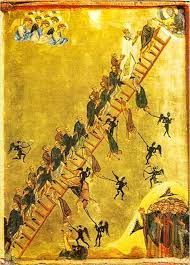
St. John Klimakos calls fear “unmanly and puerile cowardice” and lists it as one of the passions that must be overcome to ascend the ladder to God. Then why do the proverbs call fear of the Lord “the beginning of wisdom,” and St. Peter of Damaskos tells us that without fear of God “one cannot possess any blessing?”
Fear of God is different from other fears that besiege us. Loss of faith, and hence of fear of God, does not rid us from the incapacitating fears and anxieties that torture us. On the contrary, fear of God frees us from the slavery to the whims of our own will and the fears and anxieties of a heart devoid of inner stillness.
Fear of God leads to the fulness of love. Our journey to theosis, full participation in God’s person and love, begins with this fear.
St. Peter identifies two types of fear.
- The “introductory” or slave-like fear of God that serves to restrain us from sin. One cannot trust a toddler to be near a stove without burning himself or near harmful substances without the risk of swallowing them. It is the fear we gain with experience that prevents us from harm as adults. Similarly, “through fear of what threatens us,” St. Peter says, “we sinners may be led to repent and may seek to find deliverance from our sins. 1 Moreover, when it is active within us, this introductory fear teaches us the way that leads to life, for it is said: ‘Shun evil, and do good’ (Ps. 34 : 14).”
- The perfect and pure fear occurs at a more advanced spiritual state, when it is no longer a struggle to live a life of virtue. We now experience fear, not because we are afraid of punishment for our sins but because, having experienced God’s love and true nature, we cannot imagine a life without this proximity to him. We are able to perceive our fragility and are afraid of losing the ecstatic joy we have felt in his presence. “The person who has been purified continues to feel fear, not because he sins, but because, being human, he is changeable and prone to evil. In his humility, the further he advances through the acquisition of virtues, the more he fears.
At the state of perfect fear, we have undergone profound spiritual transformation. Rid of passions, we have gained the spiritual clarity and discernment to perceive our own vulnerabilities. Instead of avoiding grief, suffering and fear at all costs, Christian thought embraces them as gateways to joy and salvation.
The more a man struggles to do good, the more fear grows in him, until it shows him his slightest faults, those which he thought of as nothing while he was still in the darkness of ignorance. When fear in this way has become perfect, he himself becomes perfect through inward grief: he no longer desires to sin but, fearing the return of passions, he remains in this pure fear invulnerable.
We are filled with gratitude for the gift of this joy and with humility, realizing that it can be lost to us in a flash.
The man seized by spiritual joy is astounded by the many blessings that God in his grace has bestowed on him, and he loves his Benefactor.
I well remember my decision to become an atheist at the age of 11, eager to rid myself of the fear of punishment by God. Yet, St. Peter forces us to reconsider fear and reflect on the kind of lives we might lead, without any fear of God.
In today’s secular worldview, for example, the notion of “gift” is replaced by the notion of “deservedness.” We worked hard all our lives and deserve a luxury car. I am worth this upscale apartment or expensive make up. If we “deserve” the good things in our life, why be grateful? And if we are worthy of them, then there must be people who are not worthy.
But he who obdurately indulges in luxury and splendour, like the rich man (cf.Luke 16 : 19 ), thinks that those consumed by fear and facing trials and temptation suffer in this way because of their sins, and in his comfort and complacency he despises them.
In St. Peter’s worldview, loss of fear of God leads to division, complacency, delusion, and entitlement. Perfect fear of God engenders humility, and lives lived in gratitude.
 Readings in Philokalia
One thought on “FEAR AND GRATITUDE ( St. Peter of Damaskos, Philokalia, III)”