(Philokalia Vol. III, G.E.H Palmer, Philip Sherrard, Kallistos Ware)
pp.224-227
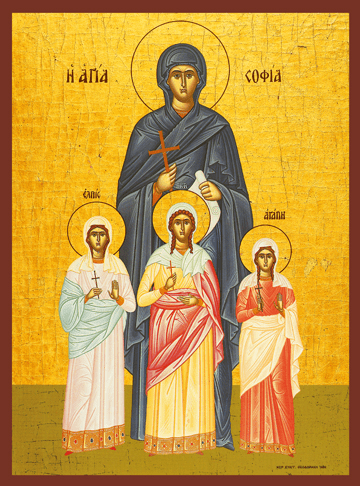
HOPE
Staring out the double glass doors into my garden, I can see a tiny sparrow laboring hard to break down a huge peanut into tiny pieces that can fit in his mouth. At first, it seems impossible but after 10-15 minutes I watch him swallow the first, tiny morsel he laboriously extracted from this peanut. What propelled him to steal from the squirrels a piece the size of his little head and then spend over 20 minutes to consume it? How did he know he would succeed? St. Peter would point this out as an example of the hope God endowed us with. It is this hope that keeps despair at bay and gives purpose to our lives. One cannot simply live without hope.
For St. Peter, hope is not absolute assurance of results, but reasonable expectation born of experience. We are willing to restrain ourselves and suffer sacrifices—undergo harsh diet and exercise routines, endure sleepless nights of studying for an exam or put in extra hours at work—because we have experienced the results in ourselves or others. It is hope, then, that drives our lives beyond the confines of simple gratification of immediate needs and endows them with meaning.
“Outwardly,” St. Peter writes, people “sacrifice immediate advantages, but in reality, even if they forfeit what they sacrifice, through their patient endurance they gain what is of far greater value.” This is why ‘through hope were they made perfect’ ( cf. Heb. 1 1 : 39-40 ).
As Christians, our greatest hope is gaining eternal life. Yet how do we maintain such hope without having experienced salvation. “No one has risen from the dead so that we can know what rewards to expect,” St. Peter says.
The path to God, however, is not based on empirical knowledge but on faith. “We walk by faith, not by sight‘ ( 2Cor. s : 7) says St Paul, quoted by St. Peter. We choose to leap beyond linear thinking and put our faith in Jesus Christ who experienced death and life eternal.
THE INADEQUACY OF FAITH ALONE
St. Peter does not present our journey as an intellectual process leading to a state of enlightenment. We have faith in God’s promise of eternal life and, hence, are willing to engage in the harsh, daily, unglamorous work of living a life of virtue in the hope of achieving it. St. Peter is, in fact, practical and matter of fact about what a life of virtue entails, using the mundane analogy of a businessman.
Yet just as it is impossible for someone engaged in business to make a profit on the basis of faith alone, so it is impossible for anyone to attain spiritual knowledge and repose before he has laboured in thought and action to acquire the virtues.
FAITH AND GRATITUDE
St. Peter asks us a difficult question. Why is it so difficult for us to live lives of gratitude in which we are aware of God’s gifts at every moment of the day?
He compares us to small children who take everything for granted and “do not recognize the bounty of their parents.” He sees us as “inexperienced students” who resent the effort of learning and doing homework because they do not yet recognize the value of knowledge and the difference it will make to their lives. Christ, he reminds us, shed his blood for us yet all he wants from us in return is to “choose to receive His blessings.”
Faith begets gratitude and gratitude nourishes hope.
THE BURDEN OF OUR OWN WILL
What keeps us from faith is the all-powerful pull of our own will. After a visit to my adult daughter a few weeks ago, I realized the source of the tension between us and my disappointment in the visit. Her life simply did not follow the script I had envisioned for her—from the way she conducted her social life to the way she kept house and the number of pets she had.
How many of us are terrified to let go and accept God’s will without manipulating things, judging others, controlling situations, and exerting enormous efforts to ensure that things go our way?
It is difficult to experience faith and gratitude when we are at war with God’s will—resenting, holding grudges, becoming angry and disillusioned. St. Peter sums up the paradox:
He who wishes to inherit the kingdom of heaven, yet does not patiently endure what befalls him, shows himself even more ungrateful than such a child.
STILLNESS
Hope requires stillness and, in that sense, simplicity. This means a renunciation of one’s will and the illusion of controlling the universe. No matter how much we worry about the safety of loved ones travelling or rage about the speed of modern life that makes air travel a necessity, our thoughts, complaints, and desires cannot keep their airplane safely in the air.
This is why the first virtue St. Peter advises us to acquire is stillness in the sense of renunciation oF worldly passions and, hence, simplicity.
For nothing darkens a man’s mind so much as evil, while God reveals Himself to simplicity and humility, not to toil and weariness.
 Readings in Philokalia