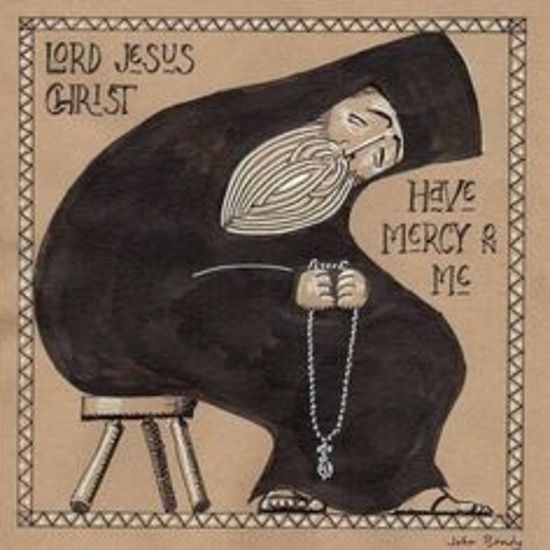
Theognostos: Passing from this Life to the Next

Philokalia, vol. 2, St Theognostos, paragraphs #24-29
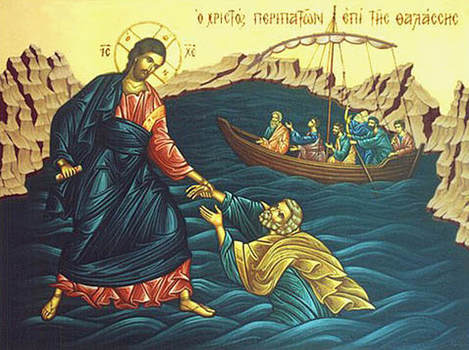
I must admit that I think of afterlife as an abstraction, separate from my life as is. St. Theognostos connects the two, on a gritty, experiential level, as he focuses us on the moments of transition from present to eternal life.

He points out that we are especially vulnerable during these moments.

When the soul leaves the body, the enemy advances to attack it, fiercely reviling it and accusing it of its sins in a harsh and terrifying manner.

We cannot face this transition unprepared. This means that, in addition to our preparation for afterlife, we must also arm ourselves with practical weaponry for this very moment of transition.  

Theognostos zeroes in on this moment, giving instructions and advice with the practical, thorough, matter-of-fact air you would expect to find in a sophisticated travel guide or self-help book. To prepare for our journey, Theognostos advises:

Ask for assurance of salvation, but not too long before your death lest “you should delude yourself into believing that you possess such assurance only to find, when the time comes, that you have failed to attain it.

He gives us encouragement for the journey:

The devout soul, however, even though in the past it has often been wounded by sin, is not frightened by the enemy’s attacks and threats.

He continues with a blueprint for action outlining specific instructions for what to say and do at that time.

First, we must take courage, remembering that we are “strengthened by the Lord, winged by joy, filled with courage by the holy angels that guide it, and encircled and protected by the light of faith…”

Though our inclination may be to be intimidated and flee, Theognostos tells us to do the opposite—shed our fears and go on the offensive. Instead of shrinking in terror, we should be unafraid to confront the forces of evil with “great boldness.”

The poet Dylan Thomas encourages to “talk back” to the forces of darkness:

Do not go gentle into that good night.

Rage, rage against the dying of the light.

Thomas rages at the human condition that makes us subjects to decay and death, wishing for earthly immortality. Theognostos accepts earthly life as temporary and longs for the peace and joy of the life beyond, in Christ’s presence.  

Instead of raging at God, he directs our rage to the dark forces preventing us from entering heaven, through words such as:

Fugitive from heaven, wicked slave, what have I to do with you? You have no authority over me; Christ the Son of God has authority over me and over all things. Against Him have I sinned, before Him shall I stand on trial, having His Precious Cross as a sure pledge of His saving love towards me. Flee from me, destroyer! You have nothing to do with the servants of Christ.

He gives us hope by enabling us to confront the devil and showing us that it is possible to defeat him:

When the soul says all this fearlessly, the devil turns his back, howling aloud and unable to withstand the name of Christ. Then the soul swoops down on the devil from above, attacking him like a hawk attacking a crow. After this it is brought rejoicing by the holy angels to the place appointed for it i n accordance with its inward state.

To transition peacefully from this life to the next, requires inner peace which, in turn, requires detachment from passions.  Theognostos tells us that when we are “shackled by an attachment to earthly things,” we are “like an eagle caught in a trap by its claw and prevented from flying.”

Even when you believe that you have battled passions successfully and have achieved a degree of peace, you may be still deluded:

for your soul may still bear within it the imprint of the passions, and so you will have difficulties when you die.

Yet this process of purification takes on a different sense of urgency and concreteness when Theognostos makes us envision our process of transition from this life to the next in minute detail.

This is not simply meditating to achieve a temporary state of serenity on a yoga mat, but a “practical” necessity for achieving the peace that comes from detachment and love before the real moment of transitioning.

For changeless dispassion in its highest form is found only in those who have attained perfect love, have been lifted above sensory things through unceasing contemplation, and have transcended the body through humility.

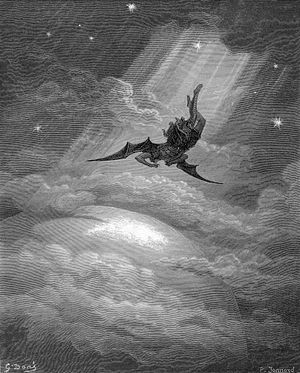
St. Theognostos: Living in God’s Time

(Philokalia, vol 2)

When I was little, I remember listening to a song by a group called, The Byrds:

To everything (turn, turn, turn)

There is a season (turn, turn, turn)

And a time to every purpose, under heaven

A time to be born, a time to die

A time to plant, a time to reap

A time to kill, a time to heal

A time to laugh, a time to weep

To everything (turn, turn, turn)

There is a season (turn, turn, turn)

This is based on a passage in Ecclesiastes 3:1-8  

For everything there is a season, and a time for every [a]purpose under heaven:  a time to be born, and a time to die; a time to plant, and a time to pluck up that which is planted.

In the decades that followed, I found waiting for the right time to be my hardest challenge. I simply hated to wait and expanded considerable efforts in forcing time to bend to my will. I was also sure that nothing would be ever achieved unless I willed it and made it happen, myself. Imagine the weight of this responsibility. I could never allow myself to be still. Even before the next self-appointed deadline was reached, the next goal and then the next had begun crowding the horizon.

How many of us have no faith in our children’s ability to correct mistakes and learn from them, or in the possibility that we lost a promotion because it wasn’t God’s time for it?  How many of us have arbitrary timeframes for assessing our, and others’, value as human beings?

He is 40 and still in middle management or still unmarried.”

In forcing our own script and timelines, we lead lives filled with anxiety, disappointment and fear– longing for but never achieving a sense of peace.

Theognostos applies similar examples of desires to control and impatience with slow results, to the pursuit of theosis. It is only when you free yourself from such passions that you can ascend higher levels of spiritual knowledge.

If you wish to be granted a mental vision of the divine,” he says, “you must first embrace a peaceful and quiet way of life and devote your efforts to acquiring a knowledge of both yourself and God.”

We cannot jump to the end of the journey by skipping steps.  We cannot experience the peace and joy of union with God by forcing our timeframe or using shortcuts—alcohol, drugs, fantasy, overwork, delusion and other forms of escape.

Do not try to embark on the higher forms of contemplation before you have achieved complete dispassion, and do not pursue what lies as yet beyond your reach. If your wish is to become a theologian and a contemplative, ascend by the path of ascetic practice and through self-purification acquire what is pure.

While Theognostos sees true longing for God as the engine that drives our journey, no matter how hard, he differentiates it from ambition.  To admit lack of readiness and submit to God’s time and will, takes humility.

If you want to be known to God,” he tells us, “do all that you can to remain unknown to men.”

Consciously look on yourself as an ant or a worm, so that you can become a man formed by God. If you fail to do the first, the second cannot happen.

Blind ambition is usually influenced by what others do, what we think will get us their approval, jealousy, insecurity and other passions that enslave rather than free us. Paradoxically, humility raises us to God. It is only by descending that you will rise.

“The lower you descend, the higher you ascend,” Theognostos tells us.

It is not by forcing the destination and willing its timing that we will achieve a state of true contemplation, but by submitting to God’s will and time and patiently completing all the stages of your journey.

 If you do this and achieve a pure state untroubled by any passion, there is nothing to prevent your intellect from perceiving, as it were in a light breeze.

Abba Philimon (part II): Stillness and Warfare

Philokalia, vol. 2, pp. 348, 353

“The only path leading to heaven,” Abba Philimon says, “is that of complete stillness, the avoidance of all evil, the acquisition of blessings, perfect love towards God and communion with Him in holiness and righteousness.”

He recounts the story of an old monk who prayed to God for two years, “unremittingly” and with his “whole heart,” before he was granted the gift of continuous and undisturbed prayer and, through it, stillness.

This is a tall order and there is no shortcut.

What, then, is that precious, hard-fought stillness?

Unlike other meditation techniques, stillness is not simply a state of complete relaxation. It is not an opportunity to cast away worries so that you can appreciate more deeply the sound of raindrops or fragrance of flowers and contemplate the beauty of the world. Philimon, in fact, asks us to do the opposite, admonishing us not to “grow slack” and urging us not to be afraid to face evil and ugliness.

Only in stillness can God dwell within us and our hearts be filled with joy and longing for Him. Instead of lulling us to sleep, however, a life of stillness sheds the scales from our eyes and elucidates a reality we could not perceive before. We are no longer a leaf tossed in the wind but are able to discern our purpose.  

And He will illumine your heart about the spiritual work which you should undertake.

Without the distraction of vain thoughts and our constant struggle to impress and please others, stillness enables us, not only to perceive and participate in God’s greatness, but also to clearly recognize the enemy, and face head on the full extent of his evil. The passage quoted from Job below does not offer us a disembodied concept of evil. On the contrary, it is epic in its scope and detailed in description, personalizing, and capturing, the symbolic and physical impact of evil.   

Burning torches pour from his mouth, he hurls forth blazing coals. Out of his nostrils come smoke of burning soot, with the fire of charcoal. His breath is charcoal, a flame comes from his mouth, power lodges in his neck. Destruction runs before him. His heart is hard as stone, it stands like an unyielding anvil. He makes the deep boil like a cauldron; he regards the sea as a pot of ointment, and the nether deep as a captive. He sees every high thing; and he is king of all that is in the waters’ (Job 4- 1 : 1 3 , 1 9-2 2 , 24, 3 1 -3 2 , 34-·LXX). This passage describes the monstrous tyrant against whom we fight.

It is only by fully perceiving the force and extent of evil that we can defeat it. Yet Philimon sweetens the hardness of the struggle with hope.

First, he reassures us, since we have freed ourselves from attachment to material things, the devil has no purchase on us.

Yet those who lawfully engage in the solitary life soon defeat him: they do not possess anything that is his; they have renounced the world and are resolute in virtue; and they have God fighting for them.

Secondly, God wants us to win and partake of His Kingdom. Spiritual warfare, born of stillness, is a path to salvation.

God wants us to show our zeal for Him first by our outward asceticism, and then by our love and unceasing prayer; and He provides the path of salvation.

Unlike passions that toss us around violently and plunge us into despair and isolation, we are neither alone nor directionless in our fight for God and against his enemies. We become members of an army of brothers and sisters, joined by shared purpose, fighting the same fight and supported by God’s right arm.  

Aware of this, brother. Recognize that you are fighting in the thick of the battle and that many others, too, are fighting for us against God’s enemy. How could we dare to fight against so fearful an enemy of mankind unless the strong right arm of the Divine Logos upheld us, protecting and sheltering us? How could human nature withstand his ploys?

We grow spiritually, when our soul is not allowed to “grow flabby” with passions. While passions deplete our souls and distance us from God, spiritual warfare is in synergy with God since we act on His behalf and with His help.  

Who has turned to the Lord with awe and has not been transformed in his nature? Who has illumined himself with the light of divine laws and actions, and has not made his soul radiant with divine intellections and thoughts? His soul is not idle, for God prompts his intellect to long insatiably for light.”

It is through the constant pursuit of stillness and spiritual warfare that we are continuously transformed and move increasingly closer to God and the salvation of our soul.  It is this pursuit that allows us to fulfill God’s purpose for us and the capabilities He gave us to accomplish it.

God created human nature a partaker of every divine blessing, able to contemplate spiritually the angelic choirs, the splendour of the dominions, the spiritual powers, principalities and authorities, the unapproachable light, and the refulgent glory.

A Discourse on Abba Philimon: ACHIEVING INNER STILLNESS

Philokalia, vol. 2, p. 344,

We don’t know much about Abba Philimon except that he was humble, devoid of passions and uninterested in worldly things. This essay about him tells us that he was “initiated into ineffable mysteries through the pursuit of contemplation, he was enveloped by divine light and established in a state of joyfulness.”

His message is direct. It is simply impossible to unite with God “without complete stillness.” Hence, his lifelong goal was to achieve complete inner stillness.

Like all hesychasts, Abba Philimon’s premise is that passions bar us from ever becoming close to God. Passions are not to be toyed with, he tells us, because they are addictive and rapidly mushroom out of our control.

When they are stimulated and aroused, they grow more savage and force us into greater sin; and they become hard to cure, like the body’s wounds when they are scratched and chafed.

Whether it is love for our work or for another person that becomes addictive; obsessive thoughts, jealousy or preoccupation over material goals, passions make anxiety the norm and clutter our minds, leaving no space for God to enter.  

Only stillness allays passions. When we are in a state of stillness, the intellect has “attained a royal dignity.”  We are anchored in firm ground and are no longer tossed in all directions by passions.

Zhou Yi, an 18th century Chinese seal carver and poet captures that state when writes: “I am so relaxed that I feel the white clouds are in a hurry.”

Abba Philimon’s teachings focus like a laser beam on the details of this journey from passion to stillness, unlocking a logical sequence of steps that guide us to God:  

stillness gives birth to ascetic effort, ascetic effort to tears, tears to awe, awe to humility, humility to foresight, foresight to love; and how love restores the soul to health and makes it dispassionate, so that one then knows that one is not far from God.

The progression is one of increasing clarity, inner freedom and unity with God and men.   Achieving a state of inner peace, gives you detachment from the passions that throw you off course. With this calm state of mind, we are able to shed tears.

Why tears? Note that these are not tears of frustration, sadness, or self-pity. They flow freely because, without the clutter of noise and delusion, we are suddenly able to see things we could not discern before. These are tears of awe and gratitude as the world is renewed for us and the glory of God becomes palpable. Awe, in turn, leads to humility as we see ourselves in true perspective –as pieces of God’s synergy and not as solitary beings lost in our own concerns and agendas.  Purified and enlivened, we reach the ultimate goal, love, and are restored to full health.

In this essay Philimon is presented as a spiritual master of asceticism, initiating us in meditation and a life of inner stillness. Stillness is not an abstract concept or expression of disembodied bliss. Philimon elucidates the rigorous process for attaining and maintaining it and gets to the nitty-gritty of daily practice.

Like a medical examiner performing an autopsy, he reveals the minute details of muscles, organs and circulation systems, hidden under the external form of a bod, and gives practical advice.

The description of his own ascetic rule is an example:

The rule of the holy Elder was as follows. During the night he quietly chanted the entire Psalter and the Biblical canticles, and recited part of the Gospels. Then he sat down and intently repeated ‘ Lord have mercy’ for as long as he could. After that he slept, rising towards dawn to chant the First Hour. · Then he again sat down, facing eastward, and alternately chanted psalms and recited by heart sections of the Epistles and Gospels. He spent the whole day in this manner, chanting and praying unceasingly, and being nourished by the contemplation of heavenly things. His intellect was often lifted up to contemplation, and he did not know if he was still on earth.

He is equally practical and detailed in his advice to others.

When asked how to avoid fantasies in one’s sleep, for example, he suggests reciting prayers before going to sleep, especially psalms, and the creed.

He responds to the question about how to meditate inwardly with the admonishment:

Keep watch in your heart; and with watchfulness say in your mind with awe and trembling : Lord Jesus Christ Son of God, have mercy on me.

He knows that the state of stillness, especially in the beginning, is fragile. His advice to a person who lost the brief stillness he had achieved was to be patient and work to recapture it:

Pray without ceasing” ( I Thess. lj : I 7). Pay strict attention to your heart and watch over it, so that it does not give admittance to thoughts that are evil or in any way vain and useless. Without interruption, whether asleep or awake, eating, drinking, or in company, let your heart inwardly and mentally at times be meditating on the psalms, at other times be repeating the prayer, “Lord Jesus Christ, Son of God, have mercy upon me.” And when you chant, make sure that your mouth is not saying one thing while your mind is thinking about another.

Even though we are not ascetics, the process of attaining stillness and the presence of God must be always in our mind, as background music to our actions.

 Even when carrying out needful tasks, do not let your intellect be idle but keep it meditating inwardly and praying, whether eating or drinking, in company or outside your cell, or on a journey, repeat that prayer with a watchful mind and an undeflected intellect; also chant, and meditate on prayers and psalms. 

St. John of Damascus, On the Virtues and the Vices: Our Irreducible Humanity

Once again, in this last section of this work, John stresses the difference between

occasional, unintended virtue and virtue that is purposeful and consistent. We see the great difference between acts of compassion and being compassionate, doing and becoming. The path toward union with God requires becoming—undergoing inner transformation rather than only performing occasional acts.

Hence it is clear that someone who occasionally shows compassion is not compassionate, and someone who occasionally practices self-control is not self-controlled. A compassionate and self-controlled man is someone who fully, persistently, and with unfailing discrimination strives all his life for total virtue; for discrimination is greater than any other virtue; and is the queen and crown of all the virtues.

A passage from Romans came to mind, as I read this, about what constitutes the core of one’s personhood and identity:

A person is not a Jew who is one only outwardly, nor is circumcision merely outward and physical. No, a person is a Jew who is one inwardly; and circumcision is circumcision of the heart, by the Spirit, not by the written code. Such a person’s praise is not from other people, but from God. Romans 2: 28, 29

The same principle of human wholeness and irreducibility applies to vices. We don’t call a man a fornicator, drunkard or liar because of individual lapses unless there is a persistent pattern, St. John tells us. We do not judge a person “on account of a single lapse, but only when he keeps on falling into the sin in question and makes no attempt to correct himself.…”

St. John challenges with a question. Would we judge a man as sinful for entering a brothel even if his purpose was to save a prostitute?

We live at a time when, in our attempt to prevent egregious, hurtful behavior, a person’s life and career can be instantaneously destroyed because of the utterance of one single word. A single act or association forever defines a person’s totality, reducing them to labels such as “leftist” or “right-wing extremist.” This is the slippery slope that leads to demonization of others and deep divisions.

St. John shows us that we are much more than our isolated acts or words; more than what we say or do. A complex cluster of forces such as, intention, purpose, state of soul and heart, capabilities for discernment and repentance, work in tandem to define a man’s character.  

Human beings are simply not reducible to component parts because we are made in the image and likeness of God.

Being made this way, however, means that we have the faculties and capabilities (likeness) to achieve true union with Him, but that it takes our will to actualize these capabilities and become one with the image of God.

Every man possesses that which according to the image of God “for the gifts of God are irrevocable.” Rom. 11:29. But only a few—those who are virtuous and holy and have imitated the goodness of God to the limit of human powers- possess that which is according to the likeness of God.

Hence, virtue is not an abstract attribute we are born with. We acquire it only by using our God-given faculties, such as intelligence, to make a conscious choice of it.

Virtue (areti) is so called because it is something we choose (to aireisthai). We choose it and will it in the sense that we do good but deliberate choice and of our own free will, not unintentionally and under compulsion.

God’s gifts, John reminds us in quoting Rom. 11:29, are “irrevocable.”

Irrevocability is an important concept. Man’s capabilities for virtue, such as “what regards the dignity of his intellect and soul,” stems from our covenant with God. It cannot be taken away, appropriated, objectified and reduced: “that is to say, the quality in man that cannot be scrutinized or observed us immortal and endowed with free will and in virtue of which he rules, begets and constructs.

John gives us an exhaustive list of all the types of virtues and vices, their categories and the interrelationships among them, so that we can be constantly alert, maintain an open heart and tend our inner garden.

It is important to note that in this work, that St. John presents virtue as relational process rather than a solitary endeavor in isolation from others. On the contrary, the actions through which we imitate God “consist having deep sympathy or one’s fellow men, in mercy, pity and love towards one’s fellow servant and in showing heartfelt concern and compassion.”  It is only in relationship with God and each other through love and compassion, that we can be saved.

St. John of Damascus: On the Virtues and the Vices

Philokalia, vol 2, pp.337-340

In this section, St. John replaces the Aristotelian framework he used to categorize virtues and vice in the previous section, and restates them within a Platonic framework.

For Plato, there are three separate parts of the soul: appetite, spirit, and reason.

For St. John “the soul has three aspects: the intelligent, the incensive and the desiring aspect.” Each aspect contains sins. Each sin can be remedied through concrete cures.

The Three Aspects of the Soul

ASPECTS OF THE SOULSINSCURES
  Intelligent  unbelief, heresy, folly, blasphemy, ingratitude, and assent to sins.  unwavering faith in God and in true, undeviating and orthodox teachings, through the continual study of the inspired utterances of the Spirit, through pure and ceaseless prayer, and through the offering of thanks to God.
    Incensive  heartlessness, hatred, lack of compassion, rancor, envy, murder and dwelling constantly on such things.  deep sympathy for one’s fellow men, love, gentleness, brotherly affection, compassion, forbearance and kindness.  
Desiring  gluttony, greed, drunkenness, unchastity, adultery, uncleanliness, licentiousness, love of material things, and the desire for empty glory, gold, wealth, and the pleasures of the flesh.  fasting, self-control, hardship, a total shedding of possessions and their distribution to the poor, desire for the imperishable blessings held in store, longing for the kingdom of God, and aspiration for divine sonship.  

St. John’s virtues and vices are not disembodied lists but understood in the context of a living human being. Thus, the portrait of the human person that emerges is whole and dynamic.

Within each of us lies a complex labyrinth of passions and virtues that constantly interact with each other and affect the state of our soul and actions. It takes alertness, spiritual knowledge and discipline to continuously re-order them and balance relationships among them so that they retake their original, intended nature. For example, note how desire, in interaction with other forces, can either point us to love for God or self-destruction, depending on our management of it.

Desire likewise conforms with nature when through humility, self-control and a total shedding of possessions, it kills the passions – that is, the pleasures of the flesh, and the appetite for material wealth and transient glory – and turns to the love that is divine and immortal. For desire is drawn towards three things: the pleasure of the flesh, vain self-glory, and the acquisition of material wealth. As a result of this senseless appetite, it scorns God and His commandments, and forgets His generosity; it turns like a savage beast against its neighbor; it plunges the intelligence into darkness and prevents it from looking towards the truth.

Anatomy of passion

As a child and a rebellious teenager, I bristled against the concept of “sin.” I thought sins were static, arbitrary lists of rules that you either kept or transgressed and you were accordingly rewarded or punished. But the understanding of sin as a gradual, fluid process of addiction and enslavement changed my perspective of human soul and life.

St. John dissects the slow and often subtle and imperceptible progression by which a seemingly harmless thought becomes an obsession and drives our lives. He details seven stages.  

  1. Provocation-a random, seemingly innocuous thought comes to mind: shouldn’t I be further along in my career? I can’t believe how offensive his comments were! I must find a way to impress them, etc.
  • Coupling—you dwell on this thought “choosing deliberately to dally with it in a pleasurable manner:”

Come to think about it he has been disrespectful to me for a while now. I remember now what he said to me last summer and, also, during Christmas…

  • Passion: the thought becomes obsessive, “letting the imagination brood on the thought continually:”

I am outraged. I bet others noticed my ill-treatment by him  and thought me a foul. I was an idiot for not putting him in his place. Let me think of all the ways I can take revenge.

  • Wrestling “is the resistance offered to the impassioned thought.” The most effective resistance is cutting the thought the minute it enters our mind, without consenting to be engaged by it for one second.
  • Captivity occurs when we abandon every sense of resistance. We rationalize and accept:

Anyone with any self-respect would react this way. It is a logical human reaction. What else could I have done when disrespected? I will only find relief in a perfect revenge plot.

  • Assent is “giving approval to the passion inherent in the thought.”
  • Actualization is “putting the impassioned thought into effect once it has received our assent.”

Embodiment of the Virtues

It is relatively easy to experience sporadically an outburst of generosity, a feeling of kindness toward someone we like, a rare moment of compassion and charity. Perhaps it happens when we are not too busy at work or not too preoccupied with our own affairs. It is by far harder, ho to have embodied such virtues so that they become second nature to us on a daily basis.

God is not interested in occasional grand gestures, St. John tells us. He is similarly disinterested in good results that our actions bring about accidentally rather than through intention and purpose:  

God is not interested in what happens to turn out to be good or in what appears to be good. He is interested in the purpose for which a thing is done. As the holy fathers say, when the intellect forgets the purpose of a religious observance, the outward practice of virtue loses its value. For whatever is done indiscriminately and without purpose is not only of no benefit – even though good in itself – but actually does harm.

Freedom

Only by directing the three aspects of our soul toward God rather than vices, do we experience freedom.  

When the intellect has been freed in this way from the passions we have described and been raised up to God, it will henceforth live the life of blessedness, receiving the pledge of the Holy Spirit (cf. 2 Cor. 1:22).

St John of Damaskos: On the Virtues and the Vices (Part 1)

St. John talks about virtues and vices through an elaborate and precise classification of them and the many interrelationships among them.

The faculties of the soul, he tells us, are, intellect, reason, opinion, fantasy, sense perception. These allow us to cultivate virtues. Cardinal virtues are courage, moral judgment, self-restraint, and justice

These, in turn, give rise to many other virtues that include, faith, hope, love, prayer, humility, gentleness, long-suffering, forbearance, kindness, freedom from anger.

There are also bodily virtues such as, self-control, fasting, hunger, thirst, staying awake, keeping all-night vigils

There is a close interrelationship between bodily and spiritual virtues and vices. While bodily virtues, in themselves, do not bring about salvation they are, nonetheless, “the tools or instruments of virtue. When used with understanding, in accordance with God’s will, and without the least hypocrisy or desire to win men’s esteem, they make it possible to advance in humility and dispassion.

Among the passions of the soul, John includes forgetfulness, laziness and ignorance, and among the passions of the body gluttony, greed, over-indulgence, drunkenness, eating in secret, general softness of living, unchastity.

This is a long and exhaustive list of virtues and vices. As we go down the list, we are struck by the degree of detail and nuance in it.

Virtues, for example, include “eating slowly.” Quite logically, one of the vices is “eating in secret.” Today, we hear a great deal about bulimia and other eating dysfunctions linked to psychological dysfunctions. Yet long before these studies, St. John of Damascus perceived the pace of eating as an indication of one’s spiritual state–either inner restraint or loss of self in passions. Eating in secret is but a sign of complete submission to gluttony, shame, pretense, and isolation from others.

 In the same vein, John goes beyond the “giants” among vices, such as wrath, to delve into their small, daily manifestations that appear at most as minor inconveniences we often just swat away: bitterness, irritability, quarrelsomeness, ingratitude, grumbling.

John demonstrates enormous psychological and spiritual insight in elucidating the gradual process of enslavement in our souls.

Both virtues and vices are interconnected in ways that one generates others who, in turn, produce their own offspring so that they create a snowball effect that overwhelms and enslaves us.

The passions of the soul are forgetfulness, laziness and ignorance. When the soul’s eye, the intellect, has been darkened by these three, the soul is dominated by all the other passions. These are impiety, false teaching or every kind of heresy, blasphemy,

Another example is when St. John explains how al vices are generated by “the three powerful giants, forgetfulness, laziness and ignorance.”  The result is that our intellect thus becomes “dispersed and dissipated,” allowing us to become overpowered by their offspring,such as “frivolous talk and foul language.”

The same process takes place with sensual pleasure. “The roots or primary causes of all these passions are love of sensual pleasure, love of praise and love of material wealth,” St. John says. “Every evil has its origin in these.”

The sources of sensual pleasure, however, come in a variety of forms, many of them are nearly imperceptible:  just an hour longer in bed, a second helping of dinner, “wandering thoughts” about all the ways we could take revenge on someone who insulted us.  It is “when the soul slackens its vigilance and is no longer strengthened by the fear of God” that we begin engaging with such small, seemingly harmless pleasures.

Without vigilance and alertness, it is easy to overlook and minimize the small, everyday pleasures and transgression without realizing how they relate to each other and how the self-sustaining process of one generating another gives rise to an avalanche that overcomes us.

The last step in the process of enslavement is habit. St. John gives us a clear picture of how seemingly harmless indulgences become ensconced in our lives as habits while, at the same time, giving us a glimpse of the hope of breaking away: 

Every attachment to material things produces pleasure and delight in the man subject to such attachment… And if through such senseless attachment some small habit gains the upper hand, the man to whom this happens is imperceptibly and irremediably held fast by the pleasure hidden in the attachment until he breaks free of it.”

ST. Maximos on the Lord’s Prayer: FORGIVE US OUR DEBTS AS WE FORGIVE OUR DEBTORS

pp. 299-302

Having united our will with God’s will in the Lord’s prayer (Thy will be done), we ask Him to “give us today our daily bread.”

It is significant to note that the prayer emphasizes, not only the food we are requesting, but the fact that we ask for it for one day: “today.”   By praying “for bread for one day at a time,” we are freed from anxiety about future needs and from preoccupation with bread, itself. In essence, we want to eat to live rather than live to eat. We acknowledge our mortal nature and need for physical sustenance while, at the same time, seeking inner freedom from passions and material attachments: 

…so that we may keep our souls unenslaved and absolutely free from domination by any kind of visible things loved for the sake of the body

The line between seeking sustenance for the present day and becoming solely driven by material things, like food, is thin and can be easily blurred and crossed if we let up on our alertness.

This is why St. Maximos calls for discipline and exactness. Even requesting bread for a second day is enough to begin the downhill spiral of enslavement to material things:

 …and let us be exact in the way we observe this prayer

 The highest level of quest, however, is the quest for the gnostic bread of our souls rather than the literal bread for our bodies:

But seek first the kingdom of God and His righteousness

We are now ready to enter into a closer union with God, by transitioning from requests for sustenance to requests for forgiveness.

Forgive us our debts as we forgive our debtors

Yet this is not a passive request but a restatement of our synergistic relationship with God.

God bestows blessings, St. Maximos tells us, but we can only retain them by exercising our own, free will. Likewise, we ask God to forgive us as a corollary of our own willingness to forgive those who sinned against us.

The fullness and unity of our human nature can only be achieved through forgiveness. Without it, we are divided, tearing ourselves away from our shared humanity with others and living in a fragmented universe of “we” and “they.”

Forgiveness takes enormous effort. It requires that we overcome the desire to dwell on, and relitigate, perceived injustices against us. It requires that we set aside our narrative for how people should behave and think.

He must not allow the memory of things that afflict him to be stamped on his intellect lest he inwardly sunders human nature by separating himself from some other man, although he is a man himself. When a man’s will is in union with the principle of nature in this way, God and nature are naturally reconciled; but, failing such a union, our nature remains self-divided in its will and cannot receive God’s gift of Himself.

In forgiveness “man’s will is in union with the principle of nature.”

This is when we will attain peace and receive the gnostic bread of the soul—the kingdom of God.

ST. MAXIMOS ON THE LORD’S PRAYER: THY WILL BE DONE

pp. 294-298

At this point in the prayer we move to a higher level of mystical participation in God. To enable this union with Him, Maximos asks us to “clean ourselves from all pollution of the flesh and spirit.” (2 Cor. 7).

As the first step in the cleansing process, he asks that we abandon all previous, logical frames of reference on which we relied to understand the world and ourselves.  

In God there is unity among elements even in ways that defy logic. Hence we cannot be reconciled and united with God through logic alone.

Christianity is based on trinitarian theology and is, hence, whole and complete. On the contrary, St. Maximos explains, other religions are fragmented and incomplete. The Greeks believe in multiple “ruling principles” while the Jews uphold faith in one single person that is narrow and deprived of Logos and Spirit.

Maximos presents trinitarian theology as true religion.

In Him, there is only the principle of true religion and the steadfast law of mystical theology, that rejects both the dilatation of the Divinity, as in Greek polytheism, and the contraction of the Divinity, as in Jewish monotheism.

We cannot achieve a state of union with God only through things that are visible and understood through linear logic. We must enter this theology mystically. We are, in fact, asked to suspend all relational measures and sequences: one and many; cause and effect, before and after. Mystical theology teaches us by grace that:

“the divinity is not one thing and then another thing: the unity does not differ from the Trinity by distinction of nature; the nature is simple and single in both.

In Divinity, one is not derived from another or is the effect of a cause:

“The Trinity does not derive from the Unity, since it is ungenerated and self-manifested. On the contrary, the Unity and the Trinity are both affirmed and conceived as truly one and the same.”

Secondly, since there are no dividing lines, all men are equal, and Christians cannot base relationships on power of one over another.  

In Christian doctrine there is no male and female, nor Greek and Jew in the proclamation of truth …that is, the deliberate fragmentation of the single nature of human beings…”

Humility and gentleness of heart are key characteristics of the Kingdom.  Humble people are not weak or timid. They simply know how to use the power given to them is ways that do not dominate, embarrass, or humiliate others, and by freeing activities from passions and submitting them to intelligence.  We must enter into a “marriage of the soul with the Logos.”

Having cleansed ourselves and submitted to God, we are ready for the next line in the prayer: “Thy will be done on earth as it is in heaven.”  This is no longer a request but a promise on our part. And we fulfill this promise through action rather than words, by incorporating God’s will into our own and imitating God.

To unite our will with God’s means that we submit all our faculties to Him. Our intelligence is no longer driven by passions, such as the desire to impress, control or gain power, but is subservient to God’s will and is motivated by the desire to reach heaven. In essence, we are allowing “God’s will to be done.”

He who worships God mystically with the faculty of the intelligence alone, keeping it free from sensual desire and anger, fulfills the divine will on earth just as the orders of angels fulfill it in heaven.

Our intelligence, in fact, must serve to bring us closer to God and re-order our souls towards an eternal quest for Him.

Let our whole intelligence be moved to seek God.”

We then become like the angels always worshiping God and not being attracted to anything but God.

Give us this day our daily bread.

If we live this way, we will receive our daily bread—nourishment for our souls.

for in this way the food of the bread of life and knowledge will triumph over the death that comes through sin.

ST. MAXIMOS ON THE LORD’S PRAYER: THY KINGDOM COME

pp. 291-294

After we have purified ourselves from passions in previous sections of the prayer, we invoke the kingdom through the Holy Spirit.

“Thy kingdom come”

What does this mean? What are we asking for and what are we promising?

These words represent a new and more intimate level in our relationship with God within the prayer. We are now a step closer to achieving complete union with Him. We are not only asking for the Kingdom to descend on earth but to enter our souls and dwell within us.

St. Maximos tells us that to become the abode of God, we must practice humility and gentleness and detach ourselves from passions. He reminds us that the Lord wanted his disciples to experience the freedom that comes from humility of the soul:

Take my yoke upon you and learn from Me; for I am gentle and humble at heart; and your will find rest for your souls; (Matt. 11:29)

A key characteristic of theosis is complete unity and healing from fragmentation. St. Maximos cautions us that this inner unity must begin within us in order to experience the Kingdom of God.

Fragmentation is an indication that the intellect is still enslaved by passions and that divisions are not yet healed. We are exhausted by our spiritual turmoil. Our vision is blurred, and our perception distorted. Caught between dualities—male and female, anger and desire—we can no longer distinguish good from evil.  

On the first (anger) St. Maximos tells us:

[It] tyrannically perverts judgment and makes the mind betray the law of nature; while the second scorns the one dispassionate cause and nature, that alone is truly desirable, in favor of what is inferior, giving preference to the flesh rather than to the spirit, and taking pleasure more in visible things that in the magnificence and glory of intelligible reality. In this way with the lubricity of sensual pleasures it seduces the intellect from the divine perception of spiritual realities that happens proper to it.

Intelligence is “by nature superior to both praise and blame.”

When the kingdom comes, our intelligence becomes free and the world is restored in its rightful order.

He who already lives and moves and has his being in Christ, has annulled in  himself the production of what is imbalanced and disunited; as I have already said, he does not bear within him, like male and female, the opposing dispositions of such passions…

Once the intellect is free from attachments … this way “it should not be burdened any longer with preoccupations about morality as with a shaggy cloak.”

Unity and freedom of the intellect give us peace. We no longer have to struggle to follow God’s will and bridge our distance from God. God’s will and likeness have been incorporated within us.

…the intelligence urges the soul to conform itself by its own free choice to the divine likeliness…

While, on our part, we invoke the Kingdom and purify our soul so that we can receive it, St. Maximos reminds us that God is not passive. God actively wants us to dwell in his kingdom. He created it for us.

(Matt. 25 : 34) Come, you whom my father has blessed, inherit the kingdom prepared for you from the foundation of the world.

The kingdom coming means that our souls are renewed and reborn in God in a way that is incomprehensible and profound.

In souls such as this Christ always desires to be born in a mystical way, becoming incarnate in those who attain salvation