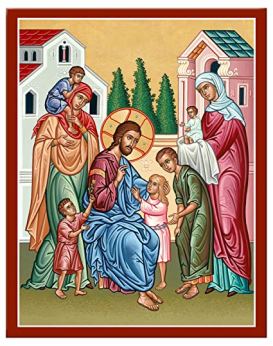
 (pp. 23-27)
It is not very difficult to love those who love us, be patient with those we admire or forgive those who think the way we do. Yet it is difficult to hold back our anger when we believe someone we dislike has wronged us or, “even if we believe in God, not to despise men who do not impress us with any visible marks of greatens.”
Yet, unless we forgive and ask to be forgiven by all, it is pointless to ask God to forgive us, Staniloae tells us.
“To ask pardon of ourselves implies coming down from our pedestal of apparent superiority…”
It is especially excruciating when we humble ourselves to, and ask forgiveness from, those we look down upon or despise. Yet this is the liberating humility we are asked to possess. It is this humility that frees us from the “stories” we construct about ourselves, the pressure of keeping them up in public to gain acceptance and admiration, the tyranny of constantly judging others and, hence, our isolation. Forgiveness, Staniloae concludes, “implies that we recognize our dependence on others.”
In the previous chapter he showed that it is only through loving others that we become free. In this chapter, he demonstrates that it is only through forgiving and asking forgiveness from others that we will be renewed.
We should be constantly penitent to others, he states,even if we don’t believe we have ever harmed them. We should step down from the pedestol of self-righteousness and self-assurance we have constructed for ourself remembering that: “I can never be quite certain that I have had no part in creating the unavoidable frictions which constantly arise among men and which also affect me.”
We are in union with God only when we are in communion with others, including the dead. We pray for the dead, forgiving them and hoping that others will pray for us after our death.
The church is never static, Staniloae tells us. Through the on-doing movement of prayer and forgiveness the church is constantly renewed. It is “a dynamic communion, made up of men and women who are sinners and who, at the same time, are being cleansed by their prayer for one another…”
Salvation is not a solitary act. Each of us is saved by taking part in this sacred choreography of people and actions.
So the church becomes as it were a symphony for Christ, and so she reveals the mystery of her continuity and the mystery of the perpetual renewal of her youth.
SUMMARY OF WHAT WE READ
How does a Saint think, act and experience reality? What makes one saintly? This is the topic of Staniloae’s first chapter, Tenderness and Holiness. Having emptied himself of personal agendas and passions, the Saint is able to listen to, understand and empathize with others. His heart is open and alert to the world, finding meaning in every living being. He has erased from his heart indifference, judgment and desire to control and, thus, he is filled with respect, love, empathy and tenderness for others,
In the next chapter, Pure Prayer or Prayer of the Heart, he compares the true prayer of the heart to meditative practices that confuse sentimentality with true union with God; have no horizon or perspective and, hence, get you lost in an “impersonal infinity.” Conversely, the only purpose of the true prayer of the heart is an encounter with “a personal God.” It engages both mind and heart but begins at the heart and love for God.
In Holiness: God Shining through the Mystery of Man, Staniloae talks about the paradoxical nature of holiness— “God, the unfathomably personal, imparts himself in his transcendence. Hence the paradoxical nature of holiness: it is one and the same time transcendence and self-disclosure, or communication.”
“Holiness is the radiance from a transcendent person whose object in revealing himself is to raise us up to him.”
Through this two-way communication, we become free to be our authentic selves– liberated from the stories we weave about ourselves and have come to believe, hence becoming confused about what is reality and what is fantasy.
Though God is transcendent, our nature “has thus become the vehicle for the manifestation of the infinite light, or the infinitely profound consciousness of the divine hypostasis.”
In Prayer and Freedom, Staniloae shows us that only prayer can free us from the enclosed space of our making—our passions and the limits of natural law and ourselves. Prayer is continuous communication with God but can only free us from our “enclosures” through love for others. Relationships of pure love can free us and save us from darkness, but can only be entered by free men. You cannot love others when trying to dominate them.
In the last chapter, Forgiveness and the Renewal of the Church, Staniloae inserts the element of forgiveness. We can only receive forgiveness if we forgive and ask forgiveness from others, he says. In the previous chapter he shows us that in love, we forgo personal agendas and the desire to control. Likewise, in forgiveness we have to strip ourselves from every ounce of pride.
Another form of this humility is the acceptance that we can only be saved in relationship to others and are not self-contained islands. Restating his continuous theme of community as prerequisite for salvation, he compares the church to a “symphony” of constant mutual forgiveness and prayer that keeps renewing the church unto the ages.
 Have you ever thought of prayer as the only avenue to true freedom? This is assertion that Staniloae makes in this extraordinary short chapter in which he defines freedom—a freedom that is achieved through prayer and forms the foundation of our relationship with God and fellow men.
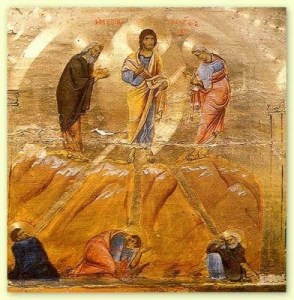 reaching the upper echelon of spiritual maturity, theosis, there are no longer dueling dualities and fragmentation.
 St. Maximos’ writings penetrate the depths of our lifelong journey toward theosis. But what do our transformed lives look and feel like in our everyday lives? How might we perceive and be impacted by a saint? Eminent theologian, Dumitru Staniloae, poses that question in this short book Prayer and Holiness:
 Staniloae’s saint, however, is not concerned with our potential for realizing our artistic or professional talents, achieving recognition and possessing material things or status. Instead, he helps us uncover the true capabilities God embedded in our nature– such as those for love, hope, inner peace, redemption, compassion, union with God– and the path for fulfilling them.
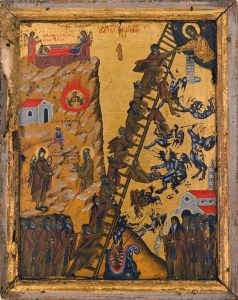 In these paragraphs, St. Maximos explores the extent of individual responsibility with regard to joy and pain, and thus uncVovers the foundations of change and spiritual growth.
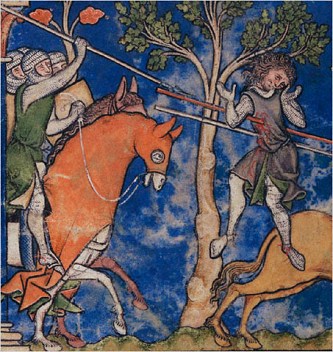 self (self-esteem), pride and the longing for popularity. The common denominator in all three is the belief that our authentic, God-given selves have low value in themselves. We are simply not enough as we are. What’s more, we cannot rely on God alone to confer on us the kind of importance that will impress others. Hence, we take on the task ourselves, obsessively building and presenting our own fiction about us, rather than understanding God’s will for us.
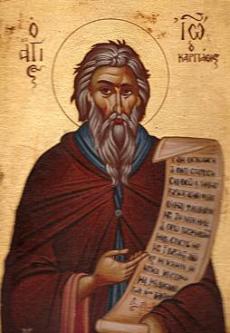 Latimer is the hero of a little book by George Elliott called “The Lifted Veil.” He is the heir of a wealthy family, a man of deep poetic sensibility with near prophetic insight into others’ souls. Upon his brother’s death, not only does he become the sole heir of his father’s vast fortune, but he also marries his brother’s fiancée, a woman he desired and thought himself in love with. Then why is it that we see him defeated, despondent, bereft of joy and hope in the middle of what should have been a fulfilling and joyous life?
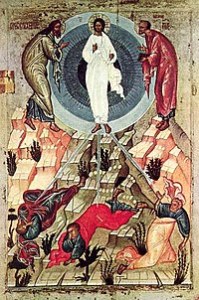 and enter into a union with Him.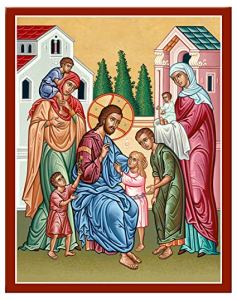

 Readings in Philokalia