SPIRITUAL KNOWLEDGE: ST. PETER OF DAMASKOS

(Philokalia Vol. III, G.E.H Palmer, Philip Sherrard, Kallistos Ware)
We are born, St. Petter writes, with an innate spiritual knowledge which we later lose through passions.

What is the meaning of spiritual knowledge then?

It is the ability to see things as they really are in nature, to uncover the mystery that lies beyond appearance and physical attributes.

The intellect then sees things as they are by nature ….by others it is called spiritual insight, since he who possesses it knows something at least of the hidden mysteries- that is, of God’s purpose- in the Holy Scriptures and in every created thing.

Passions, however, “darken the intellect” and confine us to the surface of things.

Living on the surface is easily exhaustible. We burn through material things, praise, career milestones etc., rapidly. We are, thus, on a frantic course of constantly replenishing the supply and yet, for many of us, a sense of emptiness remains.

The Greeks had an extraordinary understanding of the physical and intellectual realm, we are told, yet they lacked spiritual knowledge, defined here as the discernment of purpose.

Without understanding purpose, one cannot penetrate the true meaning of all things.

…for the pagan Greeks perceived many things but, as St Basil the Great has said, they were unable to discern God’s purpose in created beings, or even God Himself, since they lacked the humility and the faith of Abraham.

Viewed through the lens of spiritual insight, then, nothing is insignificant and worthless. Nothing is dismissible.  Nothing is empty. Even a crumb of bread or a boring daily routine points to a larger meaning and purpose.

 (God’s purpose) is clearly revealed in the world to come, when everything hidden is disclosed.

A significant difference between Christian and other types of meditative traditions is that the true meaning of things cannot be deciphered through our own resources and will not be revealed without faith.

The gnostic ought not to rely in any way on his own thoughts, but should always seek to confirm them in the light of divine Scripture or of the nature of things themselves. Without such confirmation, there can be no true spiritual knowledge, but only wickedness and delusion.

God and his purpose are there to be discovered—ensconced in simple and lofty things alike, in humble daily discourse and scriptural writings. All we have to do is rid ourselves of passions, assumptions and obsession with our self-interest so we can be filled with spiritual knowledge and allow for the revelation to occur.

We have all seen little children’s wonder-filled eyes as they explore the world with hope, faith and awe. Everything is new, sacred, and filled with unending mysteries and delights. Even a speck of dust is a source of wonder and reveals to them something about a vast and unknown world. This is the state of innocence we must achieve in order to be filled with spiritual knowledge.

Peter expounds on the meaning of faith. It is, he says, going beyond the visible to extrapolate the invisible.

A person is said to have faith when, on the basis of what he can see, he believes in what he cannot see.

Yet, discerning hidden mysteries is not enough if you lack faith in their creator. “But to believe in what we can see of God’s works is not the same as to believe in Him who teaches and proclaims the truth to us.

Faith must proceed from the head to the heart. According to St. St. Peter, it is through suffering that one acquires faith, then fear, then awe, then gratitude and humility and, finally, true spiritual knowledge.  

In this way, the person who in faith endures these trials patiently will discover, once they have passed, that he has acquired spiritual knowledge, through which he knows things previously unknown to him, and that blessings have been bestowed on him. As a result, he gains humility together with love both towards God, as his benefactor, and towards his fellow-men for the healing wrought by God through them.

PATIENCE AND ENDURANCE: St. Peter of Damaskos

(Philokalia Vol. III, G.E.H Palmer, Philip Sherrard, Kallistos Ware)

When I look for an urgent answer or solution, my double “A” personality often kicks in. There have been times when, in my impatience for an immediate answer, I stayed up until dawn, doing Google research, drawing diagrams, or making lists. Even if I become exhausted and unproductive, I am sure that if I just persist a little more, I can get results within my timeline.  

How much of our inner peace do we sacrifice, in our efforts to force our agenda and sense of timing on the universe?

St. Peter advises that we apply “conscious awareness of our own hearts” to discern God’s perspective and free ourselves from the frantic pressure to bring about the results we want, when we want them.

Harmonizing our will with God’s brings about patience and endurance. Patience and endurance are not simply two of many virtues. They are, instead, the preconditions for possessing our soul. If fact, St. Peter believes that “you come into yourself when you endure with patience.”

Without patient endurance, we live in turmoil, burdened by the idea that unless we force results, nothing worthwhile will happen in our lives. We are riddled with anxiety, uncertainty, and lack of clarity as our passions obscure the true nature of things.

How many tears would I like to shed whenever I gain even a partial glimpse of myself! If I do not sin, I become elated with pride; while if I sin and am able to realize it, in my dismay I lose heart and begin to despair. If I take refuge in hope, again I become arrogant. If I weep, it feeds my presumption; if I do not weep, the passions visit me again… In my ignorance all things seem contradictory, and I cannot reconcile them.

Patience is living in God’s infinite time. It is abandoning the futile struggle of forcing our temporal time frame on a God-created universe. It is acquiring humility to put aside our own assumptions; and discernment to understand the connecting links among things that appear contradictory.

Patient endurance is not a solitary virtue but the result of a transformative process that begins with faith and fear of God. As we no longer see ourselves as the center of the world, we experience awe, humility, clarity of vision, gratitude, and inner stillness.

For if such endurance is not born in the soul out of faith, the soul cannot possess any virtue at all.

The working assumptions for most of us are that we acquire and increase knowledge through our own efforts, feel justifiable pride in it, receive recognition for it and continue to ascend levels of accomplishment until we become “experts” or wise. It thus becomes easy to judge others, become anxious about winning arguments and impose our opinions which we “know” to be wiser than others.’  

St. Peter, and other desert fathers, turn this value system on its head. Spiritual knowledge begins with acknowledgment of ignorance and the recognition of the need of God’s grace.  

For this reason it is good to say ‘I do not know’, so that we neither disbelieve what is said by an angel nor place credence in what occurs through the deceitfulness of the enemy.

Giving up the pressure of forcing results and timelines, judging, impressing, and dominating others frees us from impatience. We now live in God’s time, realizing that experience and insight may take years, rather than hours or days, and that we cannot achieve anything on our own without God’s grace.

We may wait for many years until the answer is given us, unsolicited and unperceived, in the form of some concrete action- as someone has put it with reference to the contemplation of created beings. In this way we reach the haven of active spiritual knowledge. When we see this knowledge persisting in us over many years, then we will understand that truly we have been heard and have invisibly received the answer.

God-Given Understanding: St. Peter of Damaskos

(Philokalia Vol. III, G.E.H Palmer, Philip Sherrard, Kallistos Ware)

In this chapter, St. Peter talks about the reading of scriptures and, by extension, the nature of knowledge and learning in a God-centered universe.

Reading the scriptures, he tells us, is not simply a matter of intellectual comprehension but one of “understanding.” “Understanding” takes us beyond simply deciphering words or obscure allusions to uncover “all the mysteries hidden by God in each verse of Scripture.”

The goal of reading the scriptures, then, is not textual understanding but illumination.

He who pays attention to them is illumined, while he who pays no attention is filled with darkness.

St. Peter allows that there can be multiple levels of understanding of the scriptures, and indirectly, of a God-created world depending on. These depend on::

Our ability for inner stillness “because such devotion concentrates the intellect: even if it is attentive for only a short time.” 

Our ability for patience and humility in acknowledging our human limitations and the needs of God’s grace:

“God is beyond comprehension, and His wisdom is not limited in such a way that an angel or man can grasp it in its entirety.”

    Our own intellectual readiness, ability and the experiences we bring to the text. Knowledge is not absolute or immediate but a continuing process.

    This is clear from the fact that we often understand a certain passage in the course of our contemplation, grasping one or two of the senses in which it was written; then after a while our intellect may increase in purity and be allowed to perceive other meanings, superior to the first.

    What is significant is that the various levels and types of insight we may derive at different times are not contradictory.

    For this reason, the same saint may say one thing about a certain matter today, and another tomorrow; and yet there is no contradiction, provided the hearer has knowledge and experience of the matter under discussion.

    While we may perceive only an object’s texture, color, weight, or placement, all these attributes are part of a whole and not at war with each other.

    However, to perceive the connections among seemingly disparate or conflicting attributes and the ways these mystically unite into a harmonious whole, we must move beyond intellectual knowledge to a state of union with God. It I then that we will be able to see the world through his eyes rather than our limited, fragmented perception.

    This is why the Hesychasts describe theosis as a state, characterized by simplicity and the lack of contradiction. All connections are now visible, and the world makes sense.

    New criticism which came into prominence after the 60s with thinkers like Claude Lévi-Strauss (structuralism) and Jacques Derrida (deconstructionism) focused on multiple interpretations of a literary work. Instead of looking only at the text or its author, it aimed   at deciphering how the parts (including its patterns and the reader’s perspective) combine to contribute to its meaning.

    There is a fundamental difference, however, between St. Peter’s “understanding” and new literary criticism.

    Multiple levels of understanding in scriptural reading contribute to the true meaning of the text when “everything said or done should be said or done in accordance with God’s intention…”

    In new criticism and much of modern thought there is no agreed-upon purpose and truth. Meaning is not understood as something eternal and immutable but as something constantly shifting, while there is no acknowledgement of the validity of truth.

    Knowledge, and the deciphering of meaning, in modern thought depend on the individual while, for St. Peter, understanding depends on the grace of God.

    The acquisition of mystical knowledge is like a gradual journey through multiple stages of understanding, not unlike the journey from passions to a state of theosis.

    Knowledge and learning then progress from listening in humility to the illumination of understanding the hidden mysteries to a mystical union with God in which we experience the world through his eyes. We now see what might be contradictory in human eyes, as harmonious and complementary through God’s eyes.

    St. Peter cites St Dionysios the Areopagite in his observation “that to the ancients the resurrection of the dead appeared contrary to nature, whereas to himself and to St Timothy-and in the eyes of the truth itself- it is not contrary to nature, but it transcends nature.”  St. Peter believes that such phenomena do not simply transcend nature but in “god’s eyes” they are nature.

    in God’s eyes, however, it does not transcend nature, but is quite natural; for God’s commandment is His nature.

    The ultimate level of understanding then is to go beyond our narrow human capabilities and comprehend the scriptures, and a God-created universe, through God’s eyes. Tit is through this union that the invisible threads of meaning are uncovered, and harmony is experienced.

    Dispassion of the Soul,   St. Peter of Damaskos

    (Philokalia Vol. III, G.E.H Palmer, Philip Sherrard, Kallistos Ware)

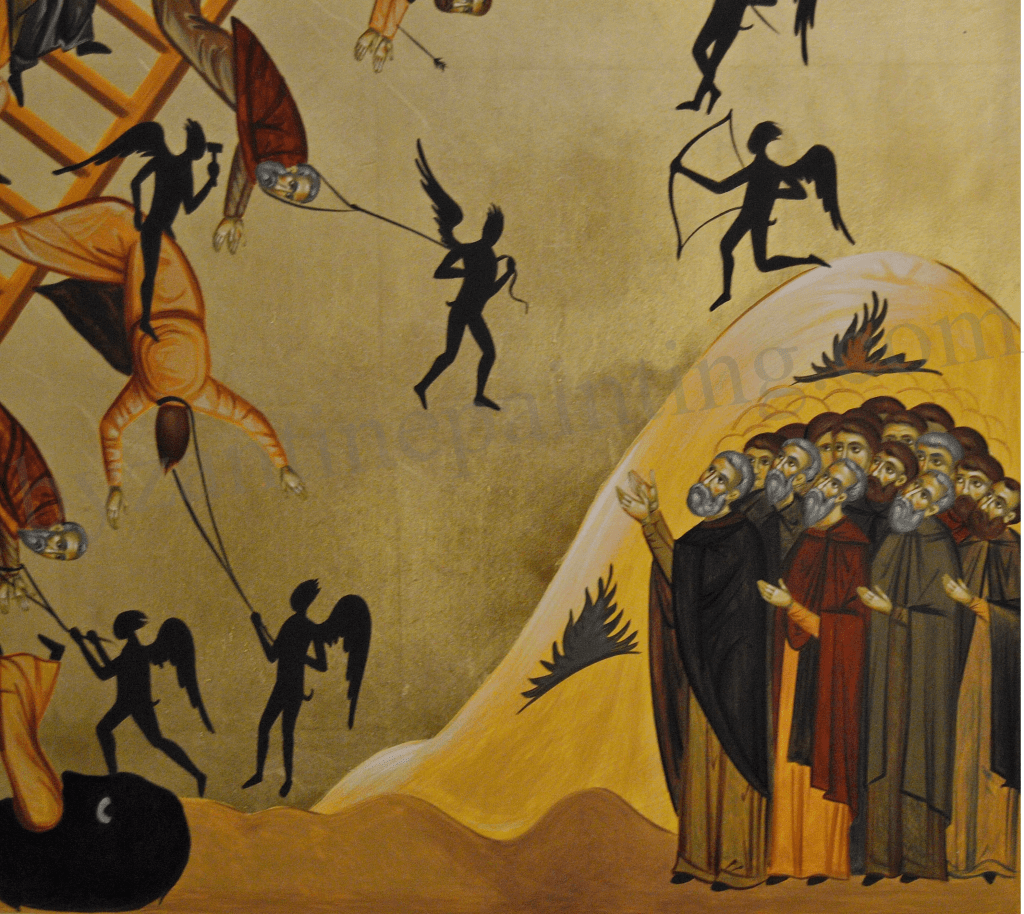
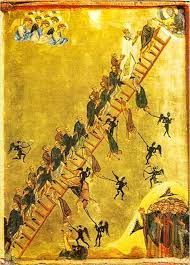
    So here we are. St. Peter has taken us to the upper rungs of the ladder that leads to union with God or theosis: dispassion.  

    Dispassion is quintessential to theosis.

    We simply cannot experience the presence of God within us if our hearts and minds are weighed down by passions—jealousy, revenge, recurrent thoughts, preoccupation with self, pursuit of other’s admiration, control or power and all other passions.

    What are passions?  “They are intense emotions that attract and hold attention,” Mitchell B. Liester writes in “Hesychasm – A Christian Path of Transcendence.” https://www.scribd.com/document/136038409/Hesychasm-A-Christian-Path-of-Transcendence

    An emotion or thought becomes a passion when it turns obsessive and veers out of control. When it is it and not we who direct our lives under God’s guidance.  

    When we are driven by our whims and passions, we are not free.

    Hesychasm is a mystical, contemplative monastic practice of the Eastern Orthodox Church, rooted in early Christianity whose goal is to excise passions and achieve inner stillness and union with God. Hesychast monks, through practice and contemplation, are on a perpetual quest for a state of dispassion.

    “Hesychia” (state of dispassion), Liester says, “is a state of detached awareness experienced during regular spiritual practice.”  

    Dispassion is not a single virtue, we are told by St. Peter. Neither is it an isolated, ecstatic moment.

    Dispassion is not a single virtue but is a name for all the virtues. A man is not merely one limb, for it is the many limbs of the body that constitute a man; and not merely the limbs, but the limbs together with the soul.”

    The cooperation and synchronicity of God’s universe are important here. Everything is connected and interdependent.

    A true state of dispassion and inner stillness cannot be simply willed by solitary acts, such as intoxication or special exercises. It requires the intervention of the Holy spirit and immersion in a virtuous way of life and thinking.

    It is, St. Peter tells us, not only “the union of many virtues,” but when “the place of the soul is taken by the Holy Spirit.”

    Dispassion is not the same as indifference or contempt. On the contrary, dispassion nurtures and enables love since it is no longer subsumed by our own self-interests, passions, and preoccupations.

    “Soulless” dispassion, driven by our ego rather than the Holy Spirit, is empty.

    For all activities described as ‘spiritual’ are soul-less without the Holy Spirit,” we are told. In fact, “unless the Holy Spirit is present can one properly speak of the all-embracing virtue of dispassion.

    Without love, inspired by the Holy Spirit, dispassion could become mere indifference, coldness, isolation and even pride.

    And if someone were to become dispassionate without the Holy Spirit, he would really be, not dispassionate, but in a state of insensitivity.

    Dispassion, in fact, “is a strange and paradoxical thing.” We are detached in that we are not driven by the whim of passions, but we still suffer, empathize with others’ pain and experience deep love. Through our dispassion we become connected because no passion is clouding our discernment and love of others.

    St. Peter contributes his own depiction of passions as slavery and dispassion as freedom – a recurrent theme in patristic writers.

    For they say that because of his amity with passions the highly impassioned person becomes like a prisoner and as one who is insensate. Sometimes because of his desire for something he rushes forward thoughtlessly like some mindless thing; The man who has attained dispassion becomes impassible out of his perfect love for God.

    How does dispassion bring us freedom?

    Which one of us doesn’t get inflated by praise and become depressed when we don’t have the success and recognition we imagined? St. Peter describes the passion-driven man as a leaf in the wind, inflating or deflating on the basis of others’ perception of him.

    The person who has achieved dispassion, however, can experience passions without allowing them to drive and overwhelm him

     Dispassion does not mean that a man feels no passions, but that he does not accept any of them. Owing to the many and various virtues, both evident and hidden, acquired by the saints, the passions have grown feeble in them and cannot easily rise up against their soul. Nor does the mind need to keep constant watch on them, because its concepts are at all times filled with study and intercourse with most excellent subjects, which are stirred n the intellect by the activity of insight. As soon as the passions begin to arise, the mind is suddenly ravished away from them by a certain insight that penetrates into the intellect, and the passions recede from it as being inactive. St. Isaac, the Syrian

    Imagine for a second, if we were simply impervious’ “to attacks from demons and vicious men. Imagine if we could experience perceived insults, demotions, loss, misfortune, disdain from others etc. as if they “were happening to someone else, as was the case with the holy apostles and martyrs” rather than as profound disappointments, and triggers for anger, revenge and despair.

    This is the true freedom dispassion brings about.

    When he is praised he is not filled with self-elation, nor when he is insulted is he afflicted.

    What is Humility? St. Peter of Damaskos

    (Philokalia Vol. III, G.E.H Palmer, Philip Sherrard, Kallistos Ware)

    Humility is acknowledged as the greatest of all virtues, the prerequisite for salvation, “the dwelling-place of the Holy Spirit, the gateway to the kingdom of heaven, that is to say, to dispassion.

    What is humility and how can we view it in the 21st century when we have, apparently, forgotten its original Christian meaning?

    Over the centuries many have come to equate humility with humiliation, weakness, lack of self-confidence and even contempt for oneself.

    In the Christian framework, however, humility leads to dispassion rather than self-hatred. We are freed from passion and, hence, we are no longer dependent on others’ praise or contempt to feel uplifted or humiliated.

    Strength is often viewed as success in getting our way, eliciting admiration, or imposing our will on others. While these may give temporary relief, they do not lead us to inner peace and union with God.

    Paradoxically, it is only by lowering ourselves that we are uplifted:

    …without humility his road is full of pain and his effort useless. Humility bestows complete repose upon whoever possesses it in his heart, because he has Christ dwelling within him.

    Humility is not second nature to us. St. Peter makes it clear that acquiring humility is not a passive act of resignation but a fierce fight against the grain—-against our desires, passions, habits, assumptions, and norms of thought and behavior.

    St. Peter believes that humility is achieved by first embracing suffering. Acceptance of suffering has a foundational role in the path toward theosis. This acceptance, however, is the opposite of acquiescence or hopelessness. We are active agents on our path to salvation rather than cogs in a mere transaction. We do not simply accept suffering to gain salvation as a reward, St. Peter tells us, but “to press forward actively and deliberately to embrace the sufferings of Christ.”

    That is, by accepting suffering, we gain humility and empathy and ascend to a higher level of theosis, or union with God.

    To acquire humility, one must have achieved knowledge and discrimination. St. Peter has already warned us about our vulnerability to delusion. When our mind is filled with self-absorbed thoughts, opinions, and conclusions we cannot perceive the world or ourselves clearly and dispassionately:

    But above all it is the offspring of discrimination, the virtue that illumines the farthest reaches of the intellect.

    A state of humility is also a state of continuous learning and discovery. Instead of laboring to justify ourselves, impress others and impose our will and opinion, we can look at the world with fresh,= eyes and open heart to always discover things that we do not know.

    But he who has tasted spiritual knowledge knows at least to some extent that he is ignorant, and so his knowledge becomes for him a source of humility.

    In becoming aware of his own weakness and ignorance, he recognizes that he has now learned what once he did not know; and this allows him to see that just as he used not to know these things, and was unaware that he did not know, so there are many other things which he may later be able to learn.

    The opposite of humility is pride. Unlike humility, it distances us from God as it puffs us up with delusions and invests our most precious resources in total immersion in, and reaction to, the external world. As an example of pride, Peter brings up he Pharisee who thanked God loudly for being superior to others:

    The Evangelist-or, rather, God, who knows men’s hearts- was right to say that he spoke ‘to himself’, for the Pharisee was not speaking to God. Even though orally he did seem to be speaking to God, yet God who knew his self-applauding soul says that he stood and prayed not to God but to himself.

    Without humility and the dispassion it leads us to, no matter how lofty or clever our words, we find ourselves going in endless circles, talking to no one but ourselves and never reaching our true destination.

    Knowledge or Delusion? St. Peter of Damaskos

    (Philokalia Vol. III, G.E.H Palmer, Philip Sherrard, Kallistos Ware)

    Without knowledge no one does anything good,” says Peter of Damaskos in his chapter, “The Remembrance of Christ’s Sufferings.”

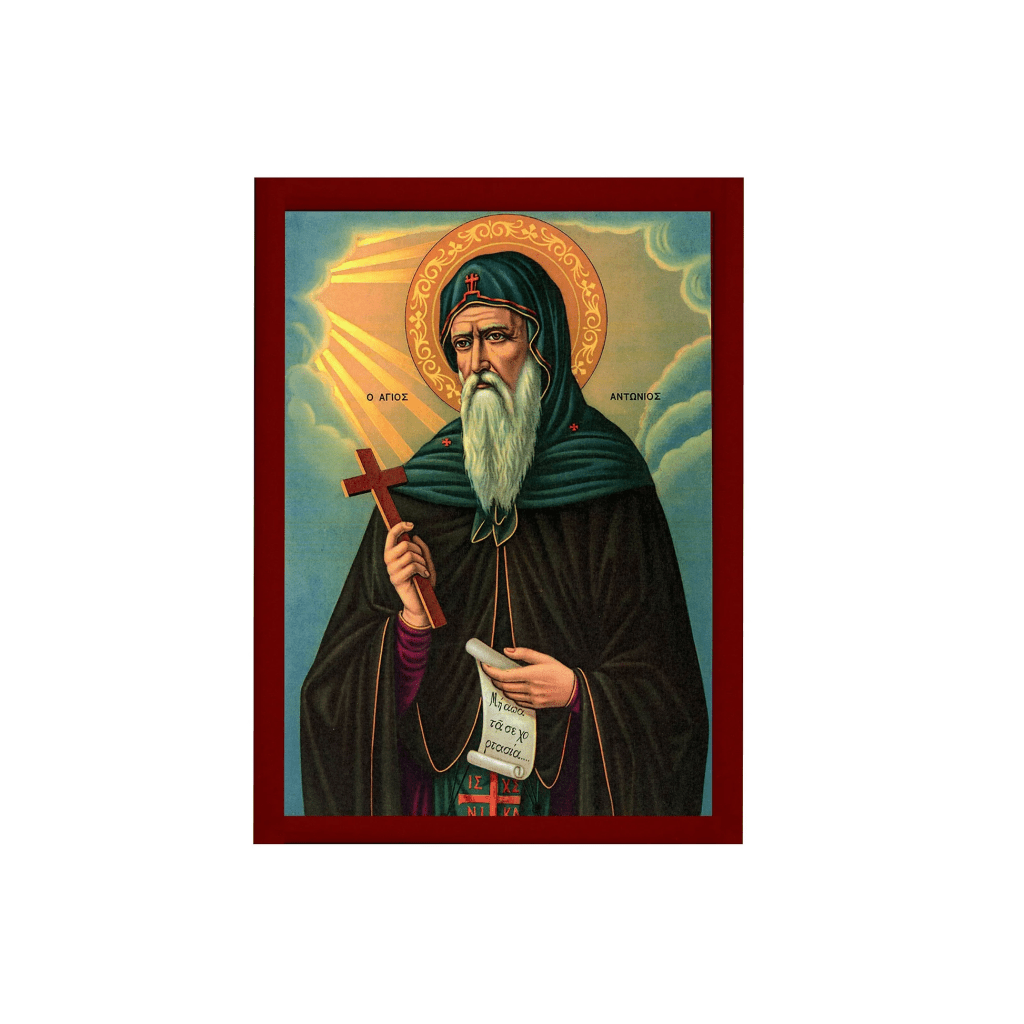
    We are told the story of a virgin who came up to an Abba while he was sitting with St. Anthony. She proudly listed all the hardships she had endured for the sake of Christ — fasting, scriptural readings, poverty and abandonment of all earthy things. Yet, when questioned by the elder, it turned out that her strict, ascetic practice had not resulted in dispassion, compassion, love, and discernment. 

    ‘Go, get to work,” admonished the elder, “you have accomplished nothing.

    St. Peter concludes:

    So, with this virgin: because she did not know what was really needed, she laboured in vain.

    What is it that the virgin should know?

     Let’s first keep in mind that the “spiritual knowledge” we read about in patristic writings differs a great deal from all other forms of knowledge–theoretical and empirical.

    The goal of spiritual knowledge is not merely to preserve in memory facts or ideas but to acquire discernment– the ability to distinguish between good and evil, truth and falsehood.  It is mystical knowledge, acquired through direct participation in God’s essence. It results in transformation rather than mere enrichment. Archim. Dr. Teofan Mada, considers spiritual knowledge, “knowledge in and by love.

    The Eastern Church Fathers underlined the specificity of the christocentrical knowledge as knowledge in and by love that is a knowledge of love which binds the one who knows and the one who is known. In love and by love, one can discover the way of Truth and of the real knowledge.

    Teofan Mada, Love and Knowledge in the Patristic Tradition https://www.orthodox-theology.com/media/PDF/IJOT1.2014/Mada.pdf

    Paradoxically, achieving discernment requires that we empty, rather than add to, our intellect.  

    we withdraw our intellect from all that it has known or heard, and concentrate it on the remembrance of God…

    Thoughts, images and even colors cloud our mind. Our own will and personal interpretation of things prevent us from discerning God’s revelations and uniting with Him.   

    To be ‘in peace’ means to have no thoughts, whether bad or good, because, as Evagrios says, if the intellect perceives something, it is not in God alone, but also in itself. This is true; for since God is undetermined and indeterminable, without form or colour, the intellect that is with God alone should itself be without form or colour, free from all figuration and undistracted. Otherwise, it will be subject to demonic illusion.

    Most of us take for granted that our basic perception of objects and ideas, and the distinctions between good and evil, true and false, are self-evident to us and we are firmly in control of our reality. We are confident that the way we perceive and understand the world is correct and do not see illusion as an imminent threat.

    Imagine the level of humility and spiritual openness it must take to silence all conclusions and assumptions inside us. Yet this is the magnitude of humility required to truly empty ourselves and learn.  

    For St. Peter and the other Dessert Fathers true humility and transparency mean the willingness to admit that no true knowledge can be achieved without God’s help and, hence, that we are in danger of self-delusion at every moment in our lives.

    There is nothing astonishing in the fact that the devil assumes the form of ‘an angel of light’ (2 Cor. I I : I4), for the thoughts that he sows in us also appear to be righteous when we lack experience. Humility is the gateway to dispassion, said St John Klimakos;

    We are constantly on a precipice, requiring constant vigilance and spiritual knowledge to keep from falling. St. Peter makes mention of two disciplines for preventing delusion:

    1. Meditation on the suffering of Christ as it humbles us and joins us to Him in love.
    2. The need for a spiritual counselor, mentioned multiple times in these chapters.   

    …unless we have taken advice from someone of experience, we should not entertain any thought, whether good or bad, for we do not know which it is. For the demons take whatever shape they want and appear in this way to us, just as the human intellect is shaped by what it wants and is coloured by the forms of the things that it perceives.

    Just as the first step in Alcoholic Anonymous is to admit our powerlessness over our addiction, we must admit our powerlessness over illusion and ask for help. 

    Just as someone who lacks horticultural knowledge, on seeing the flower and thinking that it is the fruit, rushes forward to pick it, not realizing that by picking the flower he destroys the fruit, so it is here: for, as St Maximos puts it, ‘To think that one knows prevents one from advancing in knowledge. ‘2 Hence we ought to cleave to God and to do all things with discrimination. Discrimination comes from seeking advice with humility and from criticizing oneself and what one thinks and does.

    The Difference Between Pleasure and Joy, Emptiness and Stillness: St. Peter of Damaskos

    (Philokalia Vol. III, G.E.H Palmer, Philip Sherrard, Kallistos Ware)

    The mortification of passions, the title of this chapter, is difficult for secular people to grasp. We read about the dessert fathers exhorting other monks to refrain from any pleasure of material things and cannot envision the value of a joyless life.    

    By means of these the soul in its anguish renounces the joys of this world and even the food we eat.

    Let’s dig deeper into the text for the true meaning of mortification that applies to both laity and monks, the present and the past.

    Peter is not asking us to abandon a joyful and peaceful state of mind and capriciously torture ourselves. Being led by passions means a life of anguish, marked by unfulfilled longing, loneliness, jealousy, stress, torturous ambitions, anger, self-pity, obsessive thoughts of revenge, desires to control, etc.  

    It is in this state of anguish that the soul is willing to abandon all that may trigger a state of turmoil.

    When our hearts and minds are cluttered with passions, there is no room for God’s presence, no time or desire to do “good things.”

    When this happens, the soul will not be interested in any good work, but will struggle to fulfil the desires of the body and of its own indwelling passions, piling darkness upon darkness, and gladly accepting to live always in utter ignorance.

    For St. Peter and other desert fathers, however, there is a difference between pleasure and joy.

    The temporary pleasure we receive from succumbing to an impulse for quick pleasure and comfort is not equivalent to true joy.

    “Detachment is mortification,” we are told, are “not of the intellect, but of the body’s initial impulses towards pleasure and comfort.”

    The quest for comfort and pleasure dominates our worldview in our time yet, cliché though it may be, they do not contribute to lasting joy and peace.

    Lasting joy, we are told, is derived from the presence of God in you and your union with him. The road from detachment to theosis is one from anguish to joy.

    Likewise, the sense of emptiness experienced when our life’s pursuit is aimed only at material things on the surface, is the opposite of the stillness achieved when we are free from obsessions and at peace. This is when we free to contemplate, not only the visible and immediate but the things that matter most:

    “Not of created beings in this present life, but of the awesome things that take place before and after death.”

    This is when true joy sets in:

    When a man has been sufficiently illumined, however, to perceive his own faults, he never ceases mourning for himself and for all men, seeing God’s great forbearance and what sins we in our wretchedness have committed and still persist in committing. As a result of this he becomes full of gratitude, not daring to condemn anyone, shamed by the profusion of God’s blessings and the multitude of our sins.

    HOPE AND FAITH: St. Peter of Damaskos

    (Philokalia Vol. III, G.E.H Palmer, Philip Sherrard, Kallistos Ware)

    pp.224-227

    HOPE

    Staring out the double glass doors into my garden, I can see a tiny sparrow laboring hard to break down a huge peanut into tiny pieces that can fit in his mouth. At first, it seems impossible but after 10-15 minutes I watch him swallow the first, tiny morsel he laboriously extracted from this peanut. What propelled him to steal from the squirrels a piece the size of his little head and then spend over 20 minutes to consume it? How did he know he would succeed? St. Peter would point this out as an example of the hope God endowed us with. It is this hope that keeps despair at bay and gives purpose to our lives. One cannot simply live without hope.

    For St. Peter, hope is not absolute assurance of results, but reasonable expectation born of experience. We are willing to restrain ourselves and suffer sacrifices—undergo harsh diet and exercise routines, endure sleepless nights of studying for an exam or put in extra hours at work—because we have experienced the results in ourselves or others. It is hope, then, that drives our lives beyond the confines of simple gratification of immediate needs and endows them with meaning. 

    Outwardly,” St. Peter writes, people “sacrifice immediate advantages, but in reality, even if they forfeit what they sacrifice, through their patient endurance they gain what is of far greater value.”  This is why ‘through hope were they made perfect’ ( cf. Heb. 1 1 : 39-40 ).

    As Christians, our greatest hope is gaining eternal life. Yet how do we maintain such hope without having experienced salvation. “No one has risen from the dead so that we can know what rewards to expect,” St. Peter says.

    The path to God, however, is not based on empirical knowledge but on faith. “We walk by faith, not by sight‘ ( 2Cor. s : 7)  says St Paul, quoted by St. Peter. We choose to leap beyond linear thinking and put our faith in Jesus Christ who experienced death and life eternal.

    THE INADEQUACY OF FAITH ALONE

    St. Peter does not present our journey as an intellectual process leading to a state of enlightenment. We have faith in God’s promise of eternal life and, hence, are willing to engage in the harsh, daily, unglamorous work of living a life of virtue in the hope of achieving it. St. Peter is, in fact, practical and matter of fact about what a life of virtue entails, using the mundane analogy of a businessman.

    Yet just as it is impossible for someone engaged in business to make a profit on the basis of faith alone, so it is impossible for anyone to attain spiritual knowledge and repose before he has laboured in thought and action to acquire the virtues.

    FAITH AND GRATITUDE

    St. Peter asks us a difficult question. Why is it so difficult for us to live lives of gratitude in which we are aware of God’s gifts at every moment of the day?

    He compares us to small children who take everything for granted and “do not recognize the bounty of their parents.” He sees us as “inexperienced students” who resent the effort of learning and doing homework because they do not yet recognize the value of knowledge and the difference it will make to their lives. Christ, he reminds us, shed his blood for us yet all he wants from us in return is to “choose to receive His blessings.”

    Faith begets gratitude and gratitude nourishes hope.

    THE BURDEN OF OUR OWN WILL

    What keeps us from faith is the all-powerful pull of our own will. After a visit to my adult daughter a few weeks ago, I realized the source of the tension between us and my disappointment in the visit. Her life simply did not follow the script I had envisioned for her—from the way she conducted her social life to the way she kept house and the number of pets she had.

    How many of us are terrified to let go and accept God’s will without manipulating things, judging others, controlling situations, and exerting enormous efforts to ensure that things go our way?

    It is difficult to experience faith and gratitude when we are at war with God’s will—resenting, holding grudges, becoming angry and disillusioned. St. Peter sums up the paradox:

    He who wishes to inherit the kingdom of heaven, yet does not patiently endure what befalls him, shows himself even more ungrateful than such a child.

    STILLNESS

    Hope requires stillness and, in that sense, simplicity. This means a renunciation of one’s will and the illusion of controlling the universe. No matter how much we worry about the safety of loved ones travelling or rage about the speed of modern life that makes air travel a necessity, our thoughts, complaints, and desires cannot keep their airplane safely in the air.

    This is why the first virtue St. Peter advises us to acquire is stillness in the sense of renunciation oF worldly passions and, hence, simplicity.

    For nothing darkens a man’s mind so much as evil, while God reveals Himself to simplicity and humility, not to toil and weariness.

    FEAR AND GRATITUDE ( St. Peter of Damaskos, Philokalia, III)

    pp 216-218

    St. John Klimakos calls fear “unmanly and puerile cowardice” and lists it as one of the passions that must be overcome to ascend the ladder to God. Then why do the proverbs call fear of the Lord “the beginning of wisdom,” and St. Peter of Damaskos tells us that without fear of God “one cannot possess any blessing?”

    Fear of God is different from other fears that besiege us. Loss of faith, and hence of fear of God, does not rid us from the incapacitating fears and anxieties that torture us. On the contrary, fear of God frees us from the slavery to the whims of our own will and the fears and anxieties of a heart devoid of inner stillness.

    Fear of God leads to the fulness of love. Our journey to theosis, full participation in God’s person and love, begins with this fear.

    St. Peter identifies two types of fear.

    1. The “introductory” or slave-like fear of God that serves to restrain us from sin. One cannot trust a toddler to be near a stove without burning himself or near harmful substances without the risk of swallowing them. It is the fear we gain with experience that prevents us from harm as adults. Similarly, “through fear of what threatens us,” St. Peter says, “we sinners may be led to repent and may seek to find deliverance from our sins. 1 Moreover, when it is active within us, this introductory fear teaches us the way that leads to life, for it is said: ‘Shun evil, and do good’ (Ps. 34 : 14).”
    2. The perfect and pure fear occurs at a more advanced spiritual state, when it is no longer a struggle to live a life of virtue. We now experience fear, not because we are afraid of punishment for our sins but because, having experienced God’s love and true nature, we cannot imagine a life without this proximity to him. We are able to perceive our fragility and are afraid of losing the ecstatic joy we have felt in his presence.  “The person who has been purified continues to feel fear, not because he sins, but because, being human, he is changeable and prone to evil. In his humility, the further he advances through the acquisition of virtues, the more he fears.

    At the state of perfect fear, we have undergone profound spiritual transformation. Rid of passions, we have gained the spiritual clarity and discernment to perceive our own vulnerabilities. Instead of avoiding grief, suffering and fear at all costs, Christian thought embraces them as gateways to joy and salvation.

    The more a man struggles to do good, the more fear grows in him, until it shows him his slightest faults, those which he thought of as nothing while he was still in the darkness of ignorance. When fear in this way has become perfect, he himself becomes perfect through inward grief: he no longer desires to sin but, fearing the return of passions, he remains in this pure fear invulnerable.

    We are filled with gratitude for the gift of this joy and with humility, realizing that it can be lost to us in a flash.

    The man seized by spiritual joy is astounded by the many blessings that God in his grace has bestowed on him, and he loves his Benefactor.

    I well remember my decision to become an atheist at the age of 11, eager to rid myself of the fear of punishment by God. Yet, St. Peter forces us to reconsider fear and reflect on the kind of lives we might lead, without any fear of God.  

    In today’s secular worldview, for example, the notion of “gift” is replaced by the notion of “deservedness.”  We worked hard all our lives and deserve a luxury car. I am worth this upscale apartment or expensive make up. If we “deserve” the good things in our life, why be grateful? And if we are worthy of them, then there must be people who are not worthy.

    But he who obdurately indulges in luxury and splendour, like the rich man (cf.Luke 16 : 19 ), thinks that those consumed by fear and facing trials and temptation suffer in this way because of their sins, and in his comfort and complacency he despises them.

    In St. Peter’s worldview, loss of fear of God leads to division, complacency, delusion, and entitlement. Perfect fear of God engenders humility, and lives lived in gratitude.  

    IN THE COMPANY OF SAINTS: STILLNESS AND HUMILITY IN TRUE KNOWLEDGE ( St. Peter of Damaskos, Philokalia, III)

    First, St Peter of Damaskos wants you to know that salvation is possible for everyone—lay persons or monastics, rich or poor, young, or old—in any circumstances. 

    I have said something about the righteous men of old who were saved in the midst of great wealth and among sinners and unbelievers, although they were by nature the same as us… I have also mentioned details from the lives of us monks, so that we may know that we can be saved in any situation.

    Our human tragedy is not sin alone but the lack of will “to attain perfection.”

    Think of a day in our lives. Most of us are motivated by the desire to succeed, control, accumulate, achieve, secure others’ admiration, or check off items on our to-do list, rather than by a longing for salvation.

    St. Peter also wants you to know that help for the salvation of our souls is all around us if we have the inner stillness and humility to discern it.  These two are, in fact, prerequisites for “the understanding of the mysteries hidden in the divine Scriptures and in all creation.”

    We must remember, too, that stillness is the highest gift of all, and that without it we cannot be purified and come to know our weakness and the trickery of the demons; neither will we be able to understand the power of God and His providence from the divine words that we read and sing.

    Without humility, we cannot open our hearts and eyes to “draw upon the greater experience and knowledge of good and evil” that the saints wrote about.  Our minds are clouded by a labyrinth of revolving thoughts and rigid preconceptions.

    We are incapable of perceiving, let alone utilizing, the help God richly provides for our salvation.  Certainty in our own knowledge and our scripts for what life should be like, we are left alone and exhausted as we struggle to impose our own will and draw only on ourselves for help.

    Abandoning our own will means that we are no longer exiled by a “dividing wall;” no longer tossed about by passions in contradictory directions.

    I have also mentioned details from the lives of us monks, so that we may know that we can be saved in any situation, provided we renounce our own will. Indeed, unless we do this, we cannot find rest, nor can we gain either knowledge of God’s will or practice in fulfilling it. For our own will is a dividing wall, separating us from God.

    St. Peter urges us to abandon lives of isolation and anxiety, and become united with a harmonious confluence of people, sources of learning and divine grace that God makes available.

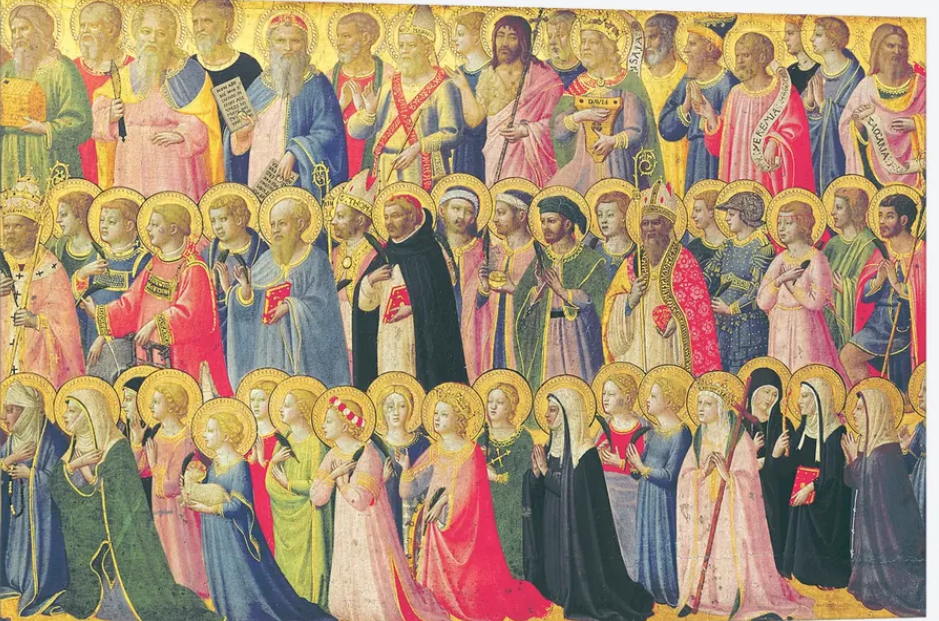
    He reassures us that we are not left unaided but are surrounded by saints and supported by an enormous trove of accumulated knowledge: “it has been granted to us to learn about the meaning of these things from the saints.”

    While in patristic texts there is an emphasis on practice vs. abstract theology, Peter emphasizes both. In fact, he stresses the value of books, specifically, as pathways to salvation.

    Moreover, it increases our wonder at and comprehension of God’s ineffable love: how by means of pen and ink He has provided for the salvation of our souls and has given us so many writings and teachers of the Orthodox faith.

    Abandoning our will also means that we leave behind our temporal, sequential notions of time to enter a different dimension:

    For Sunday is called ‘day one’ and not the first day of the week, says St John Chrysostom; such is the way in which it is singled out and described prophetically in the Old Testament. It is not simply enumerated with the other days of the week, such as the second day and the rest.

    This is not simply a call for rote memorization but one for entering sacred time. In liturgy, for example, past events are re-experienced over and over again in the present. The texts for the Matins of Holy Friday, sung on Holy Thursday, for example, mourn Christ’s crucifixion today and not two thousand years ago.

    Today He who hung the earth upon the waters is hung on the tree,

    The King of the angels is decked with a crown of thorns.

    He who wraps the heavens in clouds is wrapped in the purple of mockery.

    St. Peter invites us to abandon our will and become integrated with the shared universe God has created for our salvation in the eternal sacred Today. This is a universe populated by clues for God’s presence, spiritual guides, symbols and tools for uniting with God.

    In the world drawn by St. Peter, everything points to something else so that all is integrated and connected to enable us to achieve salvation. Greg Peters refers to the textual integration as “intertextuality.” 

    When reading texts like those penned by Peter of Damascus, it is good to work with the assumption that Peter employed a literary technique now known as. This technique, as defined by Julia Kristeva, is the theory that “Every text builds itself as a mosaic of quotations, every text is absorption and transformation of another text” https://acst-unity-production-realm-eng-uploads.s3.amazonaws.com/uploads/file_attachment/attachment/9af8a01d-d6b5-4b30-861e-56009bde3ccd/Peter_of_Damascus_and_Early_Christian_Sp.pdf

    True knowledge of God and salvation consist of interrelated pieces whose presence and connections can only be deciphered when our souls are still and free of the tyranny of our own will.