ST. MAXIMOS, THEOLOGY, THE DIVINE ECONOMY, AND VIRTUE AND VICE, First Century, #44-54

The outcome of every affliction endured for the sake of virtue is joy,” St. Maximos says, debunking popular misconceptions of Christianity as a joyless religion that demands a life of pure suffering. It is in fact natural for man to seek goodness and joy, “because He [God] wishes to unite us in nature and will with one another, and in His goodness urges all humanity towards this goal…”
Then why is our single-minded pursuit of happiness and comfort so profoundly misaligned with the Christian concept of joy? St. Maximos dissects, not only the nature of joy in Christ but also our motivations and misperceptions that distort our direct line of vision to God and path to true joy.

In the first place, there is a contradictory interrelationship between good and evil, suffering and joy. “The outcome of every affliction endured for the sake of virtue,” St. Maximos tells us, “is joy, of every labour rest, and of every shameful treatment glory; in short, the outcome of all sufferings for the sake of virtue is to be with God, to remain with Him forever and to enjoy eternal rest.”

St. Maximos is unequivocal about this direct correlation between pain and joy. This is why he finds the worldly “strategy” of taking shortcuts to joy and avoiding pain misguided and destructive.

St. Maximos’ view is that joy (rest or glory) is simply the outcome of virtue rather than an end unto itself; and that virtue, in turn, entails discipline and suffering. Seeing happiness as an outcome rather than entitlement, as the result of virtuous labor rather than as a direct goal is a radical departure from the secular worldview.

The goal, St. Maximos says, is not pleasure itself, but love; and, through love, unity with others and ourselves. Love leads to peace and unity when it stems, not from self-interest, but mercy toward others.

45· Because He wishes to unite us in nature and will with one another, and in His goodness urges all humanity towards this goal, God in His love entrusted His saving commandments to us, ordaining simply that we should show mercy and receive mercy (cf.Matt. (5 :7).

Ironically, preoccupation with self-interest and self-love deprive people of true joy and peace, “alienating them from each other and perverting the law, have cut our single human nature into many fragments.”

St. Maximos creates a type of hierarchy of joy. Sensual pleasures, including praise, status or control, are not lasting and, hence, at the bottom rung of a ladder.

Instead of inner peace, they fill us with anxiety, greed for more of the same, dependency, envy of others, insecurity or constant and rapid shifts from pleasure to disappointment. Hence sensual pleasure divides rather than unite.

“The self-love and cleverness of men have so extended the insensibility which they introduced into our nature and which now dominates it, that our nature, divided in will and purpose, fights against itself.”

In contrast, in perfect love, we have “a single identity of will and purpose, free from faction, among many or among all; for the property of love is to produce a single will and purpose in those who seek what pertains to it.”

Nothing is more destructive to human soul than division.

If by nature the good unifies and holds together what has been separated, evil clearly divides and corrupts what has been unified. For evil is by nature dispersive, unstable, multiform and divisive.

St. Maximos does not present our propensity toward personal pleasure and self-interest as merely evil but as tragic. Mired by delusion we fail to understand the complementarity of joy and pain. The more we pursue shortcuts to pleasure, without pain, the more pain we create for ourselves.

He [man] struggles with all his might to attain pleasure and he fights against pain with immense zeal. By doing this he hopes to keep the two apart from each other – which is impossible – and to indulge his self-love in ways which bring only pleasure and are entirely free from pain. Dominated by the passion of self-love he is, it appears, ignorant that pleasure can never exist without pain. For pain is intertwined with pleasure, even though this seems to escape the notice of those who suffer it. It escapes their notice because desire for pleasure is the dominating force in self-love, and what dominates is naturally always more conspicuous and obscures one’ s sense of what is present with it.

St. Maximos does not merely depict the evil of transgression but the tragedy of delusion. Through delusion and ignorance, we become caught in a downward spiral of addiction. The more we seek pleasure the greater the pain and emptiness we inflict.

Thus, because in our self-love we pursue pleasure, and because – also out of self-love – we try to escape pain, we generate untold corrupting passions in ourselves.

St. Maximos asks us to abandon this futile pursuit and show mercy to ourselves. He presents God’s mercy as salvation to our self-inflicting tortures, bringing unity to fragmentation.

In His love for man God became man so that He might unite human nature to Himself and stop it from acting evilly towards itself, or rather from being at strife and divided against itself, and from having no rest because of the instability of its will and purpose.

Thus, because in our self-love we pursue pleasure, and because – also out of self-love – we try to escape pain, we generate untold corrupting passions in ourselves.

By “casting off desire for pleasure and fear of pain, we are freed from evil self-love and are raised to a spiritual knowledge of the Creator.” Our desire for joy is not eradicated but elevated. Even self-love is transformed to a higher level of spiritual self-love.

In the place of the evil self-love, we receive an uncorrupt and spiritual self-love, separated from affection for the body; and we do not cease to worship God through this uncorrupt self-love, always seeking from Him sustenance for our souls.
 

ST. MAXIMOS, THEOLOGY, THE DIVINE ECONOMY, AND VIRTUE AND VICE, First Century, #39-#44

theosis1In the previous passages, St. Maximos established love for one another as the ultimate destination and actualization of God’s love.

“This is the door through which a man enters into the Holy of Holies and is brought to the vision of the unapproachable beauty of the Holy and Royal Trinity.3 9.”

Having taken us on a journey of imagining the possibilities of unity with God and the potential of “joining together in [ourselves] the broken fragments of human nature” and experiencing divine love, St. Maximos helps us understand why threats to this unity —such as “our love for things corruptible” — are “fearful and heinous.”

He focuses on us as persons and dissects the paradox and tragedy of the war we wage against the god within us, smothering the possibility of entering “into the Holy of Holies,” experiencing goodness, compassion, love and truth.

Absurdly, in the pursuit of material goods, comfort, lives free of hardship or inconvenient restrictions, “we deliberately kill the life that was given to us by God as the gift of the Holy Spirit.”

Yet “self-love,” and the compelling push to fulfill passions that drive us, are deceptive. Our busy lives of breathless activities and deadlines, our drive to fulfill ambitions and others’ expectations; the fantasies, disappointments and recriminations we nurse, drown out our true selves. We forget that “God made us so that we might become ‘partakers of the divine nature’ (2 Pet. 1 : 4) and sharers in His eternity, and so that we might come to be like Him (cf. 1 John 3 : 2) through deification by grace.”

St. Maximos exhorts us to denounce deceptive passions that, while promising pleasure, sever us from God and our true nature. He reminds us that it is only…

…. through deification that all things are reconstituted and achieve their permanence; and it is for its sake that what is not is brought into being and given existence. 4 3 . If we desire to belong to God in both name and reality, let us struggle not to betray the Logos to the passions, as Judas did (cf. Matt. 26 : 1 4- 1 6), or to deny Him as Peter did (cf. Matt. 26 : 69-

In denouncing passions, we must be aware that the devil is “cunning.” We are tricked into seeing indulgences and transgressions as minor and unimportant, and justifying passions. “I am only human,” “how can anyone forgive such insult?” “To succeed at work today, you have to be tough and a little ruthless,” “I give up! What did I ever do to deserve such injustice at my job or ingratitude from my children?…” By minimizing, indulging and justifying, we fail to discern our true enemy and, hence, to recognize the need to engage in a spiritual warfare.

Discernment doesn’t evolve naturally by itself. St. Maximos calls for deliberate “training”—”“Those who have trained themselves to prefer ‘truth to self-love will certainly know this fear (of love for things corruptible, deliberately killing the life that was given to us by God.)

Cherry-picking which commandments to observe and when, or even cultivating virtues and selectively abstaining from some passions, simply is not enough for salvation. St. Maximos asks that we become spiritual athletes and commit to daily spiritual warfare.

Rebelling as we do against God through the passions and agreeing to pay tribute in the form of evil to that cunning tyrant and murderer of souls, the devil, we cannot be reconciled with God until we have first begun to fight against the devil with all our strength. For even though we assume the name of faithful Christians, until we have made ourselves the devil ‘ s enemies and fight against him, we continue by deliberate choice to serve the shameful passions. And nothing of profit will come to us from our peace in the world, for our soul is in an evil state, rebelling against its own Maker and unwilling to be subject to His kingdom. It is still sold into bondage to hordes of savage asters, who urge it towards evil and treacherously contrive to make it choose the way which leads to destruction instead of that which brings salvation.


ST. MAXIMOS, THEOLOGY, THE DIVINE ECONOMY, AND VIRTUE AND VICE, First Century, #32-#39

Even though St. Maximos talks about our potential to “become gods, receiving from GodFr Maximos our existence as gods,” it is our ability to use these God-given powers the way they were meant to be used, that leads to deification. Intelligence, for example, does not fulfill its mission merely as the means for theoretical knowledge but as the instrument for discernment. In this section St. Maximos singles out three spiritual powers– spiritual knowledge, desire and dispassion—that, through intelligence, are enabled to fulfill the goal they were meant for: the attainment of union with God.
From these three powers of the soul we should actualize that divine and blessed love on account of which they exist, that love which joins the devout man to God and reveals him to be a god.

Hence, St. Maximos returns to the ultimate centrality and meaning of love through the path of theology and spiritual knowledge.

How is divine love manifested?

“The actualization and proof of perfect love for God.” St. Maximos says, “is a genuine and willing attitude of goodwill towards one’s neighbour.”  Love is not solitary or one directional. St. Maximos is adamant about it. You simply cannot attain love for God without love for your neighbors.

 For he who does not love his brother whom he has seen, ‘ says St John, ‘cannot love God whom he has not seen’ (1 John 4: 20).

Christ provides the model for how we should love and care for one another.

We should care for ourselves and each other in the way that Christ Himself, who patiently suffered for us, has already shown us in His own person.

St. Maximos uses a series of paradoxes to illustrate how love for God, and its actualization in our love for others, defies logic and saves.

  • By giving of ourselves, we free ourselves from the tyranny of fear:

 For the sake of love all the saints resisted sin, not showing any regard for this present life.

  • By separating from the world, we achieve unity with God and one another rather than isolation

It [love] unites men to God and to one another, and on this account contains the unchanging permanence of all blessings.

  • By giving of ourselves, we become more than ourselves, and by dispersing love we become whole rather than divided:

And they endured many forms of death, in order to be separated from the world and united with themselves and with God, joining together in themselves the broken fragments of human nature.  

 And satisfying our desire through material things does not quench our thirst. Instead, it kills “the life that was given to us by God as the gift of the Holy Spirit.”

Divine love is not a sentiment or emotion. No amount of erudition or askesis will provide true spiritual knowledge and discernment for “The way of truth is love.”

And love is the gateway to theosis, the “Sabbath of Sabbaths,” the realm of understanding beyond words:

This is the door through which a man enters into the Holy of Holies and is brought to the vision of the unapproachable beauty of the Holy and Royal Trinity.

ST. MAXIMOS: Various Texts on Theology, the Divine Economy, and Virtue and Vice First Century

#19-25

“How can God exist if there is so much suffering and injustice in the world?” This is a question often asked, especially when suffering is inflicted on the innocent, and can cast doubts on our faith.

St. Maximos addresses the question squarely. Instead of obfuscating or becoming defensive, he makes a bold case for suffering and hardship  as opportunities for growth and redemption.

If when the flesh has an easy life the force of sin tends to grow stronger, it is clear that when the flesh suffers affliction the force of virtue will also increase. So let us bravely endure the affliction of the flesh, which cleanses the soul’s stains and brings us future glory. For ‘ the sufferings of this present time are not worthy to be compared with the glory which shall be revealed in us’ (Rom.8 : I 8).

 St. Maximos goes even further by using the metaphor of affliction as healing medicine.

When physicians are treating the body they do not administer the same remedy in all cases. Neither does God, when treating the illnesses of the soul, regard a single kind of therapy as suitable for all conditions

 From metaphors of healing, St. Maximos transitions to the concept of discipline–the foundation of, and prerequisite to, spiritual growth.

Nothing disciplines the disposition of the soul so well as the protests of the afflicted flesh. If the soul gives way to them, it will be evident that it loves the flesh more than God. But if it remains unshaken by these disturbances, it will be shown to honour virtue more than the flesh.

“If all the saints had their share of discipline,” he reasons, “we too should thank God that we are disciplined with them, so that we may be found worthy to partake of their glory. For whom the Lord loves He discipline…”

Hence, darkness—hardship, suffering or the temptation of passions—has a place in our salvation.  Without it, we would be unable to exercise free will. Untested virtue is meaningless without the exercise of discipline in making tough choices and resisting temptations.

This is why God placed a blemish—a potential source of suffering–even in the midst of the lush beauty and harmony of Paradise.

St. Maximos gives two contrasting examples of exercising free will in the face of temptation: Adam in Paradise and Christ on the cross.

Faced with temptation, Adam chose to succumb to it. He chose worldly pleasure—pleasing his wife, tasting a forbidden fruit and following sensual desire—over obedience to God.

Christ, on the other hand, accepted God’s will and the suffering it entailed willingly and without protest.

Through their choices, Adam “expelled humanity from Paradise” while Christ “brought the robber into paradise” The risks of their choices were high yet without the hardship and temptations that forced them to make difficult choices what would be the value of easy virtue?

”Let us, then, love the suffering of the flesh and hate its pleasure,” St. Maximos concludes. “For the first brings us in and restores God’s blessings to us, while the second drives us out and separates us from those blessings.”

By accepting suffering, we become joined to Christ and this reach glorification.

“If God suffers in the flesh when He is made man,” Maximos asks, why should we not rejoice when we suffer?”

He continues:

This shared suffering confers the kingdom on us. For he spoke truly who said, ‘If we suffer with Him, then we shall also be glorified with Him’ (Rom. 8 : 1 7).”


KNOWLEDGE THROUGH PARTICIPATION (St. Maximos, Theology, Divine Economy, and Virtue and Vice First Century)

How we get to know God is the topic of the first 9 paragraphs of the first Century of “Theology, the Divine Economy, and Virtue and Vice.”

St. Maximos repeats his frequent theme of the impossibility of complete knowledge of God, using new metaphors and parallelisms.

It is impossible to fully know God because He transcends “the summit of all spiritual knowledge,” he tells us. How could we? God is “an infinite union of three infinites. Its principle of being, together with the mode, the nature and the quality of its being, is altogether inaccessible to creatures. For it eludes every intellection of intellective beings, in no way issuing from its natural hidden inwardness, and infinitely transcending the summit of all spiritual knowledge.

We can only know God by participation through the virtues we cultivate within us. Yet goodness in humans is “substantive since it has an origin, a consummation, a cause of being, an. d motion, so far as its being is concerned, towards some final cause”  

For God, however, “good is that which has no origin, no consummation, no cause of being and no motion whatsoever, so far as its being is concerned, towards any final cause.” God’s existence is prior that that of created things. In contrast, we can only derive our existence through participation in His.

In fact, “Not only is the divine Logos prior to the genesis of created beings, but there neither was nor is nor will be a principle superior to the Logos.”

Hence our knowledge through participation is limited. We cannot participate in God’s essence or be coeternal with Him “who willed [us] to exist.”

Yet how wonderful it is that God made us capable of participating and being “participated in.” Our incompleteness is also our bridge to God and humans, and hope for redemptions. St. Maximos spends some time expounding on the nature of knowledge through participation.

First, knowledge through participation requires mutual desire and a synergistic relationship between God and man:

“…God, in whose essence created beings do not participate, but who wills that those capable of so doing shall participate in Him.”

Secondly, the various modes of participation allow constant renewal.

In his desire, humility and love of man, God “becomes an infant and moulds Himself in [us] through the virtues.”  Thus, He reveals Himself in us according to what each of us is able to accept and understand at any given moment, though His true nature and reasons remain invisible. The multiple and constantly new modes of God’s manifestation in us imply infinite possibilities of growth and continuous renewal.

This is why, St. Maximos tells us,

… the apostle, when wisely considering the power of this hidden activity, says, ‘Jesus Christ the same yesterday, and today, and throughout the ages’ (Heb.r 3 : 8) ; for he sees the hidden activity as something which is always new and never becomes outmoded through being embraced by the intellect.

Thirdly, God gives the energy and tools to participate.

“…it is He who has given to nature the energy which produces its forms, and who has established the very is-ness of beings by virtue of which they exist.”

St. Maximos compares God to an artist. If an artist is able to conceptualize shapes and forms before putting them on the canvass “how much more does God Himself bring into existence out of nothing the very being of all created things, since He is beyond being and even infinitely transcends the attribution of beyond-beingness.”

While we, humans, are created beings and God is unoriginate, He allows us to uncover his presence among created things and decipher the truth.

“It is He who has yoked the sciences to the arts so that shapes might be devised” and so that our intellect can integrate and apply them.

Artists can conceive and re-create shapes and forms; and we apply science and art, intellect and heart to become capable of participating in God at the highest level.


St. Maximos: The Visionary Intellect (2nd century of Theology, #74-85)

In this remarkable section, St. Maximos delves even more deeply into the nature and experience of our relationship with God.
The key presupposition is that our hearts are empty of the thoughts and images that constantly haunt us, overwhelming with constant mental “noise” and feelings of anxiety that silence God’s voice and prevent inner stillness.

Thoughts and opinions are the loudest “noise creators.”

When our intellect has shaken off its many opinions about created things, then the inner principle of truth appears clearly to it, providing it with a foundation of real knowledge and removing its former preconceptions as though removing scales from the eyes, as happened in the case of St Paul (cf. Acts 9:18).

It occurs to me that, for most of my life, the flood of ideas and opinions that I immediately form in my mind through both propensity and academic training, have blocked me from fully even hearing the other person, let alone experience a moment of mental stillness.

For St. Maximos, the opposite of the restless “academic” intellect or of a mindset caught in incessant and anxious thoughts of fantasy, recrimination or self-pity, is what he calls “the visionary intellect.” This visionary intellect abandons this self-made complexity for true “simplicity.”

It has been “stripped of the complex garment of words with which it is physically draped” and gotten “a glimpse of the simplicity that in some measure discloses this principle.”

And the achievement of simplicity and, through it, the true understanding of the principle is not gained by force but “it reveals itself as though in the sound of a delicate breeze.”

To achieve simplicity, we are asked to rid ourselves from entrenched opinions, rambling thoughts and clever comebacks and become writing tablets instead of pen-wielding authors of our stories.

A pure heart,” St. Maximos explains, “is perhaps one which has no natural propulsion towards anything in any manner whatsoever. When in its extreme simplicity such a heart has become like a writing-tablet beautifully smoothed and polished. God comes to dwell in it and writes there His own laws.

Removing the “scales” and entering into increasingly higher levels of knowledge and unity with God is not a one-time achievement but a lifelong process of ascent. St. Maximos is clear about the difficulty of the upward path yet, at the same time, provides comfort and hope. As long as we stay the course and make progress, however small, we become sojourners on the path of salvation.

So long as the soul advances ‘from strength to strength’ (Ps. 84:7) and ‘from glory to glory’ (2 Cor. 3:18), that is, so long as it advances from one degree of virtue to a greater degree and from one level of spiritual knowledge to a higher level, it remains a ‘sojourner’, one who has no permanent home, as in the saying, ‘My soul has long been a sojourner’ (Ps. 120:6. LXX).

The destination of our journey, the “miraculous tabernacle’

…a dispassionate and untroubled state of virtue in which the Logos of God adorns the soul like a tabernacle with the varied beauties of the virtues. ‘The house of God’ is spiritual knowledge compounded of many different forms of contemplation when God dwells in a soul, filling it from the bowl of wisdom. ‘Exultation’ is the soul’s leap of joy at the riches of the virtues. ‘Thanksgiving’ is gratitude for the bountiful outpouring of wisdom. ‘The sound of feasting’ is the unceasing mystical hymn of glory, which exultation and thanksgiving combine to form.

St. Maximos makes another important point about the journey to stillness and union with God. Even though it entails stripping ourselves of worldly pleasures and passions and acquiring Christ’s intellect, “this does not come to us through the loss of our own intellectual power; nor does it come to us as a supplementary part added to our intellect; nor does it pass essentially and hypostatically into our intellect.”

On the contrary, “it illumines the power of our intellect.”

“In my opinion,” St. Maximos continues, “the person who has Christ’s intellect is he whose intellection accords with that of Christ and who apprehends Christ through all things.”

Similarly, even though we are the body of Christ, “we do not become this body through the loss of our own bodies; nor again because Christ’s body passes into us hypostatically or is divided into members; but rather because we conform to the likeness of the Lord’s flesh by shaking off the corruption of sin.”

In the lifelong journey to simplicity and stillness, we shed passions and clothe ourselves in Christ while never losing our personhood. We excise opinions and thoughts, not to become incapable of thinking for ourselves, but to remove the scales that distort our view of the truth and drown the voice of God.


St. Maximos: Dwelling Purely in the Pure Christ (2nd Century of Theology #61-74)

St. Maximos has used an array of evocative metaphors to illustrate difference aspects and manifestations of our journey to God, from purification to illumination and theosis, for example, the three levels of one’s experience of the Sabbath; the passage from Chaldea to Mesopotamia and, finally, the holy land; the symbolic meanings of Saul, David and Samuel.
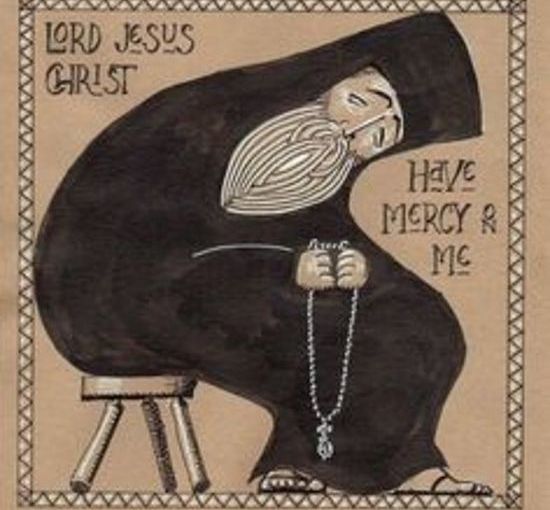
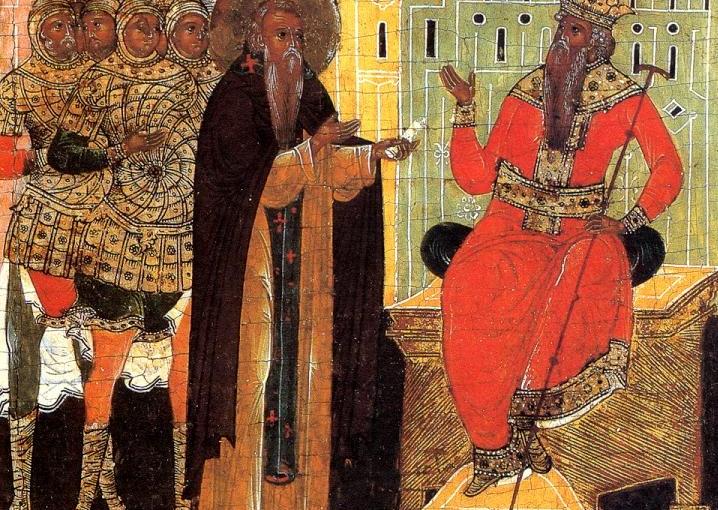
In this passage, he depicts metaphorically the stages in our knowledge of Christ. At first, we are only capable of knowing Christ “in the flesh,” that is, “we come into contact with the letter and not the spirit.” As we progress spiritually, however, we are able to rid ourselves of physical “props”—symbols, words, rituals and “the letter of the law” — and thus “we come to dwell – so far as this is possible for man — purely in the pure Christ.”

“We no longer know Him according to the flesh,” St. Maximos tells us, “because, through the intellect’s naked encounter with the Logos stripped of the veils covering Him.”

In a previous chapter, St. Maximos describes the state if unity with Christ as one in which advance “altogether beyond intellection,’ and beyond duality so that we can dwell in unity.”

Similarly, in this section, we are told that there is a stage of unity beyond simply overcoming the flesh:

“He who is living the life in Christ has gone beyond the righteousness of both the Law and nature. This St Paul indicated when he said, ‘For in Christ Jesus there is neither circumcision nor uncircumcision’ (cf. Gal. 5:6)”

St. Maximos further elaborates on the stage of mystical union with God that transcends any kind of fragmentation.

God manifests this spirit in different forms, depending on our stage of understanding.

“Some are reborn through water and the spirit (cf. John 3:5),” he says. “Others receive baptism in the Holy Spirit and in fire (cf. Matt. 3:11). I take these four things – water, spirit, fire and Holy Spirit – to mean one and the same Spirit of God.”

As long as we understand God in the flesh, through symbols and the letter of the law, we still perceive reality in fragments and be unable to achieve full knowledge of God in His simplicity and unity:

So long as we only see the Logos of God as embodied multifariously in symbols in the letter of Holy Scripture, we have not yet achieved spiritual insight into the incorporeal, simple, single and unique Father as He exists in the incorporeal, simple, single and unique Son, according to the saying, ‘He who has seen Me has seen the Father . . . and I am in the Father and the Father in Me’ (John 14:9-10).

He continues with the metaphor of the ox and the servant and the relationship between them

The Law instituted the Sabbath, says Scripture, so that your ox and your servant might rest (cf. Exod. 20:10).

Both of these are symbols for the body. When practicing the virtues, your body is the ox led by the intellect, undergoing deprivations and discipline to attain virtue. When we advanced spiritually, the duality between body and intellect is erased. Rather than being passively subjugates, the body is now a participant in intellection.

For the contemplative the body is the servant of his intellect, because through contemplation it is now endowed with intelligence and so serves the intellect’s spiritual commands intelligently.

There is harmony in the relationship between the ox and the servant and a shared goal to achieve.

“…the Sabbath signifies the final goal pursued by them throughout the ascetic and the contemplative life, and so it provides for both of them a fitting rest…The Sabbath is a virtuous, dispassionate and peaceful condition of both body and soul. It is an unchanging state.”

While there is flexibility and negotiation in our relationship with God, in that we perceive Him in the form that we are capable of understanding at various stages of our spiritual development, the permanence and unchanging nature of God is the final destination. This is a stark difference between Christian and modernist world views. In the latter, objective, permanent truth does not exist, and our individual perceptions are the only truths that matter.

We are all subject to the great temptation to mistake our own perceptions as the truth or become enamored of the words, themselves, and the means to the end

St. Maximos sums it all up at the last paragraph of this section:

Hence a person who seeks God with true devotion should not be dominated by the literal text, lest he unwittingly receives not God but things appertaining to God; that is, lest he feel a dangerous affection for the words of Scripture instead of for the Logos. For the Logos eludes the intellect which supposes that it has grasped the incorporeal Logos by means of His outer garments, like the Egyptian woman who seized hold of Joseph’s garments instead of Joseph himself (cf. Gen. 39:7-13), or like the ancients who were content merely with the beauty of visible things and mistakenly worshipped the creation instead of the Creator (cf. Rom. 1:25).


Mystical Contemplation (St. Maximos, 2nd Century of Theology, #50-61)

Ascetic practice and contemplation go together, St. Maximos tells us.

What does he mean by “contemplation? “Maximos spends the next 10 or so paragraphs explaining.

He begins with a view of contemplation, not as erudition or engagement in complex, abstract thoughts but, on the contrary, as a respite and utter simplicity. When Saul was “choked by an evil spirit,” he tells us, “David sang to the accompaniment of the harp and gave him relief (cf. 1 Sam. 16:14-23).” In the same way, when the contemplation of God is “mystical,” it is endowed with a sweetness that “brings relief to the intellect possessed by evil spirits and frees it from the bad conscience which chokes it.”

One can think of mystical contemplation as a state of silence and inner stillness; a stage in our relationship with God beyond words, symbols or logical categories. It is, as St. Maximos tells us, a state in which we are able to contemplate God “in His true simplicity, in His principial state with God the Father (cf. John 1:1-2).”

St. Maximos uses 3 Biblical figures as metaphors for three different levels of relationships with God

  • “Saul is the natural law originally established by the Lord to rule over nature. He was therefore deposed so that David might take over Israel. “
  • David is the law of the Spirit – the law engendering that peace which so excellently builds for God the temple of contemplation.
  • Samuel signifies obedience to God…Let Saul convince you of the truth of this: because he did not take Samuel for an adviser in all things he inevitably turned to idolatry, putting his trust in a ventriloquist and consulting her as if she were a god (cf. 1Sam. 28: 7-20).

Another way of viewing various stages in our relationship to God and our capability for understanding him might be through:

  1.  The flesh
  2. Ascetic practice/practice of virtues
  3. Mystical contemplation/complete union with God

St. Maximos describes our unending, upward journey through these stages:

When a man passes from the life of ascetic practice to the stage of spiritual knowledge, he is absent from the flesh (cf. 2 Cor. 5:8). Caught up as on clouds by the more lofty conceptual images into the translucent air of mystical contemplation, he is able to ‘be with the Lord for ever’ (1 Thess. 4:17).

God’s presence in us depends on our contemplative abilities. For example, when “we contemplate Him indistinctly,” we are still tethered to our own desires and preoccupations and can only see Him indirectly, “as though in a mirror,” rather than face-to-face. This is when “the Lord is absent from us.”

When our glimpse of God is indirect and incomplete, He only reveals Himself to us through parables, symbols and stories, even though “He does not contain within Himself parables, symbols and stories needing allegorical interpretation.” Yet, “when He draws near to men who cannot with the naked intellect come into contact with noetic realities in their naked state, He selects things which are familiar to them, combining together various stories, symbols, parables and dark sayings; and in this way He becomes flesh.”

Only when we have achieved “genuine knowledge of created beings,” and are able to “contemplate Him face to face (cf. 1Cor. 13:12), can He be “present within us.”

As long as we are “not yet able to contemplate his conceptual images of things with a pure intellect free from the operations of the senses, we will be ‘absent from the Lord’ (2 Cor. 5:6). But when we are able to “embrace the knowledge of the Lord in its true simplicity, without the help of symbols,” He “will be with us forever.”


Finding the Spring of Life Within Us, St. Maximos, Century, #36-50

Do not despair when you think of how far you have fallen, St. Maximos advises us in the beginning of this section. For all you know God will reach down to you when you least expect it. It could be a sudden insight, a flash of understanding, a small trigger that causes you to change a behavior. Don’t try to second-guess who will ascend to heaven. It is impossible to know. After all, we cannot grasp the meaning of God through sheer reason or by looking for physical evidence, but only through faith. And St. Maximos proceeds to show us how to achieve a true understanding and God and eventually how to unite ourselves to God, beyond understanding.

It is always a temptation to rely on the terms and categories we know when we try to make sense of what we don’t understand. However, if we talk about the Logos only in terms of action or behavior that can be seen, such as in terms of virtues, we make the Logos flesh. On the other hand, if we use higher contemplative forms to understand the mystery of theology, then we make the Logos a spirit.

But even so, we are still either “starting from positive statements about God,” or dealing in negatives “through the stripping away of positive attributes” to “make the Logos spirit or God.” But God transcends both knowing and unknowing. A higher form of contemplation, then, is to start “from absolutely none of the things that can be known” and experience unity with God beyond virtue, thought or understanding.

The thing is that we cannot leap directly to that state of perfect union to God in one fell swoop. We cannot simply engage in meditation or repeat a mantra to reach a state of “enlightenment” without having practiced the virtues and lived a contemplative life. There is no short cut. First, we must “learn to dig wells of virtue and spiritual knowledge within ourselves by means of ascetic practice and contemplation.” Only then can we look within us to ‘drink water from [our] own pitchers and from the spring of your own wells’ (Prov. 5:15).”

Whether we are stuck in ignorance, only able to “contemplate the visible creation solely according to the senses,” or “stick to the mere letter of Holy Scripture,” we cannot go further to “grasp the new spirit of grace.” This is the tragedy of existence without union with God. We look at creation as an end unto itself and a justification of lives driven by our senses rather as evidence of God’s footprint. We fail to see a universe replete with clues that point us to “whence we came, what we are, for what purpose we were made and where we are going.” Without the ability to transcend a world of senses or adherence to form without substance, we “travel through this present age in darkness, fumbling with both hands” in “ignorance of God.”

St. Maximos shows us three options for the life we choose to live. We could doom ourselves to live in the land of the Chaldeans, which “is a way of life dominated by the passions, in which the idols of sins are fashioned and worshipped.” Or we may find ourselves in Mesopotamia, a better destination than Chaldea but still a land caught between two rivers, in a strife between opposites, without reconciliation.

The third and final option, which St. Maximos holds out for us as a vision of hope and inspiration, is to join “the people assembled in Galilee in the upper room with the doors locked for fear of the Jews.” These are “those who, having safely reached the height of divine contemplation in the land of revelations and having shut their senses like doors for fear of the spirits of evil, receive the presence of the divine Logos of God in a way that cannot be conceived. He is revealed to them without the activity of their senses; through His words ‘Peace be with you.’

Only then will we experience a God who “bestows dispassion on them and breathing on them He grants them participation in the Holy Spirit, giving them power to combat evil spirits and showing them the signs of His mysteries (cf. John 20:19-22; Mark 16:17-18).”


St. Maximos, 2nd Century of Theology, #26-36

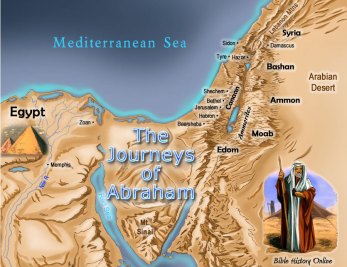
When Abraham left the land of the Chaldeans on his way to the promised land, he stopped at Haran, which was the midway point. In this section, St. Maximos refers to Haran as the symbolic midway point in our spiritual journey, “the intermediate state between virtue and vice – a state not yet purified from the delusion of the senses.”

How many of us find ourselves in some way or another in that midway state; between and betwixt? Not totally lacking in faith but not totally committed to it either; admiring the principles yet unwilling to practice them; loving yet not giving ourselves fully to love without judgment and control; understanding our blessings but not fully experiencing them in the moment.

At the midway point, we have succeeded in leaving behind the “land of the Chaldeans” and so have made some progress.

“He who still satisfies the impassioned appetites of the flesh dwells in the land of the Chaldeans as a maker and worshipper of idols. But when he has begun to discern what the situation is and has gained some insight into the mode of life which nature demands, he leaves the land of the Chaldeans and comes to Haran in Mesopotamia (cf. Gen. 11:31).

But while stuck at the midway point, our imperfection and ambiguity limits and diminishes our view of Christ

As long as I remain imperfect and refractory, neither obeying God by practicing the commandments nor becoming perfect in spiritual knowledge, Christ from my point of view also appears imperfect and refractory because of me.: For I diminish and cripple Him by not growing in spirit with Him, since I am ‘the body of Christ and one of its members’ (1 Cor. 12:27).

To him who is not satisfied with the midway point; who wants to go “beyond that moderate understanding of goodness which he has attained through the senses” and “hasten towards the blessed land, that is, to the state free from all sin and ignorance…” St. Maximos gives practical advice and holds out hope.

How do we get to the blessed land?

  • Not by looking for knowledge or validation outside ourselves but by looking inside.

“Those who seek the Lord should not look for Him outside themselves; on the contrary, they must seek Him within themselves through faith made manifest in action.”

    • By practicing the virtues. And, while sounding simple, this practice is neither as easy as following humdrum routines nor a rush of excitement, such as engaging in stimulating discourses of theology. It involves the difficult, dogged askesis of good; going against the grain of our habits, desires and, often, social norms.
  • By following gradual steps, which St. Maximos lays out:The first by means of practice trains the flesh in virtue, the second illuminates the intellect so that it chooses above all else companionship with wisdom; and through wisdom it destroys the strongholds of evil and pulls down ‘all the self-esteem that exalts itself against the knowledge of God’ (2 Cor. 10:5).”
  • By renewing our efforts at spiritual warfare each and every day; and, by “keeping the Sun of righteousness from setting [inside us] throughout the whole day.”

Hope comes in the knowledge that Christ is not static. “The Logos of God adapts Himself according to each person’s strength.” He “appears sometimes as risen and sometimes as set, depending on the manner of life and the spiritual status and essence or quality of those pursuing virtue and searching for divine knowledge.”

Just as we fall, repent and become renewed, Christ was crucified, died and was resurrected, not only in historical time but in the present, appearing to us “according to the state we are in.”

Christ is always crucified and resurrected and appears to us If we are imperfect, he appears to us imperfect as well.

If for our sakes the Logos of God ‘died on the Cross in weakness’ and was raised ‘by the power of God’ (2 Cor.13:4), then in a spiritual sense He is always doing and suffering this on our account, becoming all things to all men so that He might save all men (cf. 1 Cor. 9:22).

The movement from darkness to illumination and union to God is both historic and present; eternal and continuous; ceaselessly manifested by Christ to different individuals and in various circumstances.

…the Logos appears sometimes as risen and sometimes as set, depending on the manner of life and the spiritual status and essence or quality of those pursuing virtue and searching for divine knowledge.

There is no end to the movement of continuous ascension. Even the new testament is not a historical end point but a harbinger of the future, “leading our souls forward:”

Just as the teachings of the Law and the prophets, being harbingers of the coming advent of the Logos in the flesh, guide our souls to Christ (cf. Gal. 3:24), so the glorified incarnate Logos of God is Himself a harbinger of His spiritual advent, leading our souls forward by His own teachings to receive His divine and manifest advent.

And this is the most reassuring manifestation of hope, constantly leaving open the possibility of becoming unstuck from the midway point and heading to the blessed land.