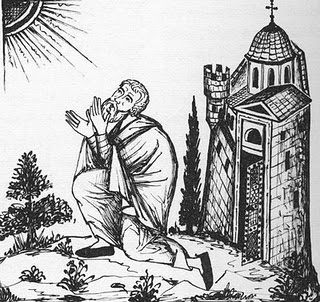
STEP #3: EXILE

The concept of exile takes us even beyond renunciation and detachment.
Exile goes beyond just leaving material things behind. It is a state of mind and manner of living in which “we live “a hidden life, an invisible intention, unseen meditation, desire for humiliation, longing for hardship, constant determination to love God, abundance of charity, renunciation of vainglory, depth of silence.”
Exile is not the result of anger, bitterness, or despair.
It is not from hatred that we separate ourselves from our own people or places (God forbid!), but to avoid the harm which might come to us from them.
“Exile” means having a hidden life that is so different than the lives of most others, that we feel like we are speaking a foreign language.
He is an exile who, having knowledge, sits like one of foreign speech amongst people of another tongue.
An exile is a fugitive from every attachment to his own people and to strangers.
This is a step that seems difficult to put into practice because it requires us to renounce relationships that are precious to us. However, let’s consider than St. John addressed monks. Let us also consider that such texts employ narrative conventions we would call rhetorical exaggerations to make the point of their critical importance.
How do we apply these principles?
We are asked not to “associate with people of the world or approach them.” He admonishes us that even our “attachment either to some particular relative or to strangers is dangerous. Little by little it can entice us back to the world, and completely quench the fire of our contrition.”
It seems extreme but isn’t this what AA and other addiction treatment programs advise? The first step is humility in recognizing that you are powerless over substances, things, feeling, behavior, or people you have an unhealthy attachment to. Having recognized that you are vulnerable to temptation, you deliberately avoid it. You stop going to bars, hanging out with those addicted to alcohol, drugs, or unhealthy behavior. You change your habits and way of thinking step by step.
A state of exile grows out of our admission of vulnerability. In other words, it requires humility.
We have no problem in understanding physical addiction, yet isn’t sin an addiction—a state when passions drive your life and you are no longer in control of your body and soul?
St. johns advies:
“Run from places of sin as from the plague, for when fruit is not present, we have no frequent desire to eat it.”
The hardest part for us to accept is the need to renounce your family.
Look, beware, lest you be exposed to the deluge of sentiment through your attachment to the things of your home, and all that you have be drowned in the waters of earthly affection. Do not be moved by the tears of parents or friends; otherwise you will be weeping eternally. When they surround you like bees, or rather wasps, and shed tears over you, do not for one moment hesitate, but sternly fix the eye of your soul on your past actions and your death, that you may ward off one sorrow by another.
Monastics, of course, must leave their family behind and renounce the world. Yet St. John is not asking us to literally hate and abandon our families but to prioritize our values. Christians are asked to love God above all else.
The last step in the Ladder of Divine Ascent is faith, hope and love. Once you have achieved this ultimate level of complete union of God, you are capable of true love, not sentimental or romantic love. You are in a state of inner stillness in which we can truly see, listen to and love others.
Putting God first does not mean abandoning the children but, for example, facilitating their salvation rather than pushing them to pick the most prestigious college or job or to succeed a level above their peers,
St. John advises us to note the temptations that come with a life of exile. Among us is the danger of feeling so superior that we consider it our job to teach and save others.
In trying to save the careless and indolent along with themselves, many perish with them, because in course of time the fire goes out. As soon as the flame is burning within you, run; for you do not know when it will go out and leave you in darkness. Not all of us are required to save others. The divine Apostle says: ‘Each one of us shall give account of himself to God.’4 And again he says: ‘Thou therefore who teachest another, teachest thou not thyself?’1 This is like saying: I do not know whether we must all teach others; but teach yourselves at all costs.
In pursuing exile, John advises us to avoid extremes. He also wants us to understand that the state of inner freedom that exile brings about, can also elicit passions such as pride and contempt for others. He stresses the need for humility in acknowledging our own weaknesses and vulnerabilities. Such acknowledgment of our powerlessness justifies the sacrifices he is asking for.