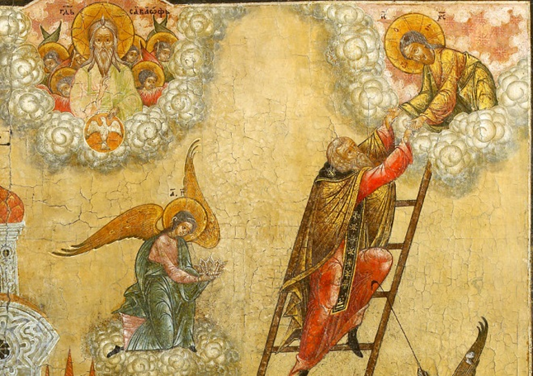
“We are like purchased slaves, like slaves under contract to unholy passions” John writes in the beginning of the chapter. The metaphor compares lives filled with passions to slavery. John’s mastery of the human soul shows another, more insidious dimension of this slavery—the longer we stay in it the less we desire freedom because we can neither remember nor imagine what freedom looks, feels and tastes like. Isn’t it why abused wives, addicts or abusers stay in destructive relationships, even though the right choice seems so logical and simple to those on the outside? Abuse, violence and dysfunction become the norm after a while, and they can no longer remember or envision what health looks like.
Not so long ago, I would have been dismissive of anything resembling silence. How boring! Who would actually pursue it? For most of us, living with noise and inner clutter is all we have known and defines normal. The Fathers, however, considered the practice of inner stillness an essential foundation of spiritual life. Being silent is not the same as practicing inner silence. You can be quiet on the outside but tortured by the constant noise of racing thoughts and lingering resentments on the inside.
Metropolitan Jonah defines inner stillness as “conscious communion’ with God.” He continues: “Inner stillness is not merely emptiness. It is a focus on the awareness of the presence of God in the depths of our heart. One of the essential things we have to constantly remember is that God is not out there someplace. He’s not just in the box on the altar. It may be the dwelling place of His glory. But God is everywhere. And God dwells in the depths of our hearts. When we can come to that awareness of God dwelling in the depths of our hearts, and keep our attention focused in that core, thoughts vanish.
How do we do this? In order to enter into deep stillness, we have to have a lot of our issues resolved. We have to have a lot of our anger and bitterness and resentments resolved. We have to forgive. If we don’t we’re not going to get into stillness, because the moment we try our inner turmoil is going to come vomiting out. This is good – painful, but good. Because when we try to enter into stillness and we begin to see the darkness that is lurking in our souls, we can then begin to deal with it. It distracts us from trying to be quiet, from trying to say the Jesus Prayer, but that’s just part of the process. And it takes time.”
John emphasizes the role of despondency in preventing us from union with God. To achieve stillness, we must be driven by love for God and the desire to experience the joy and sweetness of his presence. This spiritual state requires that any trace of despondency be shed from our soul. “For to link despondency to the loving of God,” John writes, “is rather like committing adultery.”
John talks about the clarity we achieve through inner stillness and silence: ‘Stillness of the soul is the accurate knowledge of one’s thoughts and is an unassailable mind.” He writes:
“The start of stillness is the rejection of all noisiness as something that will trouble the depths of the soul….Close the door of your cell to your body, the door of your tongue to talk, and the gate within to evil spirits.” Yet being quiet or away from noise in nature does not necessarily imply stillness. Inner stillness is practiced “in the deep spaces of the heart.”
When you have arrived at the” final point,” however, fear and rejection of noisiness are no longer concerns because you are immune to them and cannot even detect them.
 Readings in Philokalia