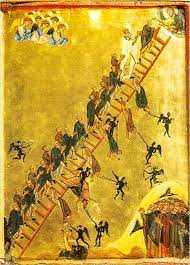
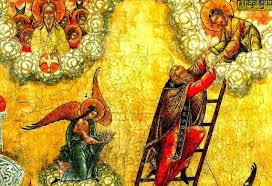
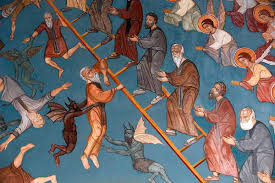
THE LADDER OF DIVINE ASCENT BY JOHN CLIMACUS: ON TALKATIVENESS & DESPODENCY (Steps 11 and 13)

Have you ever felt like you had to keep talking, not because you enjoyed it, but because you saw it as your responsibility to fill any awkward gaps of silence in the conversation? Or because you couldn’t stand the thought that someone may have been unaware of your accomplishments or your expertise on a topic?  Or because you were sure that if you persisted long enough, you would eventually be able to persuade the other person that you were right?  

In these situations, you usually know on some level that your motives are not just to communicate but to avoid becoming vulnerable or to make sure you are not ignored, disrespected or undervalued.  This is why  you feel listless or anxious and may leave a gathering with a sense of emptiness or exhaustion rather than the satisfaction of having connected with another human being.

Talkativeness, St. John tells us, is a grievous offense. Preoccupation with what we say and should say does not leave us with enough inner silence to be able to listen. It squanders our resources outward; strips us from inner peace and blocks spiritual nourishment leaving us vulnerable to despair.  Like gluttony, talkativeness is an addiction; and like all addictions, it drives and controls the “talker,” rather than be controlled by him. Once you abandon self- discipline and the dike bursts open through what John calls “a relaxed lifestyle,” it is very difficult to mend the hole and stem the flood.  As John says:

“It is hard to keep water in without a dike.”  

No wonder John calls talkativeness “the darkening of prayer” and gateway to despondency.

Why is it that talkativeness leads to despondency? Talkativeness, John tells us, encourages the talker to dwell on destructive trains of thought such as recollections of wrongs or bragging.  Compulsive talking can easily evolve into gossip or slander; tempt us to boast, lie or deceive in efforts to impress or manipulate others. 

Despondency or tedium of the spirit,” according to John, is “the paralysis of the soul.” We remain frozen and in limbo as we constantly procrastinate about what is important—reciting the psalms, praying, helping someone, connecting with others, loving and empathizing, doing our share of work. Instead of getting to our tasks, we distract ourselves with unimportant trivia.

I remember my compulsion to cook and clean the house when I was having a hard time starting the first chapter of my dissertation. This was my way of postponing a task that seemed to me insurmountable at the  time.

Despondency implies the loss of all hope, according to St. John. “It is a voice claiming that God has no mercy and no love for man.” 

Have you ever had the dream of being unable to finish your packing to get to the airport on time for your flight?  In my version of this dream, instead of focusing on how to reduce my load to expedite my trip, I feel compelled to bring the entire contents of a hotel room, filled to the brim with clothes and toys. Each time I think I am done with packing, I discover yet another enormous quantity of clothes and toys behind a closet door or in a drawer, that needs to be  packed.

I lose all hope of catching my flight, but I continue with the impossible task of stuffing a household worth of stuff into my suitcase without an end in sight.

The cure to my anguish would have been to exercise self-control and pack lightly, with only what was absolutely necessary .

For John the solution to spiritual tedium is the remembrance of death and past sins so that we can clearly perceive what is important and necessary and, thus, apply restraint.

The man who mourns for himself does not suffer from tedium
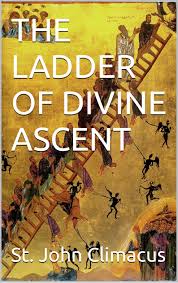
THE LADDER OF DIVINE ASCENT BY JOHN CLIMACUS: STEP 10, SLANDER

We are leaving Philokalia for a while to re-read the Ladder of Divine Ascent by St. John Climacus. With the exception of the Bible, writes Bishop Kallistos Ware in the introduction of this book, there is no other book as influential and foundational for Orthodox spirituality as the Ladder of Divine Ascent by St. John Climacus. While addressed to monastics, it embodies the transformational journey that all Christians are capable of, and have a right to, from the tumult of passions and fragmentation to wholeness, inner stillness and unity with God.

On Slander: Step 10

At first glance, it is easy to assume that we already know the topic of this chapter. “What’s there to say? Slander is bad. We get it!”  Yet, as always, we are humbled by the twists and brand-new insights that St. John brings to the topic, making it new.

Curiously, John doesn’t address the propriety of the act or its effect on others. He concentrates on its root causes of slander—hatred, self- love, hypocrisy, brooding over past injuries, contempt for others, and desire for self-promotion– and emphasizes their destructive effect on our souls.  

What is insidious about slander is the ease with which it can masquerade its intentions as innocent or even noble, hiding their dark underside: “I am only criticizing you out of love.”  “It doesn’t bother me at all that you are fat. I strongly believe that all sizes are beautiful. I am just so concerned for your health.”  John calls it:  “a leech in hiding and escaping notice.”    

Being tempted by slander should serve as a warning sign for us; an opportunity to examine our own soul rather than compile lists of others’ flaws. 

Think of the first thoughts that come to mind before you resort to slander —focusing on someone’s flaws, remembering offenses against you, reliving a moment of humiliation over and over again until you are livid with “justifiable” anger,” honing and practicing smart and revengeful responses against “offenders.” You can hardly contain yourself. You are bursting with the desire to share your anger with others and get their support for the condemnation of the offender.

While by slandering others we may achieve a few seconds of relief and a sense of superiority, we are left wallowing in self- justification, seething at perceived offenses and stuck in isolation from others.

John calls for restraint at the first impulse to focus on others’ flaws and offenses against us.  We should, instead, redirect our attention to ourselves.  What do these thoughts of slander say about our own state of mind and the passions simmering in our heart?  Are we lashing out at someone to avoid the pain of facing the reality of our sins?

“Those who pass speedy and harsh judgments on the sins of their neighbors,” John tells us, “fall into this passion because they, themselves, have failed to achieve a complete and unceasing memory of and concern for their sins. Anyone untrammeled by self- love and able to see his own faults for what they are would worry about no one else in this life.”

What are our lives like when we have rid ourself of the need to slander and removed the underlying causes?  We are told that our hearts would then be open to love, effortlessly and immediately by looking for the good in others rather than judging and probing to identify the bad. 

The temptation to slander stems from the temptation to look for, and focus on, flaws rather than virtues.  It implies a spiritual state of inner turmoil, discontent and ingratitude that makes it difficult to achieve the humility to repent.

You cannot “mix judgement of others with the desire to repent.”

If we are prone to slander, we have put ourselves in automatic judgment mode, maintaining a sense of control but keeping love at bay.

As St. John tells us, “a charitable and grateful mind  takes careful notes of the virtues it observes in another while the fool goes looking for faults and defects.”

He gives the example of the grape picker.

“A good grape picker chooses to eat ripe grapes and does not pluck what is unripe. A charitable and sensible mind takes careful note of the virtues it observes in another, while the fool goes looking for faults and defects…Do not condemn. Not even if your very eyes are seeing something, for they may be deceived.”

The tendency to slander implies a mind constantly holding itself above others and ensconced in anger and ingratitude.

Again, John focuses on the offender rather than the offended showing that the path of judgment and slander of others leads to spiritual death.

They searched out iniquity and died in the search ( ps. 63:7

THE LADDER OF DIVINE ASCENT BY JOHN CLIMACUS: STEP 8

We are leaving Philokalia for a while to re-read the Ladder of Divine Ascent by St. John Climacus. With the exception of the Bible, writes Bishop Kallistos Ware in the introduction of this book, there is no other book as influential and foundational for Orthodox spirituality as the Ladder of Divine Ascent by St. John Climacus. While addressed to monastics, it embodies the transformational journey that all Christians are capable of, and have a right to, from the tumult of passions and fragmentation to wholeness, inner stillness and unity with God.

 On Placidity and Meekness (step 8)

As the gradual pouring of water on a fire puts out the flame completely so the tears of genuine mourning can extinguish every flame of anger and irascibility.”  This is how step 8 begins as the natural continuation of the previous step on mourning.

Meekness for me used to imply failure! People who let others step on them! Starting with my early teens, I scorned anything that resembled meekness, moderation, timidity, quietness.  I defined myself through rebellion and excess. Unlike the faceless “meek” that stay in their little boxes, I was going to change the world and defy categories.  Little did I know then that the appearance of strength does not signify true, inner strength! Quite the contrary! Keeping up the trappings of strength and power and avoiding quietude through noise—outrage, anger, talkativeness—are often indications of fear and emptiness.

Meekness for St. John and other ascetics most certainly does not imply weakness. On the contrary, while anger is “an easily changed movement of one’s disposition” and the “disfigurement of the soul,” meekness is a “permanent condition;” unaffected by either praise or insult. It is, in fact, “a triumph of one’s nature.” This is the most profound and insightful differentiation I have seen.  Anger, however noble or justifiable we want to believe it is, is “movable;” something you can neither rely on nor control. It is a flash in time; a reaction rather than action, lacking permanence and substance. Meekness, on the other hand, is a hard-won spiritual state that deliberately, rather than reactively, cultivates virtues and resists temptations that threaten the inner stillness it has created. The difference between anger and meekness that John conjures up is one between a spoiled baby and a highly trained Olympic athlete.  Clearly he does not use the term to signify weakness.

There is a practical, “how to” dimension in John’s Ladder that is rooted in deep understanding of human psychology and the depths of the soul. He knows that, even as we desire the inner stillness of meekness, it will go against engrained habits and we will resist it. This is why he reminds us continuously that virtues are achieved in stages in a lifelong spiritual warfare and walks us through the steps.  First he advise us to learn how to keep “the lips silent when the heart is stirred” – go through the motions even if your heart is not yet open to it. Once you achieve this, the next step is to also “keep your thoughts silent when the soul is upset.”  Reaching the next and final step is when you are so unaffected by anger that your soul isn’t even stirred by insult or injustice against you.  

Vainglory, conceit, remembrance of past wrongs, self-justification, hate are among the passions that stir anger.  Yet, “just as darkness retreats before light, so all anger and bitterness disappear before the fragrance of humility,” John writes.   Meekness is the foundation on which we can anchor the virtue of humility. We will know that we have fully ascended the step of meekness when, instead of anger at someone who caused us harm, we feel compassion and love. Unless we root out anger and replace it with meekness and humility, there will simply be no space for the Holy Spirit to enter. 

THE LADDER OF DIVINE ASCENT BY JOHN CLIMACUS. STEP 7

We are leaving Philokalia for a while to re-read the Ladder of Divine Ascent by St. John Climacus. With the exception of the Bible, writes Bishop Kallistos Ware in the introduction of this book, there is no other book as influential and foundational for Orthodox spirituality as the Ladder of Divine Ascent by St. John Climacus. While addressed to monastics, it embodies the transformational journey that all Christians are capable of, and have a right to, from the tumult of passions and fragmentation to wholeness, inner stillness and unity with God.

Mourning as Gateway to Life

We live our lives trying to minimize discomfort and avoid sorrow. We consider our happiness, safety, achievements, comfort and others’ respect as our indisputable rights. This shared worldview makes sense to us.

The world seen through the eyes of God, however,  applies a different kind of logic that turns the logic of the world upside down.  If you think that modern schools of thought, like nihilism or deconstructionism, are revolutionary, think again.

Mourning, John tells us in the beginning of this chapter, could be a melancholy of the soul, an anguished heart; futile longing for something that will never be obtained.  This sounds logical to us. But then John suggests a different possibility for viewing it. “Alternatively,” he tells us: “mourning is a golden spur within a soul that has been stripped of all bonds and ties, set by holy sorrow to keep watch over the heart.” (p. 136, Penguin edition)

What does this mean? Instead of spelling it out, John relies on a series of paradoxes to gradually reveal its significance and implications. True mourning is the gateway to love and freedom, while the single-minded pursuit of bodily pleasures leads to emptiness and despair. Mourning, paradoxically,

We live our lives trying to minimize discomfort and avoid sorrow. We consider our happiness, safety, achievements, comfort and others’ respect as our indisputable rights. This shared worldview makes sense to us.

The world seen through the eyes of God, however,  applies a different kind of logic that turns the logic of the world upside down.  If you think that modern schools of thought, like nihilism or deconstructionism, are revolutionary, think again.

Mourning, John tells us in the beginning of this chapter, could be a melancholy of the soul, an anguished heart; futile longing for something that will never be obtained.  This sounds logical to us. But then John suggests a different possibility for viewing it. “Alternatively,” he tells us: “mourning is a golden spur within a soul that has been stripped of all bonds and ties, set by holy sorrow to keep watch over the heart.” (p. 136, Penguin edition)

What does this mean? Instead of spelling it out, John relies on a series of paradoxes to gradually reveal its significance and implications. True mourning is the gateway to love and freedom, while the single-minded pursuit of bodily pleasures leads to emptiness and despair. Mourning, paradoxically, cleanses us and opens our hearts so that delight and a spirit of celebration arrive unexpectedly to fill our daily lives. Conversely those who pursue shallow pleasures through indulgence, glory or material goods can never satisfy their thirst and are led to despair. Achievement and status can only bring about shallow, inauthentic and passing moments of pleasure if we have not acknowledged, and repented for, the destructive passions that still weigh on our souls. Contrition paves the way to real, deep and unforced joy.

Groans and sadness cry out to the Lord, trembling tears intercede for us and the tears shed out of all holy love show that our prayer has been accepted.” P. 137

Mourning is not antithetical to joy. Surprisingly, those unable to mourn cannot experience true, inner joy.

The man who mourns constantly in a way that pleases God does not seize to celebrate daily, but tears without end are in store for him who him who does not abandon bodily celebration. P. 140

Mourning requires humility; surrender of the heart to God rather than intellectual understanding of Him.  Theology and mourning do not go together, according to John. One sits on a professorial chair and the other “passes his days in rags on a dung heap.”   Christ did not teach us from the heights and safety of heaven. He became one of us and willingly experienced the full extent of suffering as a man to save us.  Through mourning we go from talking the talk to walking the walk, and from the head to the heart.

Mourning is, in fact, a gateway to life.

“If you find yourself unable to mourn, then lament that very fact,” John tells us. 

This is a powerful image and a stunning possibility to contemplate. Can you imagine living without the capacity for empathy that would allow you to be touched by others’ struggles and experience love and sorrow for them? Or being unable to experience regret and, hence, to find redemption and experience transformation?  This is why the ability to mourn is a gift:

True mourning penetrates the depths of our soul, freeing us from the need to show off, control or yearn for wealth and prestige that block us from openness to love and union with God:

 He who has the gift of spiritual tears will be able to mourn anywhere. But if it is all outward show, there will be no end to his discussion of places and means.

Tears alone do not constitute mourning, however. There are, in fact, good tears and  bad tears. We may cry because of a sense of entitlement and self-pity for lacking the rewards we feel entitled to.  Or good tears may turn into bad tears when we become proud of them and feel superior to others.

Silly men take pride in their tears, and this is why some are not granted the gift of mourning…”  When mourning is deep-rooted, it leaves no room for efforts to garner raise or reap rewards from God. Paradoxically, this is exactly when Christ comes uninvited to a heart that is open and cleansed through mourning.

Mourning, John tells us, is freedom from passions and anguish, a state of humility and inner stillness, an experience of love and union with God and man.   

 When the heart is filled with sorrow and weeps, it is full of tenderness and all this without having striven for it. …”the Lord has arrived uninvited and is holding out to us the sponge of loving sorrow, the cool waters of blessed sadness with which to wipe away the sadness of our sings.

THE LADDER OF DIVINE ASCENT BY JOHN CLIMACUS

Step 4 On blessed and ever-memorable obedience

Having renounced the world, St. John asks us to renounce ourselves in order to ascend the next rung in the Ladder.

Obedience is absolute renunciation of our own life, clearly expressed in our bodily actions.

How can we, as modern men and women, view the concept of obedience which is such a fundamental requirement to your ability to ascend the Ladder? After all, questioning authority, challenging boundaries and deconstructing received truths are part of the definition of the modern hero. Are we called to dutifully obey all those with authority over us? Is our ideal self, someone like Dilbert, mindlessly performing menial tasks and unable to form a single thought independently? Are there limits to obedience? Should you obey an abusive husband or boss for example? Or comply with the requests of someone whose judgment is impaired?

To grasp the meaning of “obedience” in ascetic life, we must first drop all familiar associations.

Let’s first consider the context. “Obedience” in ascetic spirituality refers to the relationship of a monastic to his spiritual director. Hence, obedience is exercised within an agreed upon relationship and assumes a consensual framework. Without mutual agreement and consent you have tyranny rather than obedience. For example, spiritual directors use their authority on those who have willingly entered the monastery and, hence, have already accepted a life of obedience. Conversely, the directors have accepted responsibility for guiding the souls of those in obedience to them, to lead them to salvation.

Christianity is practiced in community. No man is an island.

The concept of obedience is not alien to the modern world. The journey of healing in all 12-step and similar programs that fight addiction begins with humility and obedience. You must admit that you are powerless over a habit or addiction and seek a guide for your recovery journey. The concept of mentorship exists in multiple realms of   life—from sports to business, artistic and trade apprenticeships.

Mother Raphaela, of the Holy Myrrhbearers monastery points out that the roots of the word “obedience” are in the Latin obaudire which means to listen. In that sense, relationships between husband and wife, parents and children are built on a construct of obedience in that they all involve mutual “listening” — mutual obligations and responsibilities for the salvation of the relationship rather than the fulfillment of one’s own will.

Ironically, as in the case of detachment, obedience becomes a gateway to freedom by releasing us from the tyranny of our own will. Self-will, which we often mistake for freedom, tethers our lives to the unceasing need to control and impose on others our script for how the world should run. It usually results in conflict, disappointment and bitterness as the world constantly falls short of our expectations. St. John shows us that faith and trust are gateways to obedience:

Obedience is the tomb of the will and the resurrection of humility…You who are therefore trying to lay your own burden on Another’s shoulders, you who are hastening to sign a pledge that you are voluntarily surrendering yourself to slavery, and in return want freedom written to your account, you who are being supported by the hands of others as you swim across this great sea—

Levels of Obedience and Surrender

To show us how obedience becomes the bridge to salvation, St. John tells a story as an example.

A repentant robber seeks to enter a monastery John was visiting. As a prerequisite to being admitted, the Abbott asks him to confess his sins before the brothers as an indication of his penitence. The robber complies, but the Abbot is still not convinced of the sincerity of his repentance. The robber next dons a hair shirt and ashes, has his hands tied behind him and appears humbled before 230 brothers at the monastery. The Abbot knows that, while he said the right things, he has not yet experienced true mourning. Eager to be admitted, the robber raises the bar and offers to confess his sins in the middle of the city square as an indication of his humility. Yet the Abbott still does not deem him worthy of admission. Suddenly, struck by a new awareness of his sins and filled with remorse, the robber drops to the ground, sheds real tears and confesses all his sins (pp. 94-95}. At that moment, he is probably not even worrying about the impression he  makes on the Abbot or what he has to do to convince him. I picture him so crushed by a fresh awareness of the magnitude of his sins and the state of his soul that he has no interest in impressing others. The Abbott recognizes the sincerity of his repentance and admits him.

He later explains to St. John his reasons for making the robber wait for that long: had he admitted him before the robber fully faced his past and repented with his whole heart, he would have doomed him to a life of torment with his past sins still dwelling in him unresolved, and gnawing at his soul. Another consideration, the Abbot continued, was the opportunity to give an example to the brothers.

This pastor understood that public confession or displays of humility did not go far enough to render the robber completely transparent to God and the brothers. True repentance has to engage the heart completely without a shred of deception or attempts to hold back.

How often do we think we have forgiven or accepted something, mistaking what is only intellectual understanding for deep commitment of the heart? During moments when we are suddenly able to peel the last layer of the onion of our consciousness and our hearts are touched by love or grief, we just know it. There are no doubts or ambiguities; and the world looks different, even for a moment, as we experience it authentically.

The Abbot recognized that the robber’s repentance had not yet reached the heart and pushed him to the fullness of being through surrender to true mourning. Yet it was obedience–the robber’s willingness to put his complete trust in the pastor and dig deeper into his soul than he thought necessary-that enabled salvation and forgiveness.

This is the ideal of obedience. We do not achieve salvation alone and on our terms, but through communion with others and, especially, relationships bound by obedience to a spiritual director.

THE LADDER OF DIVINE ASCENT BY JOHN CLIMACUS

STEP #3: EXILE

The concept of exile takes us even beyond renunciation and detachment.

Exile goes beyond just leaving material things behind. It is a state of mind and manner of living in which “we live “a hidden life, an invisible intention, unseen meditation, desire for humiliation, longing for hardship, constant determination to love God, abundance of charity, renunciation of vainglory, depth of silence.”

Exile is not the result of anger, bitterness, or despair.

 It is not from hatred that we separate ourselves from our own people or places (God forbid!), but to avoid the harm which might come to us from them.

“Exile” means having a hidden life that is so different than the lives of most others, that we feel like we are speaking a foreign language.

He is an exile who, having knowledge, sits like one of foreign speech amongst people of another tongue.

An exile is a fugitive from every attachment to his own people and to strangers.

This is a step that seems difficult to put into practice because it requires us to renounce relationships that are precious to us. However, let’s consider than St. John addressed monks. Let us also consider that such texts employ narrative conventions we would call rhetorical exaggerations to make the point of their critical importance.

How do we apply these principles?

We are asked not to “associate with people of the world or approach them.” He admonishes us that even our “attachment either to some particular relative or to strangers is dangerous. Little by little it can entice us back to the world, and completely quench the fire of our contrition.”

It seems extreme but isn’t this what AA and other addiction treatment programs advise? The first step is humility in recognizing that you are powerless over substances, things, feeling, behavior, or people you have an unhealthy attachment to. Having recognized that you are vulnerable to temptation, you deliberately avoid it. You stop going to bars, hanging out with those addicted to alcohol, drugs, or unhealthy behavior. You change your habits and way of thinking step by step.

A state of exile grows out of our admission of vulnerability. In other words, it requires humility.

We have no problem in understanding physical addiction, yet isn’t sin an addiction—a state when passions drive your life and you are no longer in control of your body and soul?

St. johns advies:

“Run from places of sin as from the plague, for when fruit is not present, we have no frequent desire to eat it.”

The hardest part for us to accept is the need to renounce your family.

Look, beware, lest you be exposed to the deluge of sentiment through your attachment to the things of your home, and all that you have be drowned in the waters of earthly affection. Do not be moved by the tears of parents or friends; otherwise you will be weeping eternally. When they surround you like bees, or rather wasps, and shed tears over you, do not for one moment hesitate, but sternly fix the eye of your soul on your past actions and your death, that you may ward off one sorrow by another.

Monastics, of course, must leave their family behind and renounce the world. Yet St. John is not asking us to literally hate and abandon our families but to prioritize our values. Christians are asked to love God above all else.

The last step in the Ladder of Divine Ascent is faith, hope and love. Once you have achieved this ultimate level of complete union of God, you are capable of true love, not sentimental or romantic love. You are in a state of inner stillness in which we can truly see, listen to and love others.

Putting God first does not mean abandoning the children but, for example, facilitating their salvation rather than pushing them to pick the most prestigious college or job or to succeed a level above their peers,

St. John advises us to note the temptations that come with a life of exile. Among us is the danger of feeling so superior that we consider it our job to teach and save others.

In trying to save the careless and indolent along with themselves, many perish with them, because in course of time the fire goes out. As soon as the flame is burning within you, run; for you do not know when it will go out and leave you in darkness. Not all of us are required to save others. The divine Apostle says: ‘Each one of us shall give account of himself to God.’4 And again he  says: ‘Thou therefore who teachest another, teachest thou not thyself?’1 This is like saying: I do not know whether we must all teach others; but teach yourselves at all costs.

In pursuing exile, John advises us to avoid extremes. He also wants us to understand that the state of inner freedom that exile brings about, can also elicit passions such as pride and contempt for others. He stresses the need for humility in acknowledging our own weaknesses and vulnerabilities. Such acknowledgment of our powerlessness justifies the sacrifices he is asking for.

THE LADDER OF DIVINE ASCENT BY JOHN CLIMACUS

With Lent coming, we are leaving Philokalia for a while to re-read the Ladder of Divine Ascent by St. John Climacus.

With the exception of the Bible, writes Bishop Kallistos Ware in the introduction of this book, there is no other book as influential and foundational for Orthodox spirituality as the Ladder of Divine Ascent by St. John Climacus.

While addressed to monastics, it embodies the transformational journey that all Christians are capable of, and have a right to, from the tumult of passions and fragmentation to wholeness, inner stillness and unity with God.

We use the edition, translated by Colm Luibheid and Norman Russell. Note, however, that my quotes are from a different, online translation.

You can order the book from Amazon.

STEP ONE

Like all journeys, the Ladder of Divine Ascent consists of many steps. St. John divides our journey into 30 small steps, which he describes and helps us climb one-by-one.

With his help we travel gradually from detachment and renunciation to the acquisition of fundamental virtues, the struggle against passions and finally the cultivation of dispassion and acquisition of inner stillness. When we reach at the top of the summit, we can directly experience the love of God and become God-like.

The first step, before our real climb even begins, is renunciation of the material world as we know it: our dependence on things, indulgences, addictions to passions, assumptions that close our hearts and minds.

Those who enter this contest must renounce all things, despise all things, deride all things, and shake off all things, that they may lay a firm foundation.

St. John’s audience, of course, is other monks who have chosen to leave the world and live a life of prayer. Yet renunciation is not negation but purification. Its three pillars according to St. John are “innocence, fasting and temperance.” They do not describe a simple deficit but the shedding of artifice and the return to a child-like nature:

Let all babes in Christ begin with these virtues, taking as their model the natural babes. For you never find in them anything sly or deceitful. They have no insatiate appetite, no insatiable stomach, not a body on fire…

Hence the return to a child-like state, free from passions and anxiety is possible for all of us.

Why would a citizen of the 21st century want to deprive himself/herself in an age when self-gratification and actualization are inalienable rights? In the hesychastic (and more broadly, Christian) worldview, material gratification and abandon in passions result in slavery of the soul. Renunciation, on the other hand, paradoxically leads to freedom.

The book’s preface quotes St. Augustine as he puts forth a vision of a life in which we are in union with God.

Imagine a man in whom the tumult of the flesh goes silent, in whom the images of earth, of water, of air and of the skies cease to resound. His soul turns quiet and, self-reflecting no longer, it transcends itself. Dreams and visions end. SO too does all speech and every gesture, everything in fact which comes to be only to pass away. All these things cry out: “We did not make ourselves. It is the Eternal One who made us.”

This is the vision that makes the journey worthwhile.

Unlike other meditative traditions, the journey up the ladder is enabled by faith and love. Why would you even want to undertake such a challenging journey without this motivation, John asks?

5. All who have willingly left the things of the world, have certainly done so either for the sake of the future Kingdom, or because of the multitude of their sins, or for love of God. If they were not moved by any of these reasons their withdrawal from the world was unreasonable. But God who sets our contests waits to see what the end of our course will be.

Our journey is not a willful adventure but a disciplined process that can only be undertaken under the guidance of a spiritual father. This journey, hence, should be driven by humility rather than certainty in our own knowledge and abilities.

In the patristic mindset, life is a constant spiritual warfare and the forces of evil and darkness are real and ever present.

We have very evil and dangerous, cunning, unscrupulous foes, who hold fire in their hands and try to burn the temple of God with the flame that is in it. These foes are strong; they never sleep; they are incorporeal and invisible.

The hope for Christians is that “God belongs to all free beings. He is the life of all, the salvation of all—faithful and unfaithful, just and unjust, pious and impious, passionate and dispassionate, monks and seculars, wise and simple, healthy and sick, young and old—just as the diffusion of light, the sight of the sun, and the changes of the weather are for all alike; ‘for there is no respect of persons with God’”. Being God-lie, then, is our heritage to reclaim.

In hesychasm there is a need for direct and personal experience with God. Only through renunciation can we hear God speak to us directly without intermediaries. Renunciation opens the door to the journey of direct communion with Him.

So that we can hear his word, not in the language of the flesh, not through the speech of an angel, not by way of a rattling cloud or a mysterious parable. But Himself. The One Whom we love in everything.

.

PATIENCE AND ENDURANCE: St. Peter of Damaskos

(Philokalia Vol. III, G.E.H Palmer, Philip Sherrard, Kallistos Ware)

When I look for an urgent answer or solution, my double “A” personality often kicks in. There have been times when, in my impatience for an immediate answer, I stayed up until dawn, doing Google research, drawing diagrams, or making lists. Even if I become exhausted and unproductive, I am sure that if I just persist a little more, I can get results within my timeline.  

How much of our inner peace do we sacrifice, in our efforts to force our agenda and sense of timing on the universe?

St. Peter advises that we apply “conscious awareness of our own hearts” to discern God’s perspective and free ourselves from the frantic pressure to bring about the results we want, when we want them.

Harmonizing our will with God’s brings about patience and endurance. Patience and endurance are not simply two of many virtues. They are, instead, the preconditions for possessing our soul. If fact, St. Peter believes that “you come into yourself when you endure with patience.”

Without patient endurance, we live in turmoil, burdened by the idea that unless we force results, nothing worthwhile will happen in our lives. We are riddled with anxiety, uncertainty, and lack of clarity as our passions obscure the true nature of things.

How many tears would I like to shed whenever I gain even a partial glimpse of myself! If I do not sin, I become elated with pride; while if I sin and am able to realize it, in my dismay I lose heart and begin to despair. If I take refuge in hope, again I become arrogant. If I weep, it feeds my presumption; if I do not weep, the passions visit me again… In my ignorance all things seem contradictory, and I cannot reconcile them.

Patience is living in God’s infinite time. It is abandoning the futile struggle of forcing our temporal time frame on a God-created universe. It is acquiring humility to put aside our own assumptions; and discernment to understand the connecting links among things that appear contradictory.

Patient endurance is not a solitary virtue but the result of a transformative process that begins with faith and fear of God. As we no longer see ourselves as the center of the world, we experience awe, humility, clarity of vision, gratitude, and inner stillness.

For if such endurance is not born in the soul out of faith, the soul cannot possess any virtue at all.

The working assumptions for most of us are that we acquire and increase knowledge through our own efforts, feel justifiable pride in it, receive recognition for it and continue to ascend levels of accomplishment until we become “experts” or wise. It thus becomes easy to judge others, become anxious about winning arguments and impose our opinions which we “know” to be wiser than others.’  

St. Peter, and other desert fathers, turn this value system on its head. Spiritual knowledge begins with acknowledgment of ignorance and the recognition of the need of God’s grace.  

For this reason it is good to say ‘I do not know’, so that we neither disbelieve what is said by an angel nor place credence in what occurs through the deceitfulness of the enemy.

Giving up the pressure of forcing results and timelines, judging, impressing, and dominating others frees us from impatience. We now live in God’s time, realizing that experience and insight may take years, rather than hours or days, and that we cannot achieve anything on our own without God’s grace.

We may wait for many years until the answer is given us, unsolicited and unperceived, in the form of some concrete action- as someone has put it with reference to the contemplation of created beings. In this way we reach the haven of active spiritual knowledge. When we see this knowledge persisting in us over many years, then we will understand that truly we have been heard and have invisibly received the answer.