Nikitas Stithatos
Philokalia, vol. 4, On the Inner Nature of Things and on the
Purification of the Intellect:
One Hundred Texts
What does Stithatos mean by knowledge of oneself? How is it achieved?
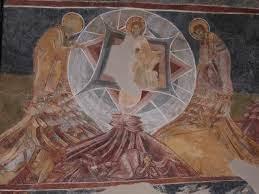
For Socrates knowledge of oneself is a rational examination of strengths, weaknesses, values and limitations.
Stithatos, however, peels away all the known assets of selfhood. You are NOT your innate strengths and weaknesses, profession or life choices, he tells us. External circumstances beyond your control—praise, wealth, misfortune, or social status—have no bearing on your true self.
So, what remains of us then? How can there be “self” outside our values, actions, thoughts, successes and failures?
I struggled with my understanding of self in this passage. I kept waiting for a clear definition of what constitutes the authentic core of myself and how to find it.
Instead, Stithatos offers a radical redefinition of self and our knowledge of it. He shows that true self can only be experienced and not described. Since we are made in the image of God, it is only through union with Him that we know ourselves.
Without uniting ourselves to God, we are locked in our ego-centric perception of the world, and we are unable to fully give of ourselves to Him and our fellow human beings.
Surely, we have all experienced the demon of distraction, even in things and situations we deeply value. We catch ourselves missing entire chunks of conversation, important moments in our children’s lives, portions of liturgical services or even the beauty of the surrounding landscape because of our all-consuming thoughts and self-centered preoccupations —from reviewing the shopping list and feeling guilty for relaxing instead of pursuing a “productive” task, to mentally preparing for a forthcoming interview or worrying about the future.
For Stithatos, self-knowledge is not a solitary mental effort of introspection, but a spiritual pilgrimage away from the limited self and toward a true union with God.
Shedding preoccupation with ourselves, we can now see the world anew through God’s perception and decipher the true essence of things all around us—their purpose, nature and role in creation.
Once the Bridegroom has led the soul into the sanctuary of His hidden mysteries, He will initiate it with wisdom into the contemplation of the inner essences of created things.
By seeing the interconnectedness of all things and their divine purpose, we come to understand who we are in relation to God and His creation.
To see the inner essence of all things around us and know ourselves requires humility.
Nothing so inspires the soul with longing for God and love for one’s fellow beings as humility, compunction and pure prayer. …But until you come to know yourself through humility and spiritual knowledge your life is one of toil and sweat.
Stithatos’ writing has detailed for us a spiritual path that moves beyond rational knowledge and physical perception toward a direct, personal experience of union with God. Instead of arriving at a definition or logical conclusions he gives us a glimpse into a life in union with God.
- Purification of the intellect which allows the soul’s “eye” to be unveiled. Free from passions and distractions, you can access a deeper, spiritual kind of knowledge and experience inner peace.
With true knowledge of yourself, “…you cannot be constrained by sensory attachment to things. You are not distracted by any of the delectations of this life…”
2. Transition from knowledge to mystical experience
If you remain in a state of humility and keep your heart open
…you will be filled with a strange, unspeakable intoxication – the intoxication of compunction – and will enter into the depths of humility. Rapt out of yourself, you take no account of food, drink or clothing beyond the minimum needed; for you are as one who has experienced the blessed change that comes from ‘the right hand of the Most High’
3. Love. You can now experience and give pure love. We no longer see people as objects to impress or control and judge them on the basis of human-made categories. You see God’s presence and purpose in all people.
You do no “regard some people as holy and others as unholy; but just as God makes the rain fall and the sun shine equally on the just and on the unjust, on the evil and on the good (cf. Matt. t; : 4t;), so you irradiate love and diffuse its rays to all men.”’’’
In essence, Stithatos offers a profound redefinition of self. It argues that true identity is not a worldly achievement but a divine endowment that can only be uncovered through a spiritual journey toward union with God, leading to a profound and altered perception of yourself and reality.
 Readings in Philokalia