St Maximos the Confessor, Various Texts on Theology, the Divine Economy, and Virtue and Vice, Fourth Century
# 16-26
 To grasp the complex paths to salvation that St. Maximos lays out in these paragraphs, we must first understand that human nature is inherently good rather than a synonym for passions and abandonment. St. Maximus tells us that “sin is what is contrary to nature” and that what “is beyond nature is the divine and inconceivable pleasure which God naturally produces in those found worthy of being united with Him through grace.”
So why doesn’t our nature lead us directly to God?
St. Maximos reminds us of our fallen nature. “When, as a result of the fall, the devil had riveted the attention of these faculties to visible things, nobody understood or sought out God, because in all who participated in human nature intellect and intelligence were confined to the superficial aspects of sensible things, and so they acquired no understanding of what lies beyond the senses.”
We are hence trapped on the surface; caught up in a downward spiral, filling the void with more indulgences to passions and increasingly distancing ourselves from God. We become habituated to pursuing pleasure and indulging in passions and no longer remember what it is like to restore our true nature and experience union with God.
St. Maximos carefully delineates the source of hope and path of action, above all, the fact that we possess an intellect that is capable of receiving virtue and spiritual knowledge.
The faculties which search out divine realities were implanted by the Creator in the essence of human nature at its very entrance into being.
The Holy Spirit provides us with the light for us to discern these faculties.
Just as we cannot see objects without the light of the sun, our faculties cannot engage in spiritual contemplation without the light of the spirit.
However, while the Holy Spirit provides the faculty for knowledge in us, he does not actualize it. Nature, while good in its origins, does not “contain the inner principles of what is beyond nature any more than it contains the laws of what is contrary to nature.”
The journey to union with God can be only launched through true, burning desire.
The Holy Spirit leads those who seek the spiritual principles and qualities of salvation to an understanding of them; for He does not allow the power with which they naturally seek divine things to remain inactive and unproductive in them.
Desire is, in turn, generated by faith.
St. Maximos unveils the interrelated steps, actions and experiences that return faculties to their original state and enable the path leading to unification with God.
- Breaking your attachments to material things
- Practices virtue
- Acquiring faith
- Possessing a burning desire
- Achieving synergy between your will and God’s
These are not merely solitary milestones to be checked off on a list, but interconnected pieces of a larger choreography. In it, thought is accompanied by synergistic action and all is fused into one through our union with God.
Deification, briefly, is the encompassing and fulfillment of all times and ages, and of all that exists in either.
All these steps involve synergy with and participation in God.
This participation consists in the participant becoming like that in which he participates. Such likeness involves, so far as this is possible, an identity with respect to energy between the participant and that in which he participates.”
For the truth to be revealed, for example, faith must be consummated or acted upon. Beyond action and theoretical understanding faith is expressed by interpenetration.
Revelation is the inexpressible interpenetration of the believer with the object of belief and takes place according to each believer’s degree of faith (cf. Rom. 12:6). Through that interpenetration the believer finally returns to his origin.
St. Maximos sums up the course of the journey as follows:
First a man seeks to make his will dead to sin and sin dead to his will, and to this end he investigates how and by what means he should make these two dead to one another. When that has been done, he seeks to make his will alive in virtue and virtue alive in his will; and to this end he investigates how and by what means he should vivify each in the other. To seek is to have an appetite for some object of desire; to investigate is to employ effective means by which the appetite can attain that object.
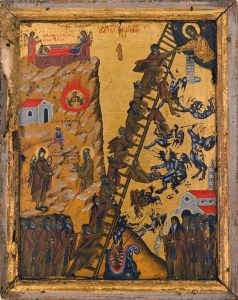 St. Maximos delves once more into the intricacies of the relationship between soul and flesh. He reminds us that his is not a doctrine of separation and polarization between God-given faculties. To nourish the soul, you do not need to annihilate the flesh. You need to understand and follow the correct order.
 experience, rather than hardship. Years later, I switched to automatic transmission, which I found much easier. I wasn’t exactly full of gratitude for this improvement. Instead, my perception of what was normal had rapidly changed, so that automatic transmission was now an expectation. Now heated seats, keyless entry and built-in GPS are my new normal. I hate to admit it but I would probably seize on the next innovation, whether it was flying cars or transmuting myself into atoms that could be reconfigured back into my person in another location, within seconds–like Dr. Spock and the rest of the Star Trek characters.
 (pp. 23-27)
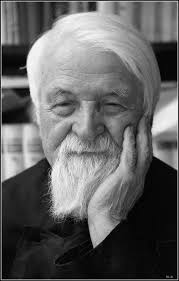 Have you ever thought of prayer as the only avenue to true freedom? This is assertion that Staniloae makes in this extraordinary short chapter in which he defines freedom—a freedom that is achieved through prayer and forms the foundation of our relationship with God and fellow men.
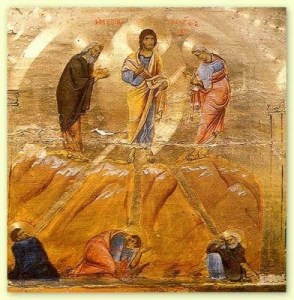 reaching the upper echelon of spiritual maturity, theosis, there are no longer dueling dualities and fragmentation.
 St. Maximos’ writings penetrate the depths of our lifelong journey toward theosis. But what do our transformed lives look and feel like in our everyday lives? How might we perceive and be impacted by a saint? Eminent theologian, Dumitru Staniloae, poses that question in this short book Prayer and Holiness:
 Staniloae’s saint, however, is not concerned with our potential for realizing our artistic or professional talents, achieving recognition and possessing material things or status. Instead, he helps us uncover the true capabilities God embedded in our nature– such as those for love, hope, inner peace, redemption, compassion, union with God– and the path for fulfilling them.
 self (self-esteem), pride and the longing for popularity. The common denominator in all three is the belief that our authentic, God-given selves have low value in themselves. We are simply not enough as we are. What’s more, we cannot rely on God alone to confer on us the kind of importance that will impress others. Hence, we take on the task ourselves, obsessively building and presenting our own fiction about us, rather than understanding God’s will for us.
 Latimer is the hero of a little book by George Elliott called “The Lifted Veil.” He is the heir of a wealthy family, a man of deep poetic sensibility with near prophetic insight into others’ souls. Upon his brother’s death, not only does he become the sole heir of his father’s vast fortune, but he also marries his brother’s fiancée, a woman he desired and thought himself in love with. Then why is it that we see him defeated, despondent, bereft of joy and hope in the middle of what should have been a fulfilling and joyous life?
