In these chapters St. Maximos talks about how to understand the nature of God 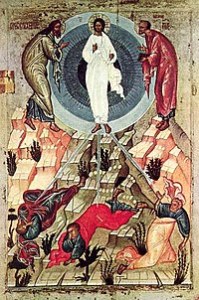 and enter into a union with Him.
- BEYOND HUMAN CATEGORIES
He first addresses a major challenge in our relationship to God. God is uncreated, unoriginate and uncontainable. Yet we try to understand Him through the limited categories of the created world that we know. This contradiction is the tragedy of our human condition. We long for God and the peace and unity that union with Him would confer. Yet we are doomed to an incomplete, fragmented perception of God and the world around us if we are not united with him and see through His eyes and not ours.
As long as we understand God in the flesh, through symbols and the letter of the law, we still perceive reality in fragments and be unable to achieve full knowledge of God
St. Maximos reminds us that there is a grave danger in mistaking our own perceptions for the truth; becoming so preoccupied with the symbols and words of the scripture that we lose sight of its essence.
Hence a person who seeks God with true devotion should not be dominated by the literal text, lest he unwittingly receives not God but things appertaining to God; that is, lest he feel a dangerous affection for the words of Scripture instead of for the Logos.
- THE PATH TO THEOSIS
The solution is to progress in our spiritual knowledge so that there is no longer separation between God and us. He dwells within us and we participate, in part, in his divinity. This stage in our relationship with God is called theosis. St. Maximos’ writings on theology all concern themselves with the lifelong process of achieving theosis and the stages within it.
Conventionally, there are three stages of spiritual growth: purification, illumination and glorification. St. Maximos repeatedly shows that these stages are not static destinations but pivots for the next phase and pieces of a transformative journey to theosis.
We first renounce the “flesh.” We next rise higher through “ascetic practice/practice of virtues;” and we finally reach the stage of mystical contemplation/complete union with God.
St. Maximos uses a great variety of metaphors and perspectives to depict the stages—each time unveiling a different dimension and level of meaning. In these chapters he frequently brings up parallelisms with the Old Testament.
- PURIFICATION AND THE VIRTUES
Our journey begins with purification—getting rid of worldly passions and attachments or there will be no space for God to enter our soul. Yet purification is not enough. It must be followed by the lifelong cultivation of virtues and a life lived in God’s commandments.
We cannot reach union with God on our own, but only through the grace of God. What we can do on our part is to cultivate virtue and nurture in our hearts the true desire for spiritual contemplation of God. It is then that we may experience the grace of God when we least expect it.
“For he who lives not for himself but for God, is filled with all the gifts of Grace which were not previously apparent to him because of the disturbance of passions.”
- THE MIDWAY POINT
St. Maximos sheds light on the dynamics of our individual paths to theosis by pausing to highlight the struggles at the midway point. Our journey, he says, can be compared to that of Abraham’s, from the land of the Chaldeans, which signifies passions, to the promised land which symbolizes theosis. Before reaching the promised land, Abraham makes a stop at Haran. The Israelites have succeeded in abandoning passions (the land of the Chaldeans). Yet Haran is only “the intermediate state between virtue and vice – a state not yet purified from the delusion of the senses.”
How many of us find ourselves in some way or another in that midway state; between and betwixt? Not totally lacking in faith but not totally committed to it either; admiring the principles yet unwilling to practice them; loving yet not submitting to love fully, without judgment and control.
Many may be tempted to stop the journey halfway and settle for the success they have achieved so far. This is not what we are called to do as Christians, however.
Settling for the middle means making do with a fragmented view of the word and a diminution of Christ to man-made measures. As long as I remain imperfect and refractory, neither obeying God by practicing the commandments nor becoming perfect in spiritual knowledge, Christ from my point of view also appears imperfect and refractory because of me. “For I diminish and cripple Him by not growing in spirit with Him, since I am ‘the body of Christ and one of its members’ (1 Cor. 12:27).”
St. Maximos shows the consequences of spiritual laziness:
Whoever does not advance towards God by these means remains paralyzed until the Logos comes to teach him how he can obtain prompt healing, saying to him, ‘Rise, take up your bed and walk’ (John 5:8); that is to say, the Logos commands him to upraise his intellect from the love of pleasure which dominates him, to shoulder the body of the virtues and to go home, that is, to heaven.
- CHARACTERISTICS OF COMPLETE UNION WITH GOD:
- Simplicity and Wholeness
St. Maximos describes the state of unity with Christ as one in which advance “altogether beyond intellection,’ and beyond duality so that we can dwell in unity.”
Perceiving the universe through our intellect alone and through our own, worldly categories produces a multiplicity of “intellections; for it is marked by the form of each intelligible object that it apprehends.” This multiplicity prevents us from true union with God. We struggle with doubt, competing principles, confusion, faulty conclusions and passions. We are unable to discern the essence of things through conflicting allegiances, racing thoughts on past grievances and future uncertainties that rob us of the present, futile efforts to control and script our lives and that of others.
When we are united with Christ, we transition from fragmentation and multiplicity to unity. We can suddenly see the truth clearly and, hence, we are not torn by conflicting dualities.
St. Maximos brings up parallels with the Old Testament to get us to see the process of theosis from still another perspective.
According to the scripture, he tells us, “the Law instituted the Sabbath…so that your ox and your servant might rest (cf. Exod. 20:10). He sees the ox and the servants as symbols of the body. During the stage of “ascetic practice/practice of virtues,” while we have purified our senses, we are still in the realm of the created universe because our body, “the ox,” is still “led by the intellect, undergoing deprivations and discipline to attain virtue.”
However, when we ascend to the level of spiritual contemplation, our bodies and souls are no longer separate entities. “When we advanced spiritually, the duality between body and intellect is erased.” Antithetical categories no longer have meaning.
In the beginning of our journey, our intellect rejects material things to be beautified. At the stage of theosis body and spirit are united through participation in God “Rather than being passively subjugates, the body is now a participant in intellection.” And we have now reached the Sabbath:
“…the Sabbath signifies the final goal pursued by them throughout the ascetic and the contemplative life, and so it provides for both of them a fitting rest…The Sabbath is a virtuous, dispassionate and peaceful condition of both body and soul. It is an unchanging state.”
Once we enter “the Logos, who is beyond intellection,” Maximos tells us, “then the intellect contemplates only its own immutability, and rejoices with an unspeakable joy because it has received the peace of God which transcends all intellect, and which ceaselessly keeps him who has been granted it from falling (cf. Phil. 4:7).”
2. Contemplation
Maximos sees contemplation, not as erudition or engagement in complex, abstract thoughts but, on the contrary, as a respite and utter simplicity.
One can think of mystical contemplation as a state of silence and inner stillness; a stage in our relationship with God beyond words, symbols or logical categories. It is, as St. Maximos tells us, a state in which we are able to contemplate God “in His true simplicity, in His principial state with God the Father (cf. John 1:1-2).”
“When a man passes from the life of ascetic practice to the stage of spiritual knowledge, he is absent from the flesh (cf. 2 Cor. 5:8). Caught up as on clouds by the more lofty conceptual images into the translucent air of mystical contemplation, he is able to ‘be with the Lord for ever’ (1 Thess. 4:17).

 In existentialism, freedom is the ability of individuals to define their own meaning of life despite the absurdity of a meaningless universe. St. Maximos tells us that salvation is a process of reunification with God and that confining the world to the limitations and loneliness of one’s own self, is enslavement and death.
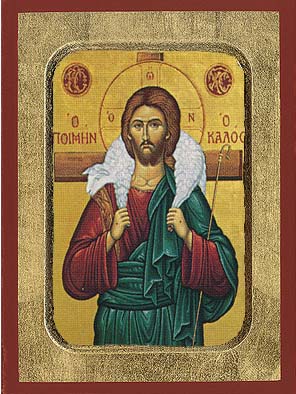
 St. Maximos recounts for us the stages of sin and pits them against the stages of spiritual contemplation that lead to salvation.
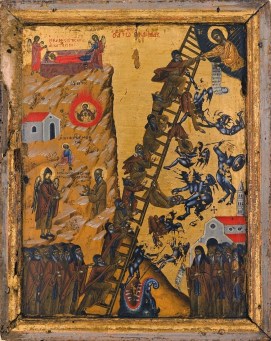
 In St. John Climacos’ Ladder of Divine Ascent, we finally reach the uppermost and ultimate step of theosis through a process of purification and illumination that requires r an arduous climb of 33 steep steps. At the end of the journey, we are not rewarded by perfect wisdom, complete emptiness or absolute power but by the triad of faith, hope and love.
 “In Scripture,” St. Maximos tells us, “hearts capable of receiving the heavenly gifts of holy knowledge are called cisterns (cf. 2 Chr.26:10). To become a cistern, we need God’s Grace, in addition to our own efforts. Yet not everyone is worthy of God’s grace.
