Mother Siluana Vlad, “God, where is the Wound?”
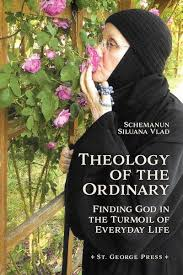
Mother Siluana Vlad (1944–2021) was a Romanian Orthodox schema-nun and spiritual mother whose writings bring the healing wisdom of the patristic tradition into dialogue with the psychological and spiritual wounds of contemporary life.
In God, Where Is the Wound?, Mother Siluana explores the path to theosis, beginning not with abstract theology but with the wounds, fears, and attachments that imprison us. Bringing these wounds honestly before Christ—and relinquishing our addiction to negative emotions and false identities—opens the way to healing, freedom, and participation in divine life.
In patristic theology, thoughts can lead to negative emotions and actions if we engage with and dwell on them. The path to inner stillness begins with our decision not to entertain them. Mother Siluana embraces this patristic understanding but focuses on another obstacle: we can actually become addicted to the stress and negativity our thoughts create.
Just as spouses sometimes remain in abusive marriages to everyone’s astonishment, we continue making the very choices that keep us tethered to the darkness we experience. We may complain, but we become habituated to this environment and begin seeing it as the norm—painful and unpleasant, but familiar.
In fact, Mother Siluana sees addiction to stress as an illness of our times.
Even when we understand the roots of our stress and negativity, we continue feeding and watering them. This is the nature of addiction. How many of us lick our wounds, imagine scenarios of revenge against perceived enemies, relive humiliations over and over, obsess about what we do not have while discounting what we have, or anguish over our inability to bring others—our children, for example—in line with our expectations?
“Another grave illness of our soul and a great enemy of our happiness is the remembering of evil…Almost all of us are filled with resentment…” (p. 130)
Constant preoccupation with how come, what if, why me, or why not me removes us from life as it is and isolates us in a mental labyrinth with no visible exit.
“We get sick today because of unjustified, many times unreal cares and fears” Mother Siluana says. “Many of us live in a permanent state of stress caused by thoughts that we can ‘chew on’ as if they were chewing gum…”
We cannot control the onslaught of destructive thoughts, but we can choose not to indulge in or act on them. Only, we cannot do this alone. We have to call on and rely on God.
Mother Siluana marvels at the self-torture we engage in: “It is painful to realize that we do not put to use God’s grace…It is astonishing how skilled we are at creating our own sorrows which could be avoided so easily. It seems that we are addicted to a state of stress.”
But how do we “put to use God’s grace”?
In Eastern Orthodoxy, Christianity is not merely believing propositions about God. It is entering into communion with Him. While we cannot participate in God’s essence, we can participate in His uncreated energies—His love, grace and living presence. We may experience these as unexpected peace during suffering, strength to forgive, joy independent of circumstances, increasing compassion, or a deeper awareness of God’s presence.
Instead, many of us look for magic bullets and externally derived solutions. Even churchgoing Christians, Mother Siluana observes, may “come to church to seek miracles and signs and magical solutions to their problems.”
Participation in God’s energies is not a ready-made solution but a process of inner transformation. It also requires us to be present and open. When our minds are filled with obsessive thoughts and preoccupations, we cannot be fully open to God. We live instead in an artificial universe constructed from hypotheses, resentments and ruminations about the past or future—and thus say “no” to our God-given life.
This is why Mother Siluana’s most encompassing advice is to “say yes to life.”
“Life,” she reminds us, should not be confused with life events. Life is “the astounding capacity to be, to feel, to think, to act.” Saying yes means accepting reality instead of continually fighting what has already happened; accepting ourselves rather than believing we must become someone else before God can love us; accepting suffering without surrendering to despair; and saying yes to becoming who God created us to be.”.
Saying yes to life is the opposite of addiction to stress. Instead of living inside our fears, resentments, desires to control, passions and endless what ifs, we can inhabit the life we actually have—including its suffering—and open it to God. The wound does not necessarily disappear. But, as Mother Siluana teaches, it can be lived differently.

