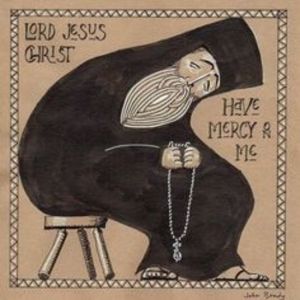
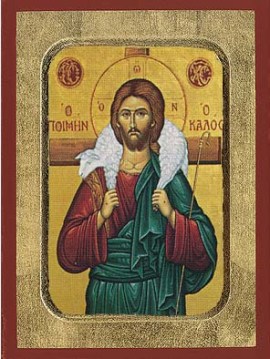
Wisdom from Mount Athos The Writings of Staredz Silouan Chapter 1: Of the Knowledge of God

Taking a short break from St. Maximos and switching to Staredz Silouan is like leaving the turbulent, vast ocean to rest for a while on a calm, translucent lake.
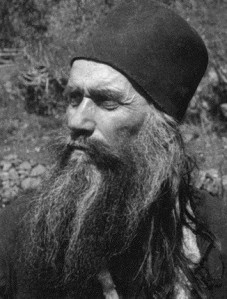
Metaphors, complex series of paradoxes, parallelisms and allusions are sparse; the narrative is direct and experiential.

What does it mean to “know God” and how important it is to our relationship with Him, asks Silouan in this chapter?

To respond, he first makes an essential distinction between seeing and understanding beyond what is visible:

a multitude of people beheld the Lord in the flesh but not all knew him as God.

Even believing in God is not the same as knowing, he states:  “To believe in a God is one thing, “to know God another.”  He continues further down: “Many philosophers and scholars have arrived at a belief in the existence of God, but they have not come to know God.”

God wants us to know Him. “The Lord loves man and has revealed himself to man.” Yet it is impossible to recognize what is being revealed since we can only understand what we can discover through our senses, intelligence, educational experience and even by the force of our belief. Going beyond human capabilities requires the help of the Holy Spirit.

Both in heaven and on earth the Lord is made known only by the Holy Spirit and not through ordinary learning.

Silouan states his thesis and goals clearly at the very start of the chapter. He tells us that, though a sinner, he has come to know God through the Holy spirit. He now wants to share what he has learned so “that others might come to know God and turn to Him.”

Most importantly, Silouan wants us to understand what the Holy Spirit does for us. Without the Holy Spirit, we would be limited to what we can see on the surface or understand through the narrow limits of our human capacity for learning. We would thus be able to increase our knowledge in a linear fashion—accumulating facts, exposing ourselves to new ideas or carrying on clever conversations — yet without increasing our capacity to know God. We would be still stuck in the world that we, as humans, are capable of perceiving and understanding. The Holy Spirit stretches us beyond ourselves and human capabilities.

The Holy Spirit unfolded to us not only the things of the earth but those too which are of heaven.

Without the Holy Spirit, we could not know God “…for how can a man think on and consider a thing that he has not seen or heard tell of and consider a thing that he has not seen or heard tell of and does know?”

With the Holy Spirit dwelling in us, we are no longer subject to the laws of the flesh and will see our fears evaporate as did the Apostles and the prophets. Silouan quotes St. Andrews, saying:

If I feared the Cross, I should not be preaching about the Cross

Instead, of delivering increased knowledge, the Holy Spirit allows us to glimpse into the perfect love of God, thus, enabling us to know Him and transform our entire perception of, and relationships with, the world around us.

 The lord is love…and the Holy Spirit teaches us this love

The greater our love for God, St. Silouan tells us, the more complete our understanding of His sufferings and, hence, our knowledge of Him.

The Holy spirit does not mechanically settle into our souls. We have to enter into a living and personal relationship with Him. Without a relationship with the Holy Spirit, we are left acting as our own authority and fashioning a narrow world that fits our own limited perception of needs.

but people want to live after their own fashion and consequently they declare that God is not, and in so doing they establish that He is.

Conversely, by the grace of the Holy Spirit, we are free of material limitations and expand to participate in, not just learn about, God

The man who knows the Lord through the Holy Spirit becomes like unto the Lord. He quotes St. John the Divine: “We shall be like him; for we shall see him as he is. And we shall behold his glory.
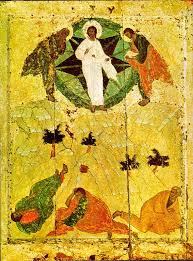
 

Radiant, Simple and Complete Wisdom, St Maximos the Confessor

Various Texts on Theology, the Divine Economy, and Virtue and Vice, Fourth Century, #78-89

In these paragraphs, St. Maximos elucidates the stages leading to theosis (likeness to or union with God), through the interrelationships between theory and practice.

  1. The first stage, he tells us, is the practice of virtues, or practical philosophy.  Practical philosophy, or the practice of the virtues, is effectuated by fear, devotion, and spiritual knowledge.

2.  After purification through the practice of virtue,  one is ready to enter the stage of “natural contemplation,” the deep, spiritual understanding of the essence of created things, beneath the surface.

3. Mystical theology, the highest stage of spiritual knowledge, transcends and unites practice and natural contemplation and “is granted only by divine wisdom.

Reaching this stage, however, is not automatic. It is not achieved simply by fulfilling the requirements of previous stages and passing an exam. Instead, one needs the help of the Holy Spirit. And the Holy Spirit illumines only “those worthy of light;” “…those whose will and disposition have been reborn in the Spirit through the practice of the virtues.”

The Holy Spirit confers illumination “through radiant, simple and complete wisdom, rather than complex philosophical premises and clever contradictions. Prior to this higher stage of perfection, we exist in what St. Maximos calls, the “intermediate states” of being. While inhabiting these states, we are pulled in different directions and are in constant danger of slipping and losing the progress we have made.  In contrast, there are no contradictory truths or changes possible in the highest state of spiritual knowledge. There is permenence, unity and the simplicity of a radiant wisdom.

Thus, having distinguished between practice and thought, surface and essence, Old and New Testament, St. Maximos takes apart the dividing line between them.

“God,” he writes, “is glorified not by mere words but by works of righteousness, which proclaim the majesty of God far more effectively than words.”

St. Maximos warns about the dangers of one without the other. Unless translated into action, words and ideas are nothing more than illusions, he tells us. Speeches on “world peace,” theoretical understanding of the scriptures or donations to an international charity mean little if you are cruel to your family or contemptuous of others. Conversely, actions and material things, bereft of spiritual knowledge, are mere idols. Physical exercise, career or clothes can become empty and exhausting obsessions without an overarching spiritual direction and understanding.

He in whom spiritual knowledge and ascetic practice are not united either makes the first an unsubstantial illusion or turns the second into a lifeless idol. For spiritual knowledge not put into practice does not differ in any way from illusion, lacking such practice to give it real substance; and practice uninformed by intelligence is like an idol, since it has no knowledge to animate it.

When one’s journey nears a state of perfection, not only there are no divisions, but one gift enhances the other in a continuous and self-sustaining loop.  In our life in Christ we live “the mystery of our salvation” which informs our way of life with intelligence and makes intelligence the glory of our way of life. It turns our practice of the virtues into contemplation manifest in terms of action, and our contemplation into divinely initiated practice. To put it briefly, it makes virtue the manifestation of spiritual knowledge and spiritual knowledge the sustaining power of virtue.

When both virtue and spiritual knowledge unite, “a single compact wisdom” is displayed, modeling the wisdom of the Holy Spirit.” It is only then that we lead full, authentic lives and experience the completeness and simplicity of true union with God.

 In this way we may know that by grace both Testaments agree in all things with each other, in their combination consummating a mystery more single and undivided than soul and body in a human being.


Living Lives of Deceit: St Maximos the Confessor

Various Texts on Theology, the Divine Economy, and Virtue and Vice, Fourth Century #64-77

Have you ever experienced moments in which your life felt inauthentic? Thought that there was a disconnect somewhere between your own stories about yourself and your actual experience of who you are?
St. Maximos delves into the reasons lives lived in the flesh are inauthentic. He uses the metaphor of deceit to give a different and even harsh perspective on the nature of sin and its effects on us.

Unless we fully live in Christ, he tells us, we experience the world only through our senses. This means that we are trapped on the surface of things, without ever grasping their true essence that lies beneath, hence leading inauthentic lives that have, tragically, become habitual.

St. Maximos provides broad and varied examples of deceit that plumb the depths of human psychology.

We deceive ourselves when we:

  • Divert, distort or corrupt what is naturally good, such as using our intelligence to “over-think” things, torture ourselves with obsessive thoughts or plans of revenge. By converting intelligence into passions, we are “diverting the intellect from its contemplation of the spiritual essences of created things and by limiting its scope merely to their superficial visible aspects”
  • Appropriate something that does not belong to us. When the devil, for example, “pillages the knowledge of God inherent in nature and arrogates it to himself, he is a thief, because he is attempting to transfer devotion from God to himself.”
  • Just can’t stop ourselves from exaggerating our importance, achievements or virtue through our actual life and actions bear little resemblance to our words: “he traffics in glory merely by speaking about it, hoping that in this manner he will be thought righteous by his hearers and so capture their admiration… To put it simply, he whose way of life does not match his speech”
  • Become “people pleasers”—affecting sweetness, dispassion, interest or compassion to conceal the anger, contempt, indifference or jealousy that we really feel and remain in someone’s good graces. “A man is also a thief when he conceals his soul’s unseen evil behind a seemingly virtuous way of life and disguises his inner disposition with an affected innocence.”
  • Make false promises to God or each other without committing to transforming our lives, attitudes and habits in order to fulfill them. “A man is a perjurer – that is to say, he swears falsely on the name of the Lord – when he promises God that he will lead a life of virtue and instead pursues what is alien to his promise.”
  • Show off  by name-dropping, dominating conversations so our brilliant opinions are admired, drawing attention to our knowledge or achievements in order “to promote [our] own self-glory.

Deceiving ourselves and others is nothing short of death for our souls. Our goals of impressing, pleasing, controlling, winning or showing ourselves superior to others, even if met, are short-lived. We live lives of secret doubts of our worth and a sense of disconnect because, deep inside, we know there is a gap between our words and deed, fantasy and truth.

Deceit goes beyond pretense. It denotes limited lives, trapped on the surface of things, blinded to the true essence that lies beneath it.

Literal reading of the scriptures is an example of deceit because it skims the surface without understanding the true meaning. Such superficial reading registers mere words without uncovering their true essence by considering their context and the spirit in which they were written.  Reading the scriptures literally and superficially, will not extricate us from lives lived in the flesh:

When a man sticks to the mere letter of Scripture, his nature is governed by the senses alone, in this way proving his soul’s attachment to the flesh. For if the letter is not understood in a spiritual way, its significance is restricted to the level of the senses, which do not allow its full meaning to pass over into the intellect.

In the second Corinthians, Paul talks about the need to abandon the surface of worldly wisdom and rely on God’s grace to both write and read about the word of God.

We have done so, relying not on worldly wisdom but on God’s grace. 13 For we do not write you anything you cannot read or understand. And I hope that, 14 as you have understood us in part, you will come to understand fully that you can boast of us just as we will boast of you in the day of the Lord Jesus.

Union with God, St. Maximos has written, is characterized by simplicity. There is a lack of plurality because there are no longer contradictions among competing priorities and versions of the truth. We are now able to delve beyond the surface and discern the simplicity of the sole truth. Living only through the senses, however, is experienced in terms of plurality and fragmentation, hence, inauthenticity.

The senses belong to a single family but are divided into five individual types. Through the apprehensive force particular to each individual type, the deluded soul is persuaded to desire the corresponding sensible objects instead of God.

St. Maximos calls this state of mind “polytheism through each individual sense organ.” Unable to escape a life lived on the surface, we allow our senses to dominate the intellect and “propagate because in their slavery to the passions.”

Instead, St. Maximos directs us to search for the truth –”the illuminating principle of knowledge” — under the surface “through contemplation and the practice of the virtues.” He compares this to “the divine lamp” which we should place “on a lampstand – the Holy Church – beaconing to all men the light of divine truth from the summit of contemplation.”


Inviting God to Build an Abode in our Souls: St Maximos the Confessor

Various Texts on Theology, the Divine Economy, and Virtue and Vice, Fourth Century, #51-63
In these pages, St. Maximos expounds on the synergistic and dynamic nature of salvation.

God is infinite, limitless and eternal, he tells us, and yet he is not equally present in each one of us. Why? Because salvation is not one-dimensional—the result of God’s will alone, regardless of our spiritual disposition and actions. Instead it requires our own active participation. In short, it requires a two-way relationship.

This continuously cooperative relationship between God and man engages us as individual and whole persons: “But, although God pervades all things absolutely, not all will participate in Him equally: they will participate in Him according to what they are.”

In this way our entire personhood in our relationship with God is affirmed.

The key question that remains to be asked is this:

If a person refuses to allow God, the abode of all who are saved and source of their well-being, to sustain his life and to assure his well-being, what will become of him?

The stakes are high. Without God’s presence within us, we cannot achieve “the divine life that is beyond age, time and place…”

St. Maximos underscores the urgency of the situation and why inaction is not a choice:

If a person’s will is not directed towards what is good, it is inevitably directed towards evil; for it cannot be stationary with regard to both.

As always St. Maximos is quite clear in laying out for us practical solutions and elucidating the process and meaning of synergy. He applies the path of salvation equally to both men and angels.

Accordingly, active participation in God requires:

  • A complete re-orientation of mind and heart
  • A shift from the world of material things and passions to the “justice” that God instilled in our very nature
  • Openness and receptivity so that we are “actively receptive to the inner principles of nature in a way that accords with the universal principle of well-being…”
  •  Most importantly, synergy between our will and God’s will.

Those involved in drastic organizational change know that, regardless of what else may change within an organization, there will be no real transformation unless there is a dramatic re-orientation of individuals’ mindset, direction and disposition. It is interesting that St. Maximos bases our ability to participate in God on our ability for personal transformation; re-orientation of our nature, priorities and disposition.

It is worth remembering at this point the difference between the common understanding of “nature,” as lack of restraint, abandonment to passions and impulses, and the patristic definition. In patristic writings, nature refers to the principles and order of things that God created.

Hardened by passions that have become habits, preoccupations with material things and forgetfulness of true virtue, we have lost sight of our original nature and, hence, the true distinction between good and evil and the essence of righteousness—the “natural justice” that exists in our “disposition.”

We have “been actively disruptive of the inner principles of nature in a way that conflicts with the universal principle of well-being.”   In doing so, we have covered our true nature and live a lie.

In other words, participation in God does not involve “addition” – becoming more or other than what we are. Instead it involves the peeling of the layers of falsehood we have wrapped around our souls in order to uncover our true selves.

It is our inner orientation, our disposition, that will determine the degree of our openness or resistance to God. It is on the basis of our overall disposition, rather than our actions alone, that we will be judged.

The scales on which the disposition of each being, whether angel or man, will be weighed at the last judgment is the principle of nature, which shows clearly whether that angel or man inclines towards well-being or its opposite… Those who in all things have failed to maintain a natural justice in their disposition, and have will lapse completely from divine life

Are we performing good deeds that are perfunctory while our heads are bowed to the ground and away from the sun or are our actions, bodies and souls completely turned toward the sun like sunflowers?

Unless we are wholly and utterly oriented toward God, our will be constantly in conflict with His will. Our souls will be in constant anxiety and turmoil as we will be fighting against our true nature. We will be leading inauthentic lives, exhausted from the pursuit of material solutions to our deceases of the soul.

With his incarnation, Christ gave us an example of perfect synergy between God and man and a tangible manifestation of his love for us. His two natures—divine and human—are distinct and yet united in one person.

Ultimately, St. Maximos tells us, we achieve salvation through belief rather than theology. And it is belief that generates hope and love

Nothing is swifter than believing, and nothing is easier than to confess orally the grace that comes from what has been believed. It is his belief that reveals the believer’s living love for his Creator; it is his confession of the grace received that reveals his godly affection for his neighbor. Love and genuine affection – that is, faith and a clear conscience – are clearly the result of a hidden impulse of the heart; for the heart is fully able to generate without using external matter.

A Life That Is More Than Just What We Can See and Touch, St Maximos the Confessor

Various Texts on Theology, the Divine Economy, and Virtue and Vice, Fourth Century,  #40-50

The role and meaning of free will plays a dominant role in these paragraphs. God, we are told, has the wisdom to discern our weaknesses and the might to save us. Yet, he will not do so unless we desire it. In short, to be saved our will must be in line with God’s will. Conversely, to save us despite our sin and against our will would be tyranny.

He could not save man, whose will was in the grip of sin, in a tyrannical fashion.

Our own free will, therefore, has a major role in our salvation. By willingly accepting suffering, Christ models for us how to use our will in the way it was intended in order to experience meaningful, everlasting joy.

Paradoxically, his suffering and death ultimately show his might, rather than his weakness.

And this is the paradox of salvation in Christianity. It was through Christ’s suffering and death that we gained a “life that is by nature eternal and of a state of dispassion that is immutable.”

Without Christ, we are caught in the vicious cycle of trying to escape pain through “self-medication:” keeping busy, drinking, pampering ourselves, becoming “workaholics,” losing ourselves in unhealthy relationships, etc. Like addicts self-medicating with drugs, we find ourselves still empty and in pain through meaningless, material pleasures. We often keep increasing our “pleasure dosage,” thus increasing the void and pain.

For in our desire to escape pain we seek refuge in pleasure, and so try to bring relief to our nature, hard pressed as it is by the torment of pain. But through trying in this way to blunt pain with pleasure, we but increase our sum of debts, for we cannot enjoy pleasure that does not lead to pain and suffering.

To free us from this bondage, Christ did the opposite. He willingly embraced suffering which ultimately led to resurrection and eternal joy.

He submitted deliberately to the or mutation. which comes through sin – that is, for the destruction of pleasure and of the tyranny of sin committed in pursuit of pleasure, and the lordship of the painful death consequent upon sin.

Christ was able to experience suffering because he had accepted to be born in the flesh, as man. This is the source of our hope as humans. By choosing pain as a man, he made it possible for us to also break the pleasure-pain syndrome and direct our lives to meaningful and eternal pleasure.

For the dominion of pleasure and pain clearly applies to what is passible in human nature.

Why did Christ embrace so much suffering to bring about our salvation?  In his haste to find a shortcut to pleasure when he wanted it, where he wanted it and on his own terms, Adam experienced pain as punishment for his sin. In his case, this was a well-deserved punishment. Christ’s sufferings, on the contrary, were not the consequences of sin. They were freely chosen and, hence, destroyed the pleasure-pain syndrome and broke the cycle that held us captive.

With Christ, our lives are more than the avoidance of pain at all costs; more than what we can see, touch and feel.

By assuming human nature, God “bestowed on human nature a new or second form of generation leading us through suffering

The Pleasure-Pain Syndrome, St Maximos the Confessor

Various Texts on Theology, the Divine Economy, and Virtue and Vice,  Fourth Century, 33-39

After the fall,  St. Maximos tells us, our human nature became impassioned. This was because we distorted and redirected the true longing for God that He implanted in our nature, and our capacity for experiencing pleasure in his presence.

Like all sins, this was also one of  misuse and re-direction. Forgetting about God, we gradually sought to fill the void of unfulfilled yearning through material things. Why wait and suffer if we can immediately feel good through new purchases, others’ praise, new clothes, a new relationship or a job promotion? And as our longing for God remained unfulfilled through material things, we begun to feel empty, anguished, depressed or obsessed with obtaining more and more of the same in the hope of eventual fulfillment.

By experiencing “pleasure in a way which is contrary to nature,” we cause ourselves pain.

While pain has its origins in the pursuit of pleasure for its own sake, this is not a linear, cause-and-effect relationship. Instead it unfolds along a continuous loop of correction and transformation. Pain becomes the remedy for our alienation from God. It can re-direct our longing toward Him and right our capsizing ship.

For God has providentially given man pain he has not chosen, together with the death that follows from it, in order to chasten him for the pleasure he has chosen.

The depth of the pain caused by the conversion of our natural longing for God to the senseless pursuit of sensual pleasure cannot be stressed enough. By diverting our course from God to sensible things we have, in essence, “freely chosen death of the soul.”  By using our free will to choose death over life we have corrupted our freedom of choice and, thus, our own human nature.

St. Maximos paints a vivid picture of our loss of true freedom and free choice, and our embrace of death rather than life.

The more we frantically pursue pleasure for its own sake and allow this pursuit to drive our lives, the greater the pain. The greater the pain, the more intensive the pursuit and the delusion that more of the same will assuage it. We are caught in an endless cycle like dogs chasing our tails. We are trapped.

For suffering naturally follows unnatural pleasure in all men whose generation has been preceded by submission to the rule of causeless pleasure.

St. Maximus distinguishes between “meaningless pleasure” that brings about the meaningless pain of dissolution and emptiness to the “purposeful pain… in the form of multiple sufferings.”

While meaningless pleasure brings about pain, purposeful suffering brings about joy—a true, lasting joy that unites us with God.

Sufferings freely embraced and those that come unsought drive out pleasure and allay its impetus. But they do not destroy the capacity for pleasure which resides in human nature like a natural law.

 Paradoxically, it is dispassion rather than obsessive pursuit that allows us to experience true joy. Dispassion is born of virtue and not the pursuit of pleasure.

For the cultivation of virtue produces dispassion in one’s will but not in one’s nature. But when dispassion has been attained in one’s will the grace of divine pleasure becomes active in the intellect.

Like addicts, caught in this vicious cycle of pleasure-seeking followed by pain, we cannot escape without the intervention of Christ.

Once human nature had submitted to the syndrome of pleasure freely chosen followed by pain imposed against one’s will, it would have been completely impossible for it to be restored to its original life had the Creator not become man and accepted by His own free choice the pain intended as a chastisement for man’s freely chosen pleasure.

To save us, Christ turned the pain/pleasure sequence on its head. He did not suffer pain as a result of his pursuit of meaningless pleasure. On the contrary, he freely embraced a different kind of suffering—one that was unjust and undeserving– “first to destroy the ill-gotten pleasure and the justly deserved sufferings consequent on it and, second, to restore suffering human nature.”

Christ had to submit himself to this unjust suffering in order to break the cycle and thus free us “from the pleasure-pain syndrome ” and restore our nature by abolishing completely “the pleasure-provoked origin of human life and its consequent termination in death.”

In His love He deliberately accepted the painful death which, because of pleasure, terminates human life, so that by suffering unjustly He might abolish the pleasure-provoked and unjust origin by which this life is dominated.


Acquiring and Transcending Knowledge, St Maximos the Confessor

Various Texts on Theology, the Divine Economy, and Virtue and Vice, Fourth Century,  #26-33
In this section, St. Maximos illuminates the way we get to know and understand and its purpose.

For him, knowledge is not separate from faith and the experience of God but, instead, drives the journey from worldliness and emptiness to deification and union with God. To understand what he says we must abandon any definition of knowledge we are familiar with– knowledge as information, intellectual exercise or mastery.

According to Maximos, there are two kinds of knowledge.

The intelligence recognizes two kinds of knowledge of divine realities.

He calls the first, “relative” because it is limited by what we, as finite beings, are able to recognize and understand within our own resources:

The first is relative, because it is confined to the intelligence and its intellections

Limited as it is, however, this relative kind of knowledge gives us a glimmer of what lies beyond it and awakens in us a longing for a higher level of knowledge; that which “is true and authentic knowledge.” The true purpose of all knowledge, then, is ascendance to God.

The second and superior level of knowledge is no longer just theoretical. It is enabled by grace and manifested through experience and participation.

The second through experience alone and through grace it brings about, by means of participation and without the help of the intelligence and its intellections, a total and active perception of what is known.

Paradoxically, this second kind of knowledge transcends not only relative knowledge but the intellect itself. Our understanding leads us to that which is beyond understanding.

This real knowledge, which through experience and participation brings about a perception of what is known, supersedes the knowledge that resides in the intelligence and the intellections.

The intellect no longer “knows” physical reality. It “forgets” it as it forgets itself and lives in God through experience of, and participation in, Him.

It is through this second kind of knowledge that, when we come into our inheritance, we receive supernatural and ever-activated deification.

Becoming trapped in relative knowledge, we are unable to experience God. How many times do we find ourselves ensnared in obsessive circular thinking—projecting, analyzing, making assumptions, resenting, planning, controlling or fantasizing—and become unable to experience the present, to fully give to, or receive love from, others?

“According to the wise,” St Maximos tells us, “we cannot use our intelligence to think about God at the same time as we experience Him or have an intellection of Him while we are perceiving Him directly. By ‘think about God’ I mean speculate about Him on the basis of an analogy between Him and created beings. By ‘perceiving Him directly’ I mean experiencing divine or supernatural realities through participation.”

The nature of knowledge and the way we acquire it in stages reveals also something about the nature of God and our relationship with Him. God, St. Maximos says, didn’t simply bring us into the world. He enabled us to constantly progress spiritually and reach the level of complete union with Him through theosis.  He is not simply the author of our being but the perpetual savior of our souls who is continuously guiding us to higher and higher levels of knowledge and participation in Him.

It was indeed indispensable that He who is by nature the Creator of the being of all things should Himself, through grace, accomplish their deification, and in this way reveal Himself to be not only the author of being but also the giver of eternal well-being.


Returning to Our Original Nature

St Maximos the Confessor, Various Texts on Theology, the Divine Economy, and Virtue and Vice, Fourth Century

# 16-26

To grasp the complex paths to salvation that St. Maximos lays out in these paragraphs, we must first understand that human nature is inherently good rather than a synonym for passions and abandonment. St. Maximus tells us that “sin is what is contrary to nature” and that what “is beyond nature is the divine and inconceivable pleasure which God naturally produces in those found worthy of being united with Him through grace.”
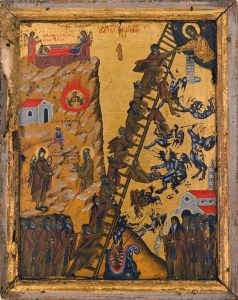
 So why doesn’t our nature lead us directly to God?

St. Maximos reminds us of our fallen nature. “When, as a result of the fall, the devil had riveted the attention of these faculties to visible things, nobody understood or sought out God, because in all who participated in human nature intellect and intelligence were confined to the superficial aspects of sensible things, and so they acquired no understanding of what lies beyond the senses.”

 We are hence trapped on the surface; caught up in a downward spiral, filling the void with more indulgences to passions and increasingly distancing ourselves from God. We become habituated to pursuing pleasure and indulging in passions and no longer remember what it is like to restore our true nature and experience union with God.

 St. Maximos carefully delineates the source of hope and path of action, above all, the fact that we possess an intellect that is capable of receiving virtue and spiritual knowledge.

 The faculties which search out divine realities were implanted by the Creator in the essence of human nature at its very entrance into being.

 The Holy Spirit provides us with the light for us to discern these faculties.

 Just as we cannot see objects without the light of the sun, our faculties cannot engage in spiritual contemplation without the light of the spirit.

However, while the Holy Spirit provides the faculty for knowledge in us, he does not actualize it. Nature, while good in its origins, does not “contain the inner principles of what is beyond nature any more than it contains the laws of what is contrary to nature.”

The journey to union with God can be only launched through true, burning desire.

The Holy Spirit leads those who seek the spiritual principles and qualities of salvation to an understanding of them; for He does not allow the power with which they naturally seek divine things to remain inactive and unproductive in them.

 Desire is, in turn, generated by faith.

St. Maximos unveils the interrelated steps, actions and experiences that return faculties to their original state and enable the path leading to unification with God.

  •  Breaking your attachments to material things
  • Practices virtue
  • Acquiring faith
  • Possessing a burning desire
  • Achieving synergy between your will and God’s

These are not merely solitary milestones to be checked off on a list, but interconnected pieces of a larger choreography. In it, thought is accompanied by synergistic action and all is fused into one through our union with God.

Deification, briefly, is the encompassing and fulfillment of all times and ages, and of all that exists in either.

All these steps involve synergy with and participation in God.

This participation consists in the participant becoming like that in which he participates. Such likeness involves, so far as this is possible, an identity with respect to energy between the participant and that in which he participates.”

 For the truth to be revealed, for example, faith must be consummated or acted upon. Beyond action and theoretical understanding faith is expressed by interpenetration.

Revelation is the inexpressible interpenetration of the believer with the object of belief and takes place according to each believer’s degree of faith (cf. Rom. 12:6). Through that interpenetration the believer finally returns to his origin.

St. Maximos sums up the course of the journey as follows:

First a man seeks to make his will dead to sin and sin dead to his will, and to this end he investigates how and by what means he should make these two dead to one another. When that has been done, he seeks to make his will alive in virtue and virtue alive in his will; and to this end he investigates how and by what means he should vivify each in the other. To seek is to have an appetite for some object of desire; to investigate is to employ effective means by which the appetite can attain that object.


Put your Soul Above All Else, St Maximos the Confessor

Various Texts on Theology, the Divine Economy, and Virtue and Vice, Fourth Century, # 9-15

St. Maximos delves once more into the intricacies of the relationship between soul and flesh. He reminds us that his is not a doctrine of separation and polarization between God-given faculties. To nourish the soul, you do not need to annihilate the flesh. You need to understand and follow the correct order.

The war we have to wage is, thus, far more intricate than choosing among competing dualities. It is one of re-ordering and transforming rather than destroying.  It calls for discernment of the right order, set of relationships and perspective as well as the need for discipline and sacrifice.

 “The flesh, St. Maximos instruct us, “belongs to the soul, but the soul does not belong to the flesh.” This order is lifesaving.

What does St. Maximos mean by “flesh?” Clearly, he does not literally refer to what is solely experienced through the flesh. Instead, “flesh” stands for worldliness — everything that tethers you to the created world, when it is void of God’s presence: greed, control, jealousy, workaholism, despair, fantasy, lust, vindictiveness.

Flesh, we are told, “has been condemned to suffer death, for the purpose of death is to destroy the law of the flesh.”  It is, hence, temporary and unpredictable. Choosing to prioritize worldly values is the result of a distorted perspective. What in fact is tangential, temporary and subordinate to the soul, becomes dominant and determines the worth of our lives. How many of us measure the success of our lives on the basis of wealth, “wins,” others’ respect and praise, career success, getting others to behave the way we want etc.

In other words, it is not the mere existence of profit, material comfort or professional success that jeopardize the salvation of our souls. Instead it is our addiction to them. Our attachment to these vices enslaves us and drives our lives. They eventually become our primary measure of success.

For unless in this present life the law of sin, evidenced in the will’s attachment to the flesh, is drained from the flesh as though from some vessel, no one can receive that blessed life.

Subjecting flesh to the soul, on the other hand, means that we constantly make inconvenient choices, rejecting quick or temporary gratification for the deeper joy of eternal virtue.

Hence the paradox of accepting temporary pain for deep and eternal joy, vs. succumbing to temporary, fleeting pleasure only to suffer death of soul and eventual despair.

St. Maximos talks about two kinds of distress:

  1. The distress we experience due to spiritual discipline—forgoing temporary pleasure for the deeper joy of virtue. He calls this, “profitable distress” –” the pain the flesh suffers for the sake of virtue.” The result is what St. Maximos calls, “salutary joy” – the soul’s rejoicing in that virtue.
  2. The distress we experience in the long-term, after succumbing to temporary pleasure.

Salutary joy is deeper than temporary pleasure because it involves a complete re- ordering of priorities and re-orientation of perspective. Instead of measuring our life’s worth by achievements, recognition, material goods and other unreliable sources of pleasure, we now hold as priorities eternal truths that cannot be taken away.   We are able to distinguish between fantasy and reality and behold “as a present reality the beauty of the blessings held in store.”

Conversely, attachment to a worldly point of view produces pain from fixating over things that are ephemeral. They distort our perspective and life’s proper order and leave us with a sense of emptiness, anxiety, dissatisfaction– unable to perceive “the beauty of the blessings held in store.”

In subjugating our soul to the flesh, we relinquish freedom by placing our source of joy and self-worth on temporary things that never quench our thirst. We are left exhausted, running on a hamster wheel that has no new destination.

On the other hand, by subjugating the flesh to the soul, we free ourselves from “addiction.”  We are replacing worldly things that can be taken from us with permanent and eternal virtue.

St. Maximos moreover introduces the important element of renewal.  Succumbing to the flesh erodes our soul and chances for eternal life. As desires for material things become habits and are perceived as the norm, we are stuck in a process of justification, accommodation and decline.

Conversely, the salutary joy we derive by allowing the soul to be above the flesh is regenerating. Death if the flesh produces continuous renewal.

For the sake of virtue he severs his will from the flesh, and so dies daily, like David (cf. Ps. 44:22). At the same time, he is continually renewed through his soul’s spiritual regeneration; for he possesses both salutary pleasure and profitable distress.


Seeing God in Every Fragment of the Created World: Intelligence and the Senses, St Maximos the Confessor

Various Texts on Theology, the Divine Economy, and Virtue and Vice, Fourth Century, #1-9

In my 20’s I used to drive cars with manual transmission. I saw this as a pleasant experience, rather than hardship. Years later, I switched to automatic transmission, which I found much easier. I wasn’t exactly full of gratitude for this improvement. Instead, my perception of what was normal had rapidly changed, so that automatic transmission was now an expectation. Now heated seats, keyless entry and built-in GPS are my new normal. I hate to admit it but I would probably seize on the next innovation, whether it was flying cars or transmuting myself into atoms that could be reconfigured back into my person in another location, within seconds–like Dr. Spock and the rest of the Star Trek characters.

St. Maximos would tell me that I misuse my intellectual capacity, diverting its true purpose and subjugating it to the senses.

My true purpose is spiritual ascendance and union with God. We are equipped by God with a nature that has the capacity to apprehend this higher noetic reality.

The intellect has as its object noetic and incorporeal beings, whose essence it is by nature fitted to apprehend

When we are entrapped in the mere pursuit of sensual pleasure—whether this be food, a new car, career advancement, praise, control of others etc.—our intellect “becomes entangled in the superficial aspects of sensible things and devises ways of enjoying the pleasures of the flesh.

We are caught in the continuous pursuit of the next object or achievement, and the next and the next, without ever feeling filled and content. Our intellect “is unable to transcend the nature of visible things because it is held back by its impassioned attachment to the senses.”

How many of us are exhausted by the endless pursuit of the next milestone and unable to ever say: “this is enough and I am content.”

St. Maximos juxtaposes the intellect against the senses as two opposite realities.

The natural energies of the intellect and those of the senses are opposed to one another because of the extreme dissimilarity between their objects. The intellect has as its object noetic and incorporeal beings, whose essence it is by nature fitted to apprehend; the senses have as object sensible and corporeal entities, which they likewise apprehend by virtue of their natural powers.

He does not, however, ask us to renounce one in favor of the other. He only asks that we put them in the proper order in which “the intelligence takes precedence over the senses in the contemplation of visible things.” In this way…” the senses are then kept under control by the intelligence.”

We still perceive the beauty or pain of the world around us through our senses, but we are no longer limited to the mere pursuit of personal pleasure. We can see beyond the “superficial aspects of visible things as soon as they strike the senses… (we can) contemplate the spiritual essences of created things stripped of their outer forms.

Apprehending the inner essence of created things and perceiving God’s blessings in them replaces greed with gratitude, and short-term pleasure with virtue and inner contentment.